
After centuries at the bottom of the English Channel, remnants from one of England’s oldest surviving shipwrecks are finally back on shore. Yet the reason it took maritime archaeologists this long to retrieve items from the 13th century Mortar Wreck was not because of its depth or the ravages of time. The shipwreck was mistaken for modern construction debris.
“Our skipper said ‘Have you ever dived this mark? We said, ‘No, because it’s rubbish, there’s nothing there,’” Bournemouth University maritime archaeologist Tom Cousins recently told the BBC.
However, a subsequent inspection in 2019 showed the opposite. Instead of a pile of discarded quarry fragments, Cousins and his colleagues found portions of the oldest known surviving medieval English ship hull, along with a cargo of stone tools used to grind food. Named after its contents, experts soon determined that the Mortar Wreck dates back to around 1250.

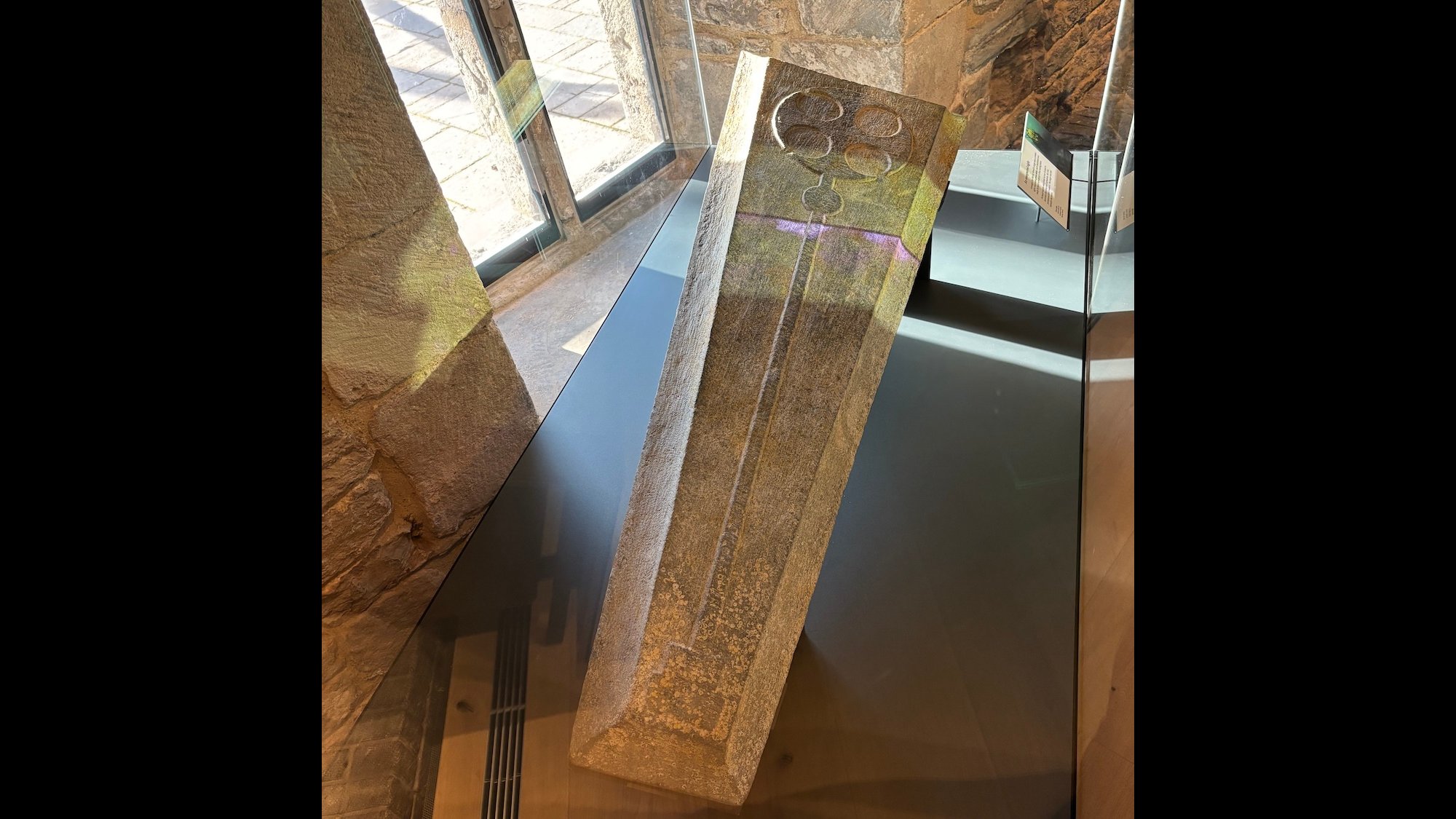
Located about a mile off the coast of Dorset and roughly 93 miles southwest of London, the vessel built from Irish oak was also hauling a pair of grave slabs carved from Purbeck stone. Medieval architects prized this heavy construction material because masons could polish it to resemble marble. Quarried solely from the Isle of Purbeck in southern England since the days of the Roman Empire, Purbeck stone was used in historic sites like Westminster Abbey and the Tower of London. Archaeologists have located other examples of this stone as far away as Denmark.
“The 13th century is the heyday of the marble industry–you won’t find a church or cathedral that doesn’t have Purbeck marble in it,” added Cousins.
The maritime archaeologist believes this intense demand may explain the Mortar Wreck’s demise. While documenting and recovering portions of the ship and its cargo, researchers noted a crack in the hull. Cousins suggests that this “souped-up” variant of a Viking ship likely succumbed to its estimated 29.5 tons of cargo stone.
Many of the artifacts are now on display at the Poole Museum, including one of the grave slabs whose ornate masonry resembles the art seen on the tomb of Stephen Langton, who served as the Archbishop of Canterbury from 1207 until 1258.
“When we first heard about the discovery of the Mortar Wreck, we were just so excited to play our part in the whole story,” museum collections officer Joe Raine said in a recent exhibit announcement, adding that the display can now inform visitors “who may know nothing about the trade in Purbeck stone, or medieval seafaring.”
