
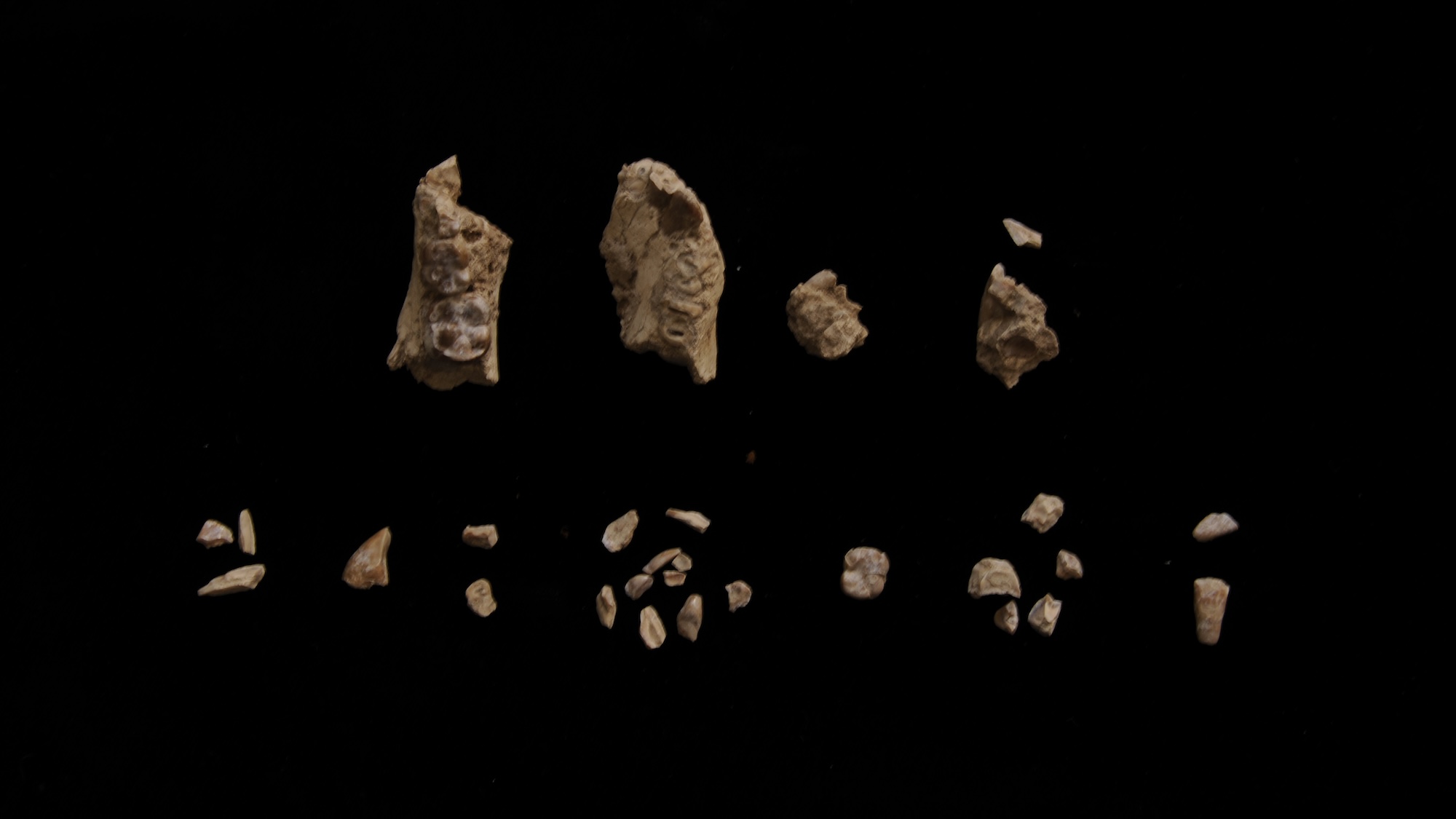
Sixteen years ago, paleoanthropologists stumbled upon an errant foot bone at a dig site in Ethiopia. It was clearly human-like, but which species it belonged to remained a mystery. Now, we finally know that the foot belongs to one of humanity’s oldest known evolutionary relatives. The 3.4-million-year-old bones belong to the now extinct Australopithecus deyiremeda.This opposable-toed ape co-existed with the same hominin species as one of our most famous ancestors–Lucy. The findings are detailed in a study published on November 25 in the journal Nature.

Feet first
In 2009, paleoanthropologists discovered the initial eight unidentified fossils—collectively referred to as the Burtele foot, at the Woranso-Mille paleontological site in Ethiopia’s Afar Rift. Researchers announced their findings in 2012, but while they knew the bones didn’t belong to the hominin species A. afarensis, they couldn’t pinpoint exactly which species the errant foot belonged to. What’s more, they weren’t ready to identify the hominin based on foot bones alone.
“It is not common practice in our field to name a species based on postcranial elements–elements below the neck–so we were hoping that we would find something above the neck in clear association with the foot,” Arizona State University paleoanthropologist and study coauthor Yohannes Haile-Selassie said in a statement. “Crania, jaws and teeth are usually the elements used in species recognition.”
Although researchers previously discovered teeth near the site of Burtele foot, they weren’t entirely certain that they originated from the same sediment layers. Three years later, Haile-Selassie’s team announced the discovery of A. deyiremeda nearby based on additional fossils. These new finds still did not include examples of the species’ feet. However, after a decade of additional excavation work and laboratory analysis, Haile-Selassie and his team are now confident the Burtele foot discovered in 2009 belongs to A. deyiremeda.
Standing up on two feet
In terms of evolutionary development, A. deyiremeda possessed a more primitive foot than those belonging to Lucy and her A. afarensis family. While the Burtele foot still has an opposable big toe vital for tree climbing, it allowed A. deyiremeda to still walk on two legs while on the ground. But unlike Homo sapiens, A. deyiremeda’s bipedal walking relied on the momentum generated using its second digit.
Haile-Selassie explained that the foot’s form was particularly striking given what they know about Ardipithecus ramidus, an early predecessor of both A. deyiremeda and A. afarensis.
“The presence of an abducted big toe in Ardipithecus ramidus was a big surprise, because at 4.4 million-years-ago there was still an early hominin ancestor which retained an opposable big toe, which was totally unexpected,” he said. “Then 1-million-years later, at 3.4-million-years ago, we find the Burtele foot, which is even more surprising.”
With the revised fossil record, Haile-Selassie said that paleoanthropologists now know early human bipedality “came in various forms.”
“The whole idea of finding specimens like the Burtele foot tells you that there were many ways of walking on two legs when on the ground, there was not just one way until later,” he added.
Remarkably, the recent fieldwork and radiocarbon dating further confirms that A. deyiremeda and A. afarensis co-existed in the same geographic area. Given their differing anatomies and diets, they were able to do so without pushing either species towards extinction.
