Click to launch the photo gallery
The first real lunar base should look literally out-of-this-world cool. Maybe it will look as spacey as Apple's new campus, or Virgin’s Spaceport America. Foster + Partners, the architectural firm to dream up those ideas, has a new lunar-base concept for the European Space Agency. (Let's hope it is better-executed than Las Vegas' beleaguered Harmon Hotel.)
It may never be built, but it could be a feasible design for future moon base planning, according to ESA. Foster + Partners designed the new moon shelter concept based on a 3-D printer--which in some ways is liberating, because the machines can theoretically make anything. Building a lunar base would be a lot easier with a 3-D printer, because you could just scoop up material from the moon’s surface and melt it together. No massive cargo ships hauling rebar required--and that would mean less fuel, less risky rocket launches, and maybe even lower costs.
The architects designed a weight-bearing catenary dome, which has cellular structured walls to shield against radiation and micrometeoroids. Astronauts would live in inflatable habitats nestled beneath the dome. Domes are extremely structurally sound and can cover large spaces without support beams--a helpful design that would allow for space-maximizing open floor plans. The current design can house four people.
First, a cylindrical base would fly to the moon on a rocket, unfolding from a tubular canister when it arrives. The dome inflates from this cylinder, which you can see in greater detail in the slideshow. Then robotic rovers cover up the dome with regolith, sintering it together with a 3-D printer to create a hard shell. The shell is made from hollow cellular structured walls (which the designers compare to bird bones), and it would be strong but incredibly lightweight. It would also guard inhabitants against cosmic radiation and temperature fluctuations.The team already produced a prototype wall, which weighs 1.5 metric tons and is made from simulated lunar regolith. It was printed with the help of 3-D printing mastermind Enrico Dini and his D-shape printer. By chance, they had a great source for very moon-like material: Basaltic rock from a volcano in central Italy, which bears a 99.8 percent resemblance to lunar soil, Dini said.
ESA’s General Studies Programme, which funds research into new topics, led the charge on this study. Next the team wants to examine how to control certain other factors, like potentially hazardous very fine lunar dust and the moon’s extreme temperature swings.
[ESA]
140 years of Popular Science at your fingertips.
Each issue has been completely reimagined for your iPad. See our amazing new vision for magazines that goes far beyond the printed page
Stay up to date on the latest news of the future of science and technology from your iPhone or Android phone with full articles, images and offline viewing
Featuring every article from the magazine and website, plus links from around the Web. Also see our PopSci DIY feed
Engineers are racing to build robots that can take the place of rescuers. That story, plus a city that storms can't break and how having fun could lead to breakthrough science.
Also! A leech detective, the solution to America's train-crash problems, the world's fastest baby carriage, and more.


Online Content Director: Suzanne LaBarre | Email
Senior Editor: Paul Adams | Email
Associate Editor: Dan Nosowitz | Email
Contributing Writers:
Clay Dillow | Email
Rebecca Boyle | Email
Colin Lecher | Email
Emily Elert | Email
Intern:
Shaunacy Ferro | Email
What is going to power all this and distribute the power? I am just curious.
It would be awesome to establish ourselves on the Moon, asteroids, space, planets and more...... happy day dream sigh....
Making lunar power:
inlportal.inl.gov/portal/server.pt/community/newsroom/257/feature_story_details/1269?featurestory=DA_582156
ubiquity.acm.org/article.cfm?id=1149636
Don't you just hate it when you click on a Popular Science link like to the Photo Gallery above and get greeted with the message "you are not authorized to view this page"?
What gives Pop Sci are you charging now for your free services?
Well, supposedly the world is supposed to have a working fusion power plant by 2035, and if that happens...well it will pretty much make a lot of space stuff possible. I know there's been Fusion tests before, but it's only been for seconds or minutes. Sustainable Fusion would be a huge jump for us. I guess it depends where this is all built, but maybe solar power too?
I think there would be a definite need for solar powered moon rakers. (to erase the inevitable tracks and footprints )
Why not utilize all that Helium 3 that's suppose to be up there? Then again, It'd be a shame to look up and see the moon resembling some West Virginia strip mine. A while back I read about a small, buried nuclear reactor that used uranium pellets. Anyone remember that?
Seems like a great concept, and i also read the link that you posted, robot. if we were to combine these two things and have each lunar "house" the center of a solar array and radio beamer (is that a word?), we could have reliable energy, not only on the moon for colonization, but also here, where it is needed more than ever.
in order to thank everyone, characteristic, novel style, varieties, low price and good quality, and the low sale price. Thank everyone
http://al.ly/AvJ
http://al.ly/AvJ
http://al.ly/AvJ
http://al.ly/AvJ
│\_╭╭╭╭╭_/│
│ │\|/
│ ● ● │—☆—
│○ ╰┬┬┬╯ ○│/|\
│ ╰—╯ /
╰—┬○————┬○╯
╭│ │╮
╰┴—————┴╯ sdgwewegw
I've always wondered why space structures were never designed like traditional igloos where the materials to make it come from within the structure itself. Essentially, dig a pit and use the regolith to build a dome over top. It seems that, even in designs that look like igloos such as this, the building is still built ON the surface rather than IN it.
I've been making a film about Enrico Dini and his work with Fosters on this project (and others) for two years. The film is going to be released this year, so if anyone's interested, check out the trailer: http://www.themanwhoprintshouses.com/Trailer.html
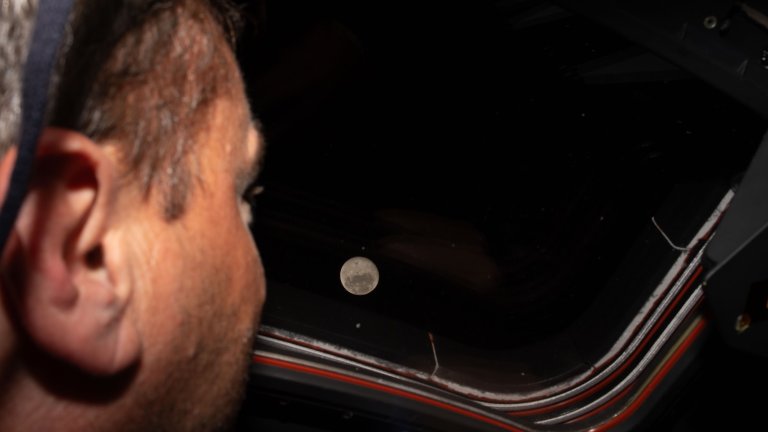
From the first picture of the house on the moon, why are they opening the windows on top? Are they letting the hot fresh air out or the cool fresh vacuum of space,.... bizarre?
@Robot: That`s the cupola. It`s build by ESA and a real one is on the International space station. It allows beautiful observations of earth through it`s large windows. They are not opening the windows. This is glass covered by extra shielding that is closed when no one is using the window for observations.
A very good idea to use these on a potential moon base as well.
Greenmatrix,
Yea, I can see your point or added info!