
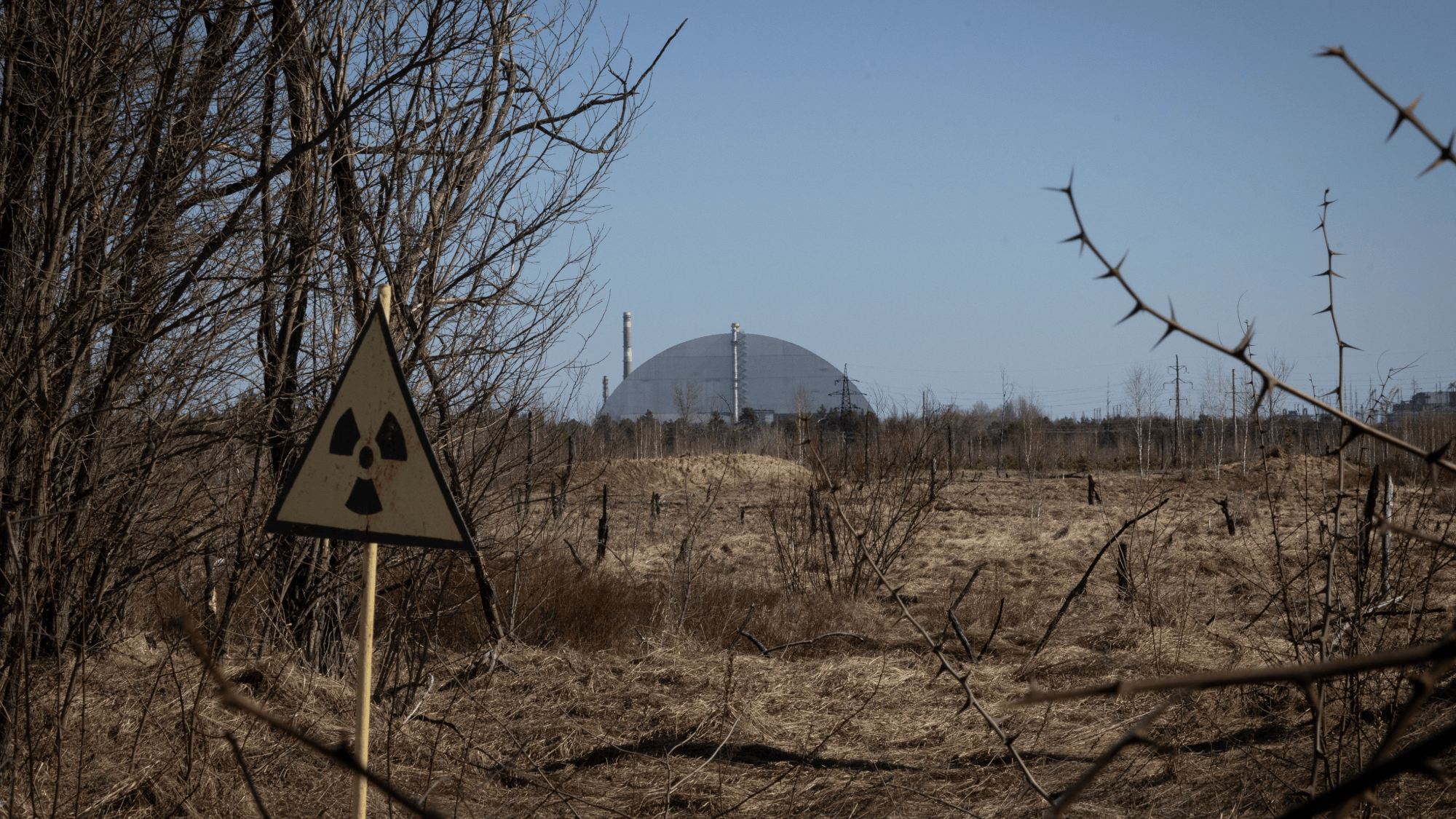
Just over 40 years ago, what began as a routine safety test at the Chernobyl nuclear power plant (or Chornobyl in Ukranian) in Soviet Ukraine spiraled into one of the most recognizable disasters of the 20th century. The reactor exploded and burned, spewing chunks of nuclear debris into the sky. Among that toxic litter were countless tiny “hot particles,” fragments of nuclear fuel smaller than the width of a human hair (somewhere between 8 and 50 micrometers across). Those particles are called hot because they’re highly radioactive, and still are four decades later. Today, scientists entering the areas of the Chernobyl Exclusion Zone where the hot particles are located are required to wear a full protective suit.
But after decades of study, scientists still know surprisingly little about what their particles are made of at the molecular level. A team of researchers from Germany recently set out to change that by analyzing six particles collected from two sites in the Exclusion Zone using synchrotron X-ray diffraction. Surprisingly, they discovered the particles remained far more chemically stable than they had expected. Their crystal structures were largely intact, suggesting they changed little since forming during the disaster and its aftermath.
The findings were recently published in the Journal of Hazardous Materials.
What are Chernobyl’s hot particles?
The hot particles thrown out of the Chernobyl plant fall into three general categories. The first is fuel that remains chemically and physically similar to the reactor’s original uranium dioxide. The second type consists of fuel that melted during the explosion and fused to its zirconium-alloy protective casing. The third type is fire-damaged fuel.
As the reactor’s graphite burned for 10 days after the explosion, the intense heat oxidized some of the fuel into other uranium compounds.
Particles, crystals…and dogs
For this particular study, the team sourced their six samples from two areas in the exclusion zone, and all three hot particle categories were represented. Two came from asphalt in Pripyat, roughly 2 miles from the reactor, while the other four came from farm soil samples in Kopachi, about 3 miles away.
With the samples selected, the researchers isolated individual particles pulled from the soil, mounted each type to a tiny tungsten electrode, and then sent them to the European Synchrotron Radiation Facility in Grenoble, France. There, a team analyzed the particles using intense X-rays produced by a synchrotron, a circular particle accelerator. The researchers rotated each particle in an X-ray beam, measuring it from roughly 2,000 different angles. Watching how the x-rays bounced off all that material revealed how its atoms were arranged, showing which compounds each particle was made of and, most importantly for this study, how intact its crystal structure remained.
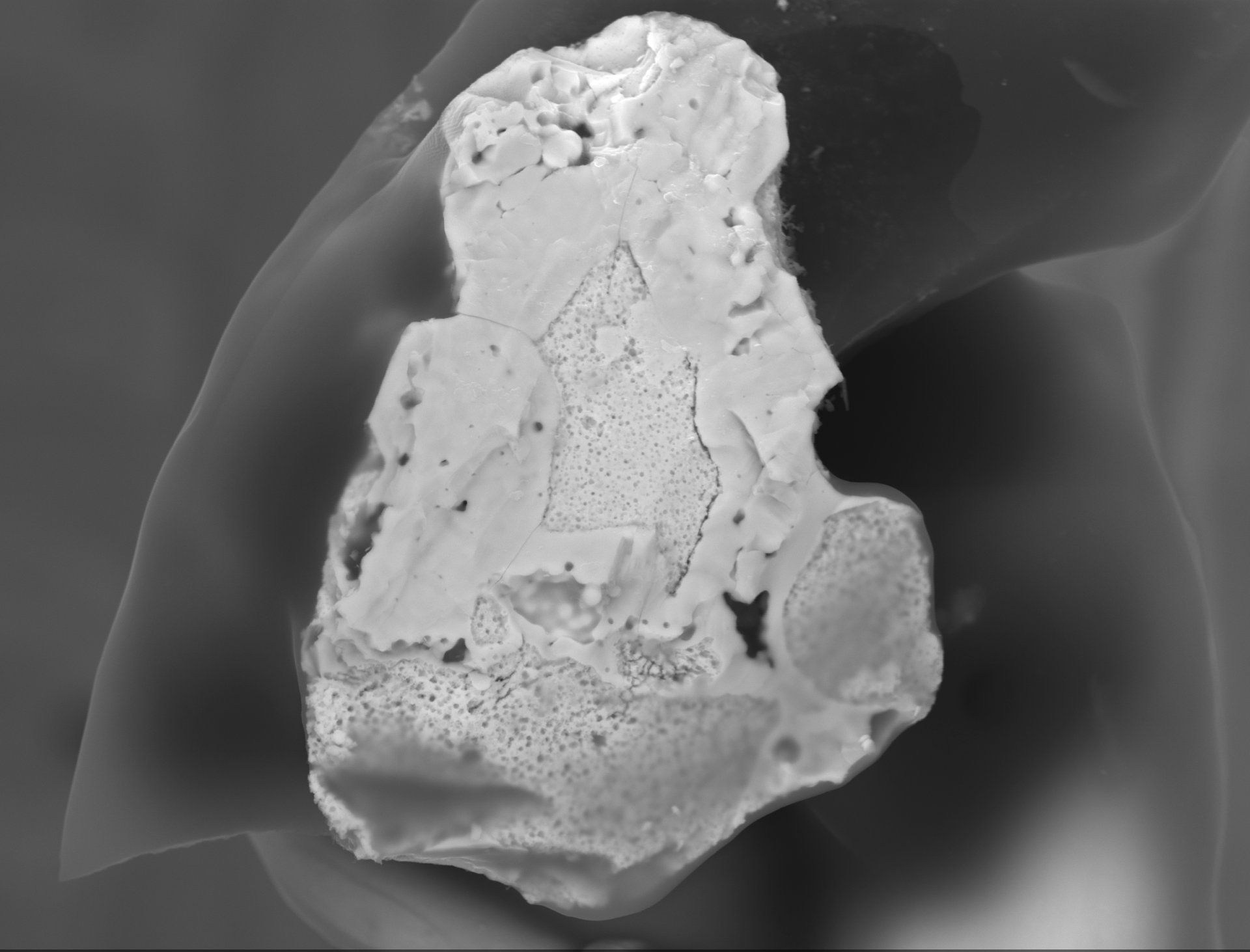
They expected to see particles that had been broken down by years of exposure to the elements. Instead, the crystal structures were still largely intact. That surprising finding suggests the particles are far more chemically stable than previously assumed, holding their radioactive contents locked inside their crystal structures.
Though some of the particles showed more oxidation (of a loss of electrons when they interact with other chemicals) than others, two showed virtually none at all. Importantly, two of the particles pulled from the same soil near Kopachi included both a sample heavily oxidized and one that was largely untouched. The authors suggest that if weathering from the environment were the cause of the oxidation, then both particles sitting side by side should look similar. Instead, they say the oxidation likely happened during the disaster itself, when the reactor fire baked some of the fuel for days.
That timeline is potentially good news for the areas around the power plant. If the particles are indeed holding onto that radioactive material and not oxidizing, that could mean less harmful material is making its way into the soil and, in turn, the surrounding ecosystem. Still, the researchers quickly caveat any broad claims. These were just six samples, after all. Making any wider claim about the soil in the region generally would require more research.
Though it’s still too early to say with any certainty, that lack of leaching dangerous material into the environment could partly help explain why the exclusion zone has become home to an ever-growing neighborhood of furry mammals in recent years. In fact, the area’s lack of humans has made it a thriving ecosystem for foxes, bears, and bison. It’s a modern, albeit a little unorthodox, example of rewilding. Of course, even in this new frontier, the consequences of a nuclear disaster aren’t totally absent. A recent study of roaming dogs living in the Chernobyl Exclusion Zone, many believed to be descendants of dogs left by their owners during the 1986 evacuation, show distinct genetic differences from dogs in an area just 10 miles away.
Related Stories
