
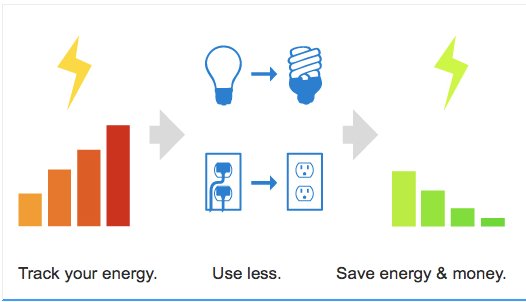
For all their promise to save money and energy use, household energy management systems apparently can’t catch on. Do consumers just not want to know how much power their electronics guzzle on a daily basis?
Cisco Systems is the latest tech giant to abandon its foray into home energy management systems, on the heels of announcements earlier this summer by Microsoft and Google. Cisco’s networking prowess was supposed to help connect the various software systems used to control heating, cooling, ventilation and other environmental factors in a home or building, but the company is moving away from that project, according to Adam Aston over at GreenBiz.
The news emerged in an investor call last week, GreenBiz reports. Cisco’s own words on the subject require some kind of MBA jargon translator, but the gist is that Cisco is moving away from household energy-monitoring products, and will maintain a mere toehold in the industrial product market.Previously, Google announced it was retiring its PowerMeter service in September, and Microsoft announced its Hohm project will transition away from households to commercial buildings. Both programs are web-based tools that let individuals monitor their home’s energy consumption, analyzing usage and recommending changes that could save energy. But consumers have been indifferent — in each case, weak consumer demand drove the tech firms’ decisions.
A reviewer at GreenTech Media who attempted to use these products suggests their own abilities may be to blame here. Maybe it's not that consumers don't care about energy efficiency, it's that recommending an 18-cent-per-hour savings is just not that awesome.
Not everyone is getting out of the home-energy business — there are several other companies selling consumer energy monitoring systems, Panasonic, Intel, Apple and GE among them. But still, the departure of the above-mentioned giants is probably not a good sign. Perhaps it’s hard to convince people there's some value in learning about the nitty-gritty details of their own power use. Or maybe it's a symptom of something worse — that green trends suffer when a listless economy sends old-energy prices into a rollercoaster spiral.
This possibility is reflected in the less-than-impressive growth in the “green jobs” sector, which was supposed to lift America out of the recent recession. The New York Times’ Bay Citizen project surveyed the field and found some rather disappointing numbers in job growth, job training programs and even something as simple as weatherization projects.
Without consumer interest, corporations see little profit motive for going green, apparently even with government incentives. Many federal and state efforts, including several funding injections through the 2009 stimulus program, have “largely failed,” the Times says. Take, for example, California, which was awarded $186 million in federal stimulus money to weatherize drafty homes. Two years later, the state has spent about half that money and created the equivalent of just 538 full-time jobs in the last quarter.
“Companies and public policy officials really overestimated how much consumers care about energy efficiency,” Sheeraz Haji, chief executive of the market research firm Cleantech Group, told the Times.
I'm not sure I buy the argument that consumers don't care about energy efficiency, but it's clear companies see it that way. What can be done about this disconnect? Tell us what you think in the comments.

Five amazing, clean technologies that will set us free, in this month's energy-focused issue. Also: how to build a better bomb detector, the robotic toys that are raising your children, a human catapult, the world's smallest arcade, and much more.


Online Content Director: Suzanne LaBarre | Email
Senior Editor: Paul Adams | Email
Associate Editor: Dan Nosowitz | Email
Assistant Editor: Colin Lecher | Email
Assistant Editor: Rose Pastore | Email
Contributing Writers:
Kelsey D. Atherton | Email
Francie Diep | Email
Shaunacy Ferro | Email
As I look at this articles picture of incandescent light to florescent light my mind wonders....
Once upon a time in history there were those that said they need led in gasoline to gasoline’s could run. They insisted it was a necessity and could not run without it. Then as all our ground water started to be contaminant to an extreme high point, suddenly it dawn on them it was a bad idea. Wa!La! Suddenly, magically gasoline auto engines when were develop to run without led in the gasoline.
It is wonderful how energy efficient these Florissant bulbs are, but where do they go once they die? Does the average consumer or small business dispose of these mercury devices correctly? I seriously doubt and we will see the poison show up in our water soon enough!
BubbaGump, no one really thinks of CFCs as a permanent solution. In just a few years, LED lighting will be exceeding CFCs in energy efficiency and lifetime at the same prices as CFCs (right now CFCs are merely cheaper, not better) and then no one will even want to look at CFC lighting. Remember that LEDs only release toxins if you grind them into dust; otherwise everything is encased in plastic and won't decay. I'm sure eventually we'll be recycling LEDs as well, so don't worry about it.
@Onihikage, I like your opinions seriously. I am very aware of a great quantity of children that are harmed by led in grown water. The politicians and engineers all swore, '..... Don’t worry about it ....' So I am not anxious just yet to stop worrying about the mercury from the CFCs. Remember the politicians in charge of our well being are also in charge of our national debt and budget too. Do some search on how much harm led and mercury in ground water causes on humans?
Sorry guys. We all know what you meant, but it's CFL's, not CFC's. CFC's are the toxins from old aerosol cans. CFL's are Compact Fluorescent Lights. CFC's are Chlorofluorocarbons.
All points made are still valid. Just had to correct.
Ok first of all QQ more? You people expect everything to be perfect always and there to never be any risks every with aynthing....we are not 12 and the world is not perfect QQ QQ QQ QQ go play WOW and cry in trade chat some more.
@ ToomeyND - The fact that they used CFC instead of CFL is your biggest concern with these comments?
led... seriously
lol
(18 cents/hour) * (24 hours/day) * (365 days/year) = $1576.80
Who wouldn't care about something like that. The problem with these feature is that the companies didn't care about them. I and everyone I know had never heard of any of these programs until they were discontinued. If Google, Cisco and MS really cared they would have advertised, at least one is an advertising company with ridiculous amounts of visibility and more importantly they should have made deals with power companies to make sure some people try this, but instead they started a program, told no one and no one used it. What a shock...
Electricity cost is really high and if potential savings was demonstrated to customers I'm sure more people would have adopted these programs.
I agree with the argument that "18 cents/Kwh isn't that awesome". At least relative to the increases of the past few years. At least where I live.
You'll save a lot more money by adjusting your thermostat by a few degrees each season. And hanging one load of clothes outside to dry instead of using the dryer for an hour will save 72 cents at 4Kw*0.18*1hr. Going a step further, dare I say, you could stop eating meat and save money on groceries and cooking costs. Not to mention all the energy that would be saved across the board from that.
As for lack of weatherization and other such improvements, I think people are just generally too poor. Who has a few hundred extra dollars for an energy audit? Not to mention the expenses that will come up as a result of the findings.
How many jobs would be created if the government paid for homeowners to have an audit done?
And as someone said, advertising is an issue too. Personally, the only reason I know about these products and services that are being discontinued is because I read Popular Science.
Well i can only speak for myself. I own CFL bulbs and the only reason i do is i recieved an 8 Dollar off coupon for like 6 of them and there is a program where i live that the electric company sends you free bulbs every few months. They arent as bright and take a while to light up. I was in the shower the other day and one blew out. I was shocked it had only been in there for about 4 months or so. I didnt recycle it nor would i even know how i live in an apt complex and we dont do any type of recycling. and im sure as heck not going to drive 30 miles out of my way to the nearest recycling center to drop it off thats just a waste. I dropped it in the trash can. I like the old bulbs better but as long as i keep getting free ones i will keep using them. Heck they are free!
The problem is the whole concept of "green jobs". The economy is not some machine you can turn a few dials on to get the outcomes you want. It's organic. Order emerges in the market from the bottom-up. Top-down control so rarely works to bring about the results people want and normally ends up doing more harm than good. People need to be given the freedom to experiment and innovate and have the freedom of choice to find the best outcomes for themselves. We have to get away from the idea that just because something sounds good the best way to get there is through the iron fist of government rather than the invisible hand of the market.
It's not the recession either look at the economic studies of green job initiatives in Spain and Denmark during the years prior to the recession. They harmed the economy not helped.
"led in grown water"
wtf? The fake bubba really needs to move on with his life.
Fluorescent lamps contain mercury which is released when bulbs are broken. Mercury in bulbs is typically present as either elemental mercury liquid, vapor or both since the liquid evaporates at ambient temperature. When broken indoors, bulbs may emit sufficient mercury vapor to present health concerns, and the U.S. Environmental Protection Agency recommends evacuating and airing out a room for at least 15 minutes after breaking a fluorescent light bulb.Breakage of multiple bulbs presents a greater concern. A 1987 report described a 23-month-old toddler who suffered anorexia, weight loss, irritability, profuse sweating, and peeling and redness of fingers and toes. This case of acrodynia was traced to exposure of mercury from a carton of 8-foot fluorescent light bulbs that had broken in a potting shed adjacent to the main nursery. The glass was cleaned up and discarded, but the child often used the area for play.
There is one major problem with all these "green" appliances and items in general. They all cost quite a bit more. Yes they all claim to save you money in the long run but because of their jacked up price the "item" will stop working before it pays it even reaches the point of true savings or people will try to replace them before they die meaning no savings anymore. And now that everything is being engineered so they will become unusable much sooner than they were in the '80s. My family had a microwave that was about 10 years old and it still worked but about 9-10 years ago we got a new one as a gift and since then we have gone through about 6 or 7 microwaves. Another is that we have a house that still has it's original asphalt shingles which places them at 40+ years old and now you can't even get asphalt shingles that last 10. Then there is the case of the new more efficient water softeners which claim to save you money by not using as much salt but in order for it to "pay" for itself it had to be used for about 10 years. I'm all for green but I find this article stupid. Recession + costly green items = no one buying and using green items.
@QuantumLeaper, what you are describing is the dirty little secret our USA engineers do to the American Consumer every day. The engineers do not build the best product possible. But build a product they can sell and build into the system a product they can sell in the future. I wish there was a motivation I could force companies or engineers to give us the best effort, but I cannot. The bean counters and business administrators influence the engineer decisions and yes everyone wants a job next year and there after. The only true motivation for a company to give its best effort is compitition of products. But at many times, behind the seens that game is rigged too.
It's spelt "lead" not "led" as in the heavy soft metal that gasoline used to have in it. More specifically, Tetraethyl lead was added from 1940s-1970s.
@Cellsior, I typed lol after my typo mistake above was pointed out. I laugh at myself for my little mistake.
"...More specifically, Tetraethyl lead was added from 1940s-1970s...." Thank you for clarifying.
http://earth911.com/
You can find recycling info there for your bulbs.
Businesses have been using fluorescent lighting for decades...
@B.V., I own florestant light bulbs all through my house. I am all for it. I just worry, once they were out and or broken people and business will dispose of them incorret and 15 years down the road, we will all feel the effects of the mercury poison.
I think Sheeraz Haji doesn't understand the nature of the problem. In fact consumers are VERY interested in energy efficiency...if it's cost-effective. Call it cost-efficiency. Very few of us tailor our purchases or consumption based on some lofty morality. Usually it's simple dollars and cents. Arguably, sometimes it's ego-driven too. In the end though, we want the best we can get for the least amount of money, with the least impact on our current lifestyle. When home energy-savings systems become inexpensive (cost-effective) and easy to use WITHOUT government subsidies (or with modest subsidies) and they save us money with little human input and without us having to make significant lifestyle changes (e.g.; washing dishes at 3 am instead of 7 pm) then they'll sell like crazy.
@laurenra7, hello dear, sweet, um, your full of it.
The point is that real savings are not limited to the 18% on the energy bill, but from the much greater cost savings that Utilities gets from a more levelled energy demand.
Controlling the energy demand of final users means for the Utilities using less power plants during peak time and buying electricity at a lower average cost.
This is a great business for the Utilities but not for the final users.
Final users are not interested to invest money into any energy management systems while there is no return for them.
Clearly the control of energy demand is a top priority for the benefit of ALL.
I fear there will be no clear booming for energy management devices until a clear energy policy will require to share the real savings between the Utilities and the consumers.