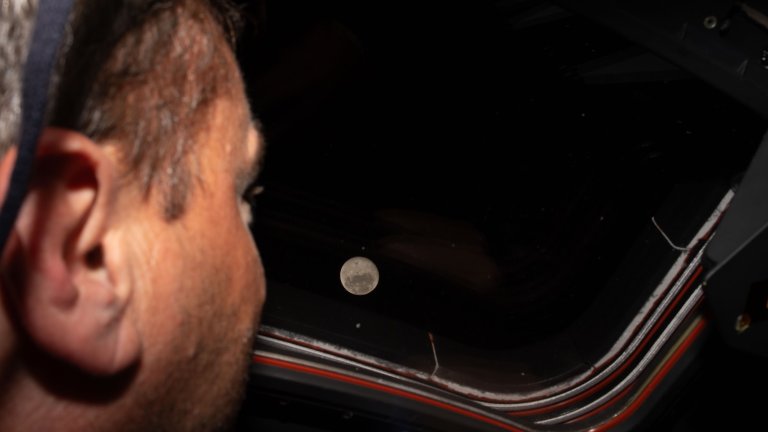
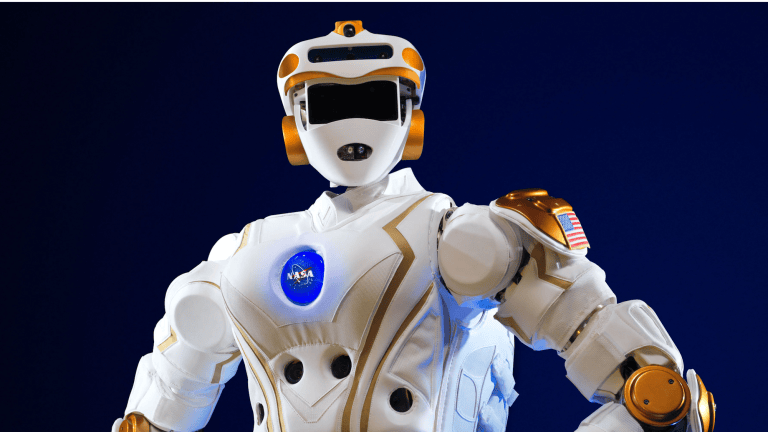
Suborbital Science Dr. Marsh Cuttino (left) practices inserting an endotracheal breathing tube on a METI Human Simulator in microgravity aboard the NASA KC-135 Parabolic aircraft. courtesy NASA

Scientists half-jokingly call it the "ignorosphere" -- a region about 50-100 kilometers above the Earth that's too high for airplanes, but too low for satellites. "It earned its name because even though the area is valuable to researchers, there has been no easy way to get to it," said Alan Stern, planetary scientist at the Southwest Research Institute. But, Stern says, suborbital flights, like those made by Virgin Galactic's SpaceShipTwo, go right to the heart of this region, which includes the layer of the Earth's atmosphere that lies above the stratosphere and below the thermosphere.

Suborbital vehicles like XCOR's Lynx and SpaceShipTwo will give passengers who pay upwards of $100,000 a ride to space when the commercial space companies begin launching their flights as early as next year. But scientists are now looking to these flights to provide a low-cost laboratory where they can solve research questions that can only be answered in space.

On February 18-20, the Next-Generation Suborbital Research Conference, which Stern helped organize, drew more than 250 scientists, engineers, and flight providers to Boulder, CO, where they spent three days sharing ideas and procedures for future suborbital research:

Microgravity

Parabolic flights like the "Vomit Comet" zip through the microgravity zone in a brief 30 seconds, but suborbital flights spend about 3-5 minutes in microgravity conditions. That may not sound like a lot of time, but it's sufficient for studying the effects of gravity changes on humans and materials. Swedish researchers at the conference in Boulder pointed out that some microgravity studies can even fly on the suborbitals as self-contained experiments, without an accompanying operator.

Human Spaceflight

Suborbital flights provide an analog environment for space, where biomedical technicians can monitor human physical responses to spaceflight. Researchers can then use this information to develop exercise protocols and regimens for astronauts that can counteract or minimize the negative impacts of spaceflight on the human body. Virgin Galactic's SpaceShipTwo will have seating for six passengers and two pilots, as well as a large cabin that will enable freedom of movement -- "wiggle" room that's vital to experiments involving both a human subject and a researcher.

Atmospheric Science

Researchers have historically studied the Earth's atmosphere using ground-based instruments, balloons, satellites, and sounding rockets, but none of these can address the region known as "the last frontier." Suborbital flights will provide access to this part of the atmosphere, which serves as the boundary between the near-Earth environment and the ionosphere -- where solar radiation strikes. "We can sample it, we can understand the chemistry, and we can understand how it's affected by global change," said Stern. Suborbital platforms can also carry remote sensing instruments to measure upper atmospheric winds, which are not well understood.

Astronomy

Getting into the "ignorosphere" will also place astronomers in a better position to study objects in the Solar System that are difficult to detect using current search methods. For example, a telescope onboard a suborbital platform could allow astronomers to get a good look at the Aten and Apohele asteroids and comets that are too close to the Sun to be observed by space telescopes.

Other astronomy studies include searching for the vulcanoids -- a population of small asteroids believed to exist inside the orbit of Mercury. So far, searches for the vulcanoids have been severely hampered by their angular proximity to the Sun, which prevents them from being seen from Earth except during the very brief twilight conditions. But a special imager that will fly onboard a suborbital vehicle will allow planetary scientists to conduct a relatively low-cost vulcanoid search over a large area. "In the suborbital region, you'll get minutes of twilight conditions instead of seconds," said Stern.

In addition to the actual science, suborbital flights offer a unique way to educate the public and engage them in scientific experiments. With the new focus on social media, scientists and engineers aboard suborbital flights can involve the public in real-time discussions about how they're doing their science and what they're finding. Emily Lakdawalla with The Planetary Society, who gave a remote audio presentation at the Boulder meeting, says that if you engage people who are already interested in science -- through tools like blogs, Facebook, and Twitter -- they will serve as unpaid public information officers and spread the word throughout their own communities.

Stern says the success of commercial suborbital vehicles hinges on a few unknown factors. First, there is the question of how quickly people adopt the technology, and once the technology catches on -- how much will the cost drop? "It's amazing to think about whether the price might come down to $50,000 a flight," said Stern. "People pay that much to go to Mount Everest -- how about going into space instead?" Then there is the issue of flight safety. "If there's one accident every 100 flights, it will be considered dangerous," said Stern. "But if it's one in 10,000 flights, people won't think twice -- it will be like stepping on an airliner."

Virgin Galactic claims to already have about 300 tourist reservations and more than $40 million in deposits for flights on its SpaceShipTwo. And Stern believes the science market will be even stronger than private passenger sales. "Science agencies like NASA and NSF will probably buy dozens and hundreds of tickets over time," he said. "Then there are the foreign sales -- we're going to sell these seats and experiment rides to all 195 nations on Earth. There are more possibilities than you can count."

3 Comments

This ignorosphere is a gas pressure boundary that would act an electrically conductive "Townsend" effect sphere and could build up tremendous electrostatic charges. It would be like the world sized Lyden jar that built up Coulomb friction with the lower atmosphere and the ionization of the solar wind. Think of the discharge of a well placed nitrogen laser beam. It would be like directing Zeus's power.

The significant research that has never been really conducted in the so called ignorosphere. This boundary layer is analogous to the beach, as in research of an Ocean. If you'd never seen the Ocean, little valuable knowledge would be gained by rushing 50 miles off-shore in a rowboat to conduct your studies. Stopping at the boundary layer and giving it a good look could reveal the trigger mechanisms of earth weather, and large structures that could hold researchers in micro-gravity would weigh very little, reducing the engineering feat to place such structures in place. The ignorosphere is where we lost the last space shuttle upon reentry. The political funding and race to get to the moon historically caused us to push right through the most important regions of near earth space. The Air Force reached altitudes above 100 thousand feet by balloon with Project Man-High and they had plans for extended period research platforms, funding scrapped and the science potentials pushed aside for the more politically headline grabbing deep space and geo- synchronous orbital positions. Perhaps the ozone layers and global warming mechanisms will be discovered in the region, if we'd only slow down long enough to look.


June 2013: American Energy Independence

Five amazing, clean technologies that will set us free, in this month's energy-focused issue. Also: how to build a better bomb detector, the robotic toys that are raising your children, a human catapult, the world's smallest arcade, and much more.


Online Content Director: Suzanne LaBarre | Email
Senior Editor: Paul Adams | Email
Associate Editor: Dan Nosowitz | Email
Assistant Editor: Colin Lecher | Email
Assistant Editor: Rose Pastore | Email

Contributing Writers:

Kelsey D. Atherton | Email
Francie Diep | Email
Shaunacy Ferro | Email

circ-top-header.gif
circ-cover.gif