For the first time in more than two decades, the United States can put a "Made in the USA" stamp on non-weapons grade plutonium, Discovery News reports.
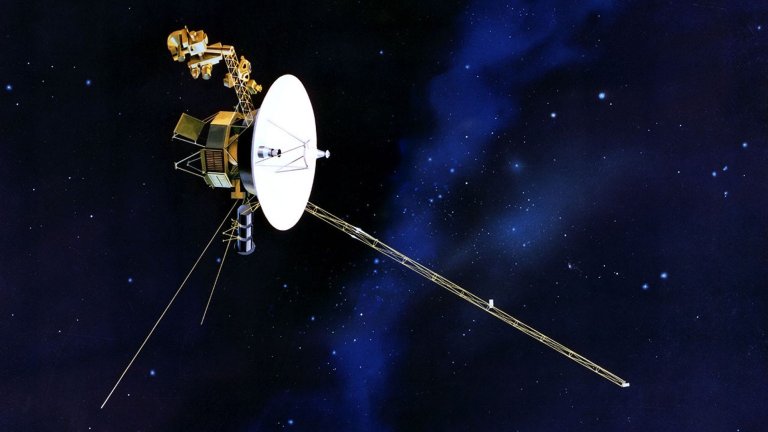
Plutonium-238 is an important fuel source for the radioisotope power systems that are used in spacecraft like the Mars Curiosity Rover and the New Horizon spacecraft that's on its way to Pluto. As plutonium-238 decays, it gives off enough heat to generate electricity and keep all the expensive parts of a spacecraft warm in the cold, dark nether regions of deep space.
Until 1988, the U.S. produced its plutonium-238 (not to be confused with plutonium-239, the isotope in nuclear weapons) as part of its Cold War nuclear shenanigans. After the Savannah River Site, a major contributor of plutonium-238, shut down because of environmental issues, we turned to Russia for our plutonium needs, but that supply has run out as well.
Since 2009, we've been wringing our hands over how to get enough of the fuel to power our future space exploration. Congress threw NASA $10 million of its requested $30 million budget to start production, but denied the Department of Energy's funding requests three years in a row.
In April, officials at the DOE finally announced production was underway, but getting supplies up to snuff could take up to eight years.
That process seems to be off to a good start, luckily. Jim Green, director of NASA's Planetary Science Division, announced at a Mars exploration planning meeting that the DOE has successfully generated plutonium at Oak Ridge National Laboratory in Tennessee, according to Discovery News.
Green said he expects a little more than three pounds of plutonium to be generated per year. New supplies of plutonium could be mixed with the small existing supply of U.S. plutonium to bring the depleted plutonium up to the necessary energy density.
140 years of Popular Science at your fingertips.
Each issue has been completely reimagined for your iPad. See our amazing new vision for magazines that goes far beyond the printed page
Stay up to date on the latest news of the future of science and technology from your iPhone or Android phone with full articles, images and offline viewing
Featuring every article from the magazine and website, plus links from around the Web. Also see our PopSci DIY feed
For our annual How It Works issue, we break down everything from the massive Falcon Heavy rocket to a tiny DNA sequencer that connects to a USB port. We also take a look at an ambitious plan for faster-than-light travel and dive into the billion-dollar science of dog food.
Plus the latest Legos, Cadillac's plug-in hybrid, a tractor built for the apocalypse, and more.

Online Content Director: Suzanne LaBarre | Email
Senior Editor: Paul Adams | Email
Associate Editor: Dan Nosowitz | Email
Assistant Editor: Colin Lecher | Email
Assistant Editor:Rose Pastore | Email
Contributing Writers:
Rebecca Boyle | Email
Kelsey D. Atherton | Email
Francie Diep | Email
Shaunacy Ferro | Email
So... it's yellow-cake uranium and red velvet cupcake plutonium?
"...United States supplyThe United States stopped producing plutonium-238 in 1988; since 1993, all of the plutonium-238 used in American spacecraft has been purchased from Russia. In total, 16.5 kilograms have been purchased but Russia is no longer producing plutonium-238 and their own supply is reportedly running low.
In 2009, the U.S. Department of Energy (DOE) requested funding to restart American domestic production. It is estimated that to restart production will cost between $75 million and $90 million over five years. Since the DOE would be responsible for producing the plutonium-238 for NASA, the two agencies want to split the cost of restarting production. Congress has given NASA some of the money requested, $10 million in 2011 and the same in 2012.[7] The U.S. Congress have denied the DOE's funding request for three years in a row.
Between 3.3 pounds (1.5 kg) and 4.4 pounds (2.0 kg) would be produced per year to support NASA's robotic science missions, although if future human missions require plutonium-238 then even more would need to be produced. The Advanced Test Reactor at the Idaho National Laboratory and the High Flux Isotope Reactor at the Oak Ridge National Laboratory are both seen as potential producers. About 15 kg per GWyr could be created in Liquid Fluoride Thorium Reactors (LFTRs).
Jim Adams, deputy director of planetary science at NASA, said that there is enough of the fuel for NASA missions to around 2022. He says if NASA does not get more after that, "then we won't go beyond Mars anymore. We won't be exploring the solar system beyond Mars and the asteroid belt." After production has been restarted it is predicted that it would take at least five years to get enough for a single spacecraft mission..."
~ en.wikipedia.org/wiki/Plutonium-238
so if NASA is strapped for cash why don't they start some kind of a business. we don't have to worry about any kind of a monopoly because NASA would have firm competition with SpaceX in the big business of space. i'm all for scientific improvements and learning new stuff but there needs to be a balance between simply learning where the best place in the universe to binge and trying to start prospective mineral mining operations on mars and other planets. and of course asteroid mining, becuase why stop at planets.
basically if NASA is having so much trouble generating income from the government then they should turn to other methods. how about an open source space program headed by NASA, or a crowd funded trip to mars. or maybe they should start a university there in Texas or in Florida.
to mars or bust!
Say NASA,
There is a bunch of helium3 on the moon. Why don't your NASA thinkers come up with an energy\money making scheme and bring home some energy and make money for NASA in the process?
I hope they make some extra available for sale to our budding new space companies as well.
@ghost NASA used to be a lot more self sufficient until we stopped charging other countries to repair their satellites.
You can think Bill Clinton for that one.
this sounds like an idea for kickstarter!
@Manannan - You mean charging countries up to $50 million to repair their satellites? -- Even though it cost us ~$500 million to launch the shuttle to be able to do that?
Not a great business model.
I need some of this to power my iPhone 5 so I don't need to charge it twice a day. Brain tumor? What?
@AnyIcon - That's great, but right now we need to focus on achieving and maintaining nuclear fusion, period, before we start monetizing its "fuel". Going to the moon to mine helium3 right now would be like Victorians going to Antarctica to mine lithium for Li-Ion batteries.
in order to thank everyone, characteristic, novel style, varieties, low price and good quality, and the low sale price. Thank everyone
http://al.ly/3JF
http://al.ly/3JF
http://al.ly/3JF
http://al.ly/3JF
http://al.ly/3JF
│\_╭╭╭╭╭_/│
│ │\|/
│ ● ● │—☆—
│○ ╰┬┬┬╯ ○│/|\
│ ╰—╯ /
╰—┬○————┬○╯
╭│ │╮
╰┴—————┴╯ sdgweg
Less jelly'o and more study on anti-matter fuel or Energy Cells!!!!!