Anything unfortunate enough to venture too close to a black hole inevitably falls prey to the gargantuan object’s inescapable gravitational pull. But that doesn’t mean a black hole is constantly devouring its next cosmic meal. In many cases, there comes a time when there simply isn’t anything left in its vicinity to consume. Although these dormant black holes don’t go anywhere, astronomers have a tough time detecting and observing them.
That hasn’t stopped researchers from successfully spotting the most distant example ever seen. At over 10 billion light-years from Earth, the dormant black hole inside the galaxy MRG-M0138 is 15 times farther away than the prior record holder. As astronomers explained in a study published on June 4 in the journal Science, the far-away subject is now offering experts an unprecedented look at one of the earliest regions of the universe.
To pull off the remarkable achievement, researchers harnessed both the James Webb Space Telescope as well as a technique called stellar dynamics, which utilizes the movements of stars around an invisible black hole to assess its mass. This approach has previously helped identify similar cosmic objects inside galaxies, including our own Milky Way, but never at such a great distance.
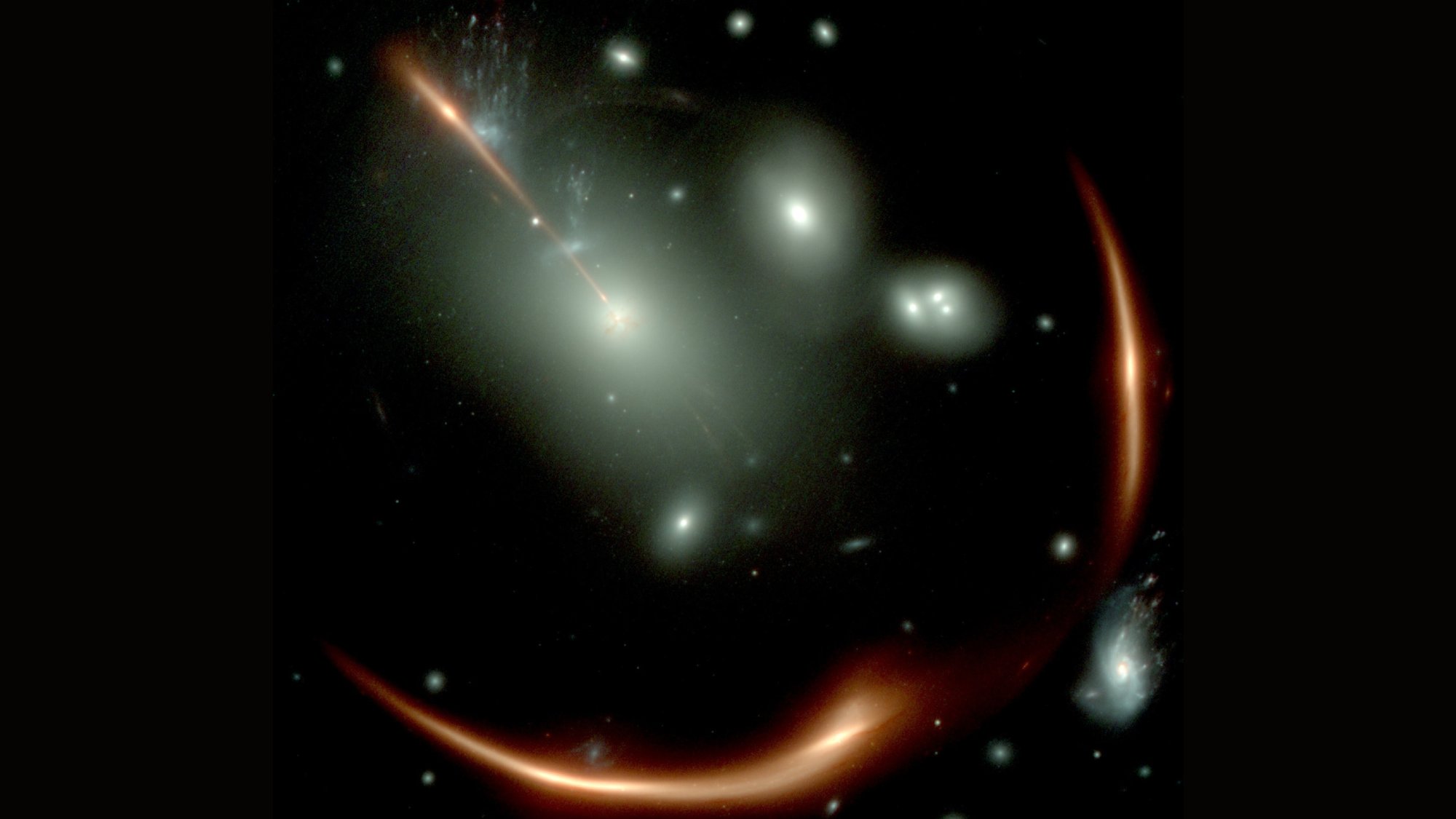
Astronomers wouldn’t be able to locate any stars moving around such a far away black hole in most scenarios. However, a galaxy located directly between Earth and MRG-M0138 enabled the otherwise impossible task through a dynamic known as gravitational lensing. Incoming light from MRG-M0138’s stars is refracted around the intermediary galaxy, which then refocuses and enlarges its appearance by 30 times its normal size. This then allowed astronomers to track and calculate the distant stellar dynamics around the dormant black hole.
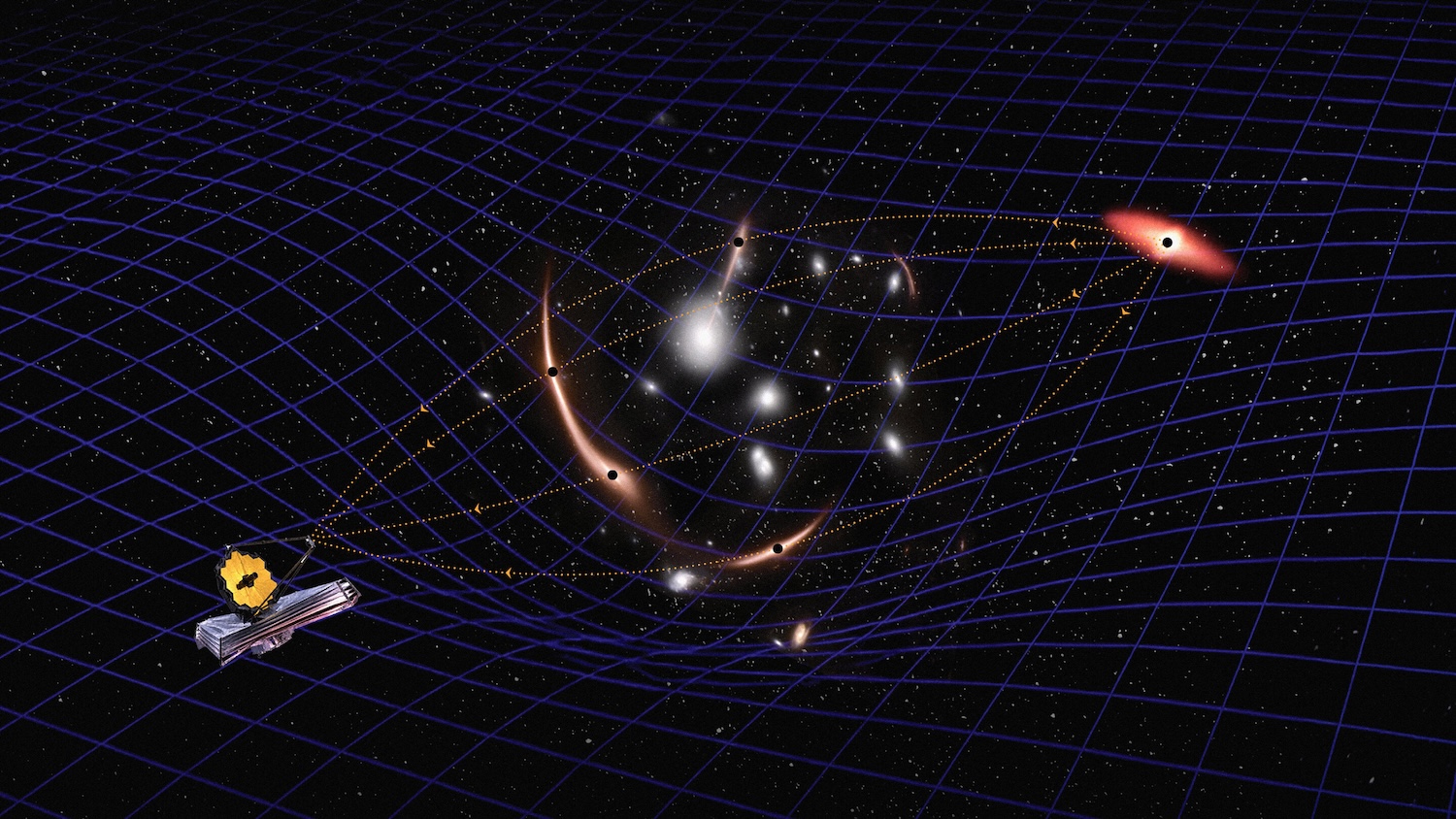
“By combining JWST data with gravitational lensing, we could peer inside the black hole’s sphere of influence, where its gravity boosts the speeds of stars,” study co-author and Carnegie Science astronomer Andrew Newman said in a statement. “This is one of the best techniques we have to weigh a black hole, so we were excited to extend it to a much earlier period in cosmic history.”
After crunching the numbers, Newman and colleagues determined the dormant black hole has a mass about six billion times greater than the sun, and is observable from an era when the universe was barely three billion years old. That’s around a quarter of its age today, which means astronomers are now glimpsing some of the earliest moments in cosmic history.
Experts have already determined that it’s not just MRG-M0138’s black hole that is dormant—the entire galaxy itself is basically silent, with no recently formed stars. The study authors also theorize the galaxy previously included a quasar, which emits huge amounts of radiation and are some of the brightest objects in the universe.
Moving forward, astronomers can now apply their methodology to other areas of the cosmos, as well as gain a better understanding of galactic evolution throughout the eons.
“By demonstrating the feasibility of such a technique for galaxies in the early universe, we can now undertake a more complete census of how black holes develop over time and infer their role in shaping galaxy evolution,” added study co-author and University College London astronomer Richard Ellis.