Derek Amato stood above the shallow end of the swimming pool and called for his buddy in the Jacuzzi to toss him the football. Then he launched himself through the air, head first, arms outstretched. He figured he could roll onto one shoulder as he snagged the ball, then slide across the water. It was a grave miscalculation. The tips of Amato’s fingers brushed the pigskin—then his head slammed into the pool’s concrete floor with such bone-jarring force that it felt like an explosion. He pushed to the surface, clapping his hands to his head, convinced that the water streaming down his cheeks was blood gushing from his ears.
At the edge of the pool, Amato collapsed into the arms of his friends, Bill Peterson and Rick Sturm. It was 2006, and the 39-year-old sales trainer was visiting his hometown of Sioux Falls, South Dakota, from Colorado, where he lived. As his two high-school buddies drove Amato to his mother’s home, he drifted in and out of consciousness, insisting that he was a professional baseball player late for spring training in Phoenix. Amato’s mother rushed him to the emergency room, where doctors diagnosed Amato with a severe concussion. They sent him home with instructions to be woken every few hours.
It would be weeks before the full impact of Amato’s head trauma became apparent: 35 percent hearing loss in one ear, headaches, memory loss. But the most dramatic consequence appeared just four days after his accident. Amato awoke hazy after near-continuous sleep and headed over to Sturm’s house. As the two pals sat chatting in Sturm’s makeshift music studio, Amato spotted a cheap electric keyboard.
Without thinking, he rose from his chair and sat in front of it. He had never played the piano—never had the slightest inclination to. Now his fingers seemed to find the keys by instinct and, to his astonishment, ripple across them. His right hand started low, climbing in lyrical chains of triads, skipping across melodic intervals and arpeggios, landing on the high notes, then starting low again and building back up. His left hand followed close behind, laying down bass, picking out harmony. Amato sped up, slowed down, let pensive tones hang in the air, then resolved them into rich chords as if he had been playing for years. When Amato finally looked up, Sturm’s eyes were filled with tears.
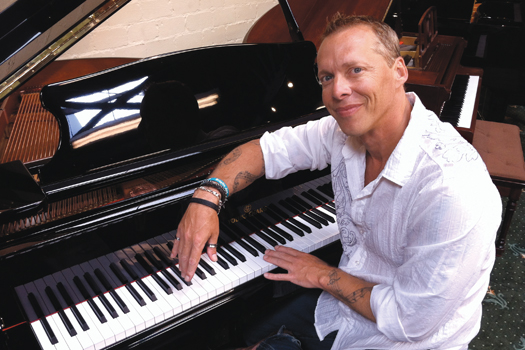
Amato played for six hours, leaving Sturm’s house early the next morning with an unshakable feeling of wonder. He searched the Internet for an explanation, typing in words like gifted and head trauma. The results astonished him.
Amato searched the internet for an explanation, typing in words like gifted and head trauma. the results astonished him.
He read about Tony Cicoria, an orthopedic surgeon in upstate New York who was struck by lightning while talking to his mother from a telephone booth. Cicoria then became obsessed with classical piano and taught himself how to play and compose music. After being hit in the head with a baseball at age 10, Orlando Serrell could name the day of the week for any given date. A bad fall at age three left Alonzo Clemons with permanent cognitive impairment, Amato learned, and a talent for sculpting intricate replicas of animals.
Finally Amato found the name Darold Treffert, a world-recognized expert on savant syndrome—a condition in which individuals who are typically mentally impaired demonstrate remarkable skills. Amato fired off an e-mail; soon he had answers. Treffert, now retired from the University of Wisconsin School of Medicine, diagnosed Amato with “acquired savant syndrome.” In the 30 or so known cases, ordinary people who suffer brain trauma suddenly develop almost-superhuman new abilities: artistic brilliance, mathematical mastery, photographic memory. One acquired savant, a high-school dropout brutally beaten by muggers, is the only known person in the world able to draw complex geometric patterns called fractals; he also claims to have discovered a mistake in pi. A stroke transformed another from a mild-mannered chiropractor into a celebrated visual artist whose work has appeared in publications like The New Yorker and in gallery shows, and sells for thousands of dollars.
The neurological causes of acquired savant syndrome are poorly understood. But the Internet has made it easier for people like Amato to connect with researchers who study savants, and improved brain-imaging techniques have enabled those scientists to begin to probe the unique neural mechanisms at work. Some have even begun to design experiments that investigate an intriguing possibility: genius lies in all of us, just waiting to be unleashed.
* * *
Bruce Miller directs the UCSF Memory and Aging Center in San Francisco, where as a behavioral neurologist he treats elderly people stricken with Alzheimer’s disease and late-life psychosis. One day in the mid-1990s, the son of a patient pointed out his father’s new obsession with painting. As his father’s symptoms worsened, the man said, his paintings improved. Soon, Miller began to identify other patients who displayed unexpected new talents as their neurological degeneration continued. As dementia laid waste to brain regions associated with language, higher-order processing, and social norms, their artistic abilities exploded.
Though these symptoms defied conventional wisdom on brain disease in the elderly—artists afflicted with Alzheimer’s typically lose artistic ability—Miller realized they were consistent with another population described in the literature: savants. That wasn’t the only similarity. Savants often display an obsessive compulsion to perform their special skill, and they exhibit deficits in social and language behaviors, defects present in dementia patients. Miller wondered if there might be neurological similarities too. Although the exact mechanisms at work in the brains of savants have never been identified and can vary from case to case, several studies dating back to at least the 1970s have found left-hemispheric damage in autistic savants with prodigious artistic, mathematical, and memory skills.

Miller decided to find out precisely where in the left hemisphere of regular savants—whose skills usually become apparent at a very young age—these defects existed. He read the brain scan of a five-year-old autistic savant able to reproduce intricate scenes from memory on an Etch-a-Sketch. Single-photon-emission computed tomography (SPECT) showed abnormal inactivity in the anterior temporal lobes of the left hemisphere—exactly the results he found in his dementia patients.
In most cases, scientists attribute enhanced brain activity to neuroplasticity, the organ’s ability to devote more cortical real estate to developing skills as they improve with practice. But Miller offered a wholly different hypothesis for the mechanisms at work in congenital and acquired savants. Savant skills, Miller argues, emerge because the areas ravaged by disease—those associated with logic, verbal communication, and comprehension—have actually been inhibiting latent artistic abilities present in those people all along. As the left brain goes dark, the circuits keeping the right brain in check disappear. The skills do not emerge as a result of newly acquired brain power; they emerge because for the first time, the areas of the right brain associated with creativity can operate unchecked.

The theory fits with the work of other neurologists, who are increasingly finding cases in which brain damage has spontaneously, and seemingly counterintuitively, led to positive changes—eliminating stuttering, enhancing memory in monkeys and rats, even restoring lost eyesight in animals. In a healthy brain, the ability of different neural circuits to both excite and inhibit one another plays a critical role in efficient function. But in the brains of dementia patients and some autistic savants, the lack of inhibition in areas associated with creativity led to keen artistic expression and an almost compulsive urge to create.
* * *
In the weeks after his accident, Amato’s mind raced. And his fingers wanted to move. He found himself tapping out patterns, waking up from naps with his fingers drumming against his legs. He bought a keyboard. Without one, he felt anxious, overstimulated; once he was able to sit down and play, relief washed over him, followed by a deep sense of calm. He’d shut himself in, sometimes for as long as two to three days, just him and the piano, exploring his new talent, trying to understand it, letting the music pour out of him.
Amato experienced other symptoms, many of them not good. Black and white squares appeared in his vision, as if a transparent filter had synthesized before his eyes, and moved in a circular pattern. He was also plagued with headaches. The first one hit three weeks after his accident, but soon Amato was having as many as five a day. They made his head pound, and light and noise were excruciating. One day, he collapsed in his brother’s bathroom. On another, he almost passed out in Wal-Mart.
Still, Amato’s feelings were unambiguous. He felt certain he had been given a gift, and it wasn’t just the personal gratification of music: Amato’s new condition, he quickly realized, had vast commercial potential.
Cultural fascination with savants appears to date as far back as the condition itself. In the 19th century, “Blind Tom” Bethune became an international celebrity. A former slave who could reproduce any song on the piano, he played the White House at age 11, toured the world at 16, and over the course of his life earned well over $750,000—a fortune at the time. Dustin Hoffman introduced the savant to millions of theatergoers with his character in the 1988 movie Rain Man. Since then, prodigious savants have become staples of shows like 60 Minutes and Oprah. But acquired savants, especially, are perfect fodder for a society obsessed with self-improvement, reality television, and pop psychology.
Acquired savants are perfect fodder for a society obsessed with self-improvement, reality television, and pop psychology.
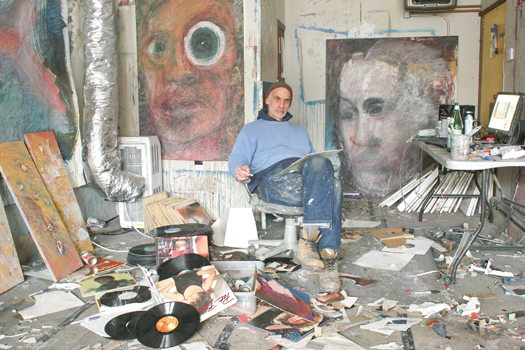
Jon Sarkin, the chiropractor turned artist, became the subject of profiles in GQ and Vanity Fair, a biography, and TV documentaries. Tom Cruise purchased the rights to his life story. “To be honest, I don’t even mention it to my wife anymore when the media calls,” Sarkin says. “It’s part of life.” Jason Padgett, the savant who can draw fractals, inked a book deal after he was featured on Nightline and in magazine and newspaper articles. Reached by phone, he complained that his agent no longer allowed him to give interviews. “It’s very frustrating,” he said. “I want to speak to you, but they won’t let me.”
To Amato, acquired savantism looked like the opportunity he’d been waiting for his entire life. Amato’s mother had always told him he was extraordinary, that he was put on the planet to do great things. Yet a series of uninspiring jobs had followed high school—selling cars, delivering mail, doing public relations. He’d reached for the brass ring, to be sure, but it had always eluded him. He’d auditioned for the television show American Gladiators and failed the pull-up test. He’d opened a sports-management company, handling marketing and endorsements for mixed-martial-arts fighters; it went bust in 2001. Now he had a new path.
Amato began planning a marketing campaign. He wanted to be more than an artist, musician, and performer. He wanted to tell his story and inspire people. Amato also had another ambition, a goal lingering from his life before virtuosity, back when he had only his competitive drive. He wanted, more than anything, to be on Survivor. So when that first interviewer called from a local radio station, Amato was ready to talk.
* * *
Few people have followed the emergence of acquired savants with more interest than Allan Snyder, a neuroscientist at the University of Sydney in Australia. Since 1999, Snyder has focused his research on studying how their brains function. He’s also pressed further into speculative territory than most neuroscientists feel comfortable: He is attempting to produce the same outstanding abilities in people with undamaged brains.
Last spring, Snyder published what many consider to be his most substantive work. He and his colleagues gave 28 volunteers a geometric puzzle that has stumped laboratory subjects for more than 50 years. The challenge: Connect nine dots, arrayed in three rows of three, using four straight lines without retracing a line or lifting the pen. None of the subjects could solve the problem. Then Snyder and his colleagues used a technique called transcranial direct current stimulation (tDCS) to temporarily immobilize the same area of the brain destroyed by dementia in Miller’s acquired savants. The noninvasive technique, which is commonly used to evaluate brain damage in stroke patients, delivers a weak electrical current to the scalp through electrodes, depolarizing or hyperpolarizing neural circuits until they have slowed to a crawl. After tDCS, more than 40 percent of the participants in Snyder’s experiment solved the problem. (None of those in a control group given placebo tDCS identified the solution.)
The experiment, Snyder argues, supports the hypothesis that the abilities observed in acquired savants emerge once brain areas normally held in check have become unfettered. The crucial role of the left temporal lobe, he believes, is to filter what would otherwise be a dizzying flood of sensory stimuli, sorting them into previously learned concepts. These concepts, or what Snyder calls mind-sets, allow humans to see a tree instead of all its individual leaves and to recognize words instead of just the letters. “How could we possibly deal with the world if we had to analyze, to completely fathom, every new snapshot?” he says.
Savants can access raw sensory information, normally off-limits to the conscious mind, because the brain’s perceptual region isn’t functioning. To solve the nine-dot puzzle, one must extend the lines beyond the square formed by the dots, which requires casting aside preconceived notions of the parameters. “Our whole brain is geared to making predictions so we can function rapidly in this world,” Snyder says. “If something naturally helps you get around the filters of these mind-sets, that is pretty powerful.”
Treffert, for one, finds the results of the experiment compelling. “I was a little dubious of Snyder’s earlier work, which often involved asking his subjects to draw pictures,” he says. “It just seemed pretty subjective: How do you evaluate the change in them? But his recent study is useful.”
Snyder thinks Amato’s musical prodigy adds to mounting evidence that untapped human potential lies in everyone, accessible with the right tools. When the non-musician hears music, he perceives the big picture, melodies. Amato, Snyder says, has a “literal” experience of music—he hears individual notes. Miller’s dementia patients have technical artistic skill because they are drawing what they see: details.
Berit Brogaard believes the left-brain, right-brain idea is an oversimplification. Brogaard is a neuroscientist and philosophy professor at the Center for Neurodynamics at the University of Missouri–St. Louis. She has another theory: When brain cells die, they release a barrage of neurotransmitters, and this deluge of potent chemicals may actually rewire parts of the brain, opening up new neural pathways into areas previously unavailable.
“Our hypothesis is that we have abilities that we cannot access,” Brogaard says. “Because they are not conscious to us, we cannot manipulate them. Some reorganization takes place that makes it possible to consciously access information that was there, lying dormant.”
In August, Brogaard published a paper exploring the implications of a battery of tests her lab ran on Jason Padgett. It revealed damage in the visual-cortex areas involved in detecting motion and boundaries. Areas of the parietal cortex associated with novel visual images, mathematics, and action planning were abnormally active. In Padgett’s case, she says, the areas that have become supercharged are next to those that sustained the damage—placing them in the path of the neurotransmitters likely unleashed by the death of so many brain cells.
In Amato’s case, she says, he learned bar chords on a guitar in high school and even played in a garage band. “Obviously he had some interest in music before, and his brain probably recoded some music unconsciously,” she says. “He stored memories of music in his brain, but he didn’t access them.” Somehow the accident provoked a reorganization of neurons that brought them into his conscious mind, Brogaard speculates. It’s a theory she hopes to explore with him in the lab.
* * *
On a beautiful Los Angeles day last October, I accompanied Amato and his agent, Melody Pinkerton, up to the penthouse roof deck of Santa Monica’s Shangri-La Hotel. Far below us, a pier jutted into the ocean and the Pacific Coast Highway hugged the coastline. Pinkerton settled next to Amato on a couch, nodding warmly and blinking at him with a doe-eyed smile as three men with handheld cameras circled. They were gathering footage for the pilot of a reality-TV series about women trying to make it in Hollywood. Pinkerton is a former contestant on the VH1 reality show Frank the Entertainer and has posed for Playboy; if the series is green-lit, Amato will make regular appearances as one of her clients.
“My whole life has changed,” Amato told her. “I’ve slowed down, even though I’m racing and producing at a pace that not many people understand, you know? If Beethoven scored 500 songs a year back in the day and was considered a pretty brilliant mind, and the doctors tell me I’m scoring 2,500 pieces a year, you can see that I’m a little busy.”
Amato seemed comfortable with the cameras, despite the pressure. A spot on a reality show would represent a step forward in his career, but not a huge leap. Over the past six years, Amato has been featured in newspapers and television shows around the world. He was one of eight savants featured on a Discovery Channel special in 2010 called Ingenious Minds, and he was on PBS’s NOVA this fall. He recently appeared on a talk show hosted by his idol, Jeff Probst, also the host of Survivor. In June, Amato appeared on the Today show.
Many savants exhibit exquisite computational or artistic capacities, but almost always at the expense of other things the brain does.
Musical renown (and a payday) has yet to follow. He released his first album in 2007. In 2008, he played in front of several thousand people in New Orleans with the famed jazz-fusion guitarist Stanley Jordan. He was asked to write the score for an independent Japanese documentary. But while Amato’s musical prowess never fails to elicit amazement in the media, reviews of his music are mixed. “Some of the reaction is good, some of it’s fair, some of it’s not so good,” he says. “I wouldn’t say any of it’s great. What I think’s going to be great is working with other musicians now.”
Still, as we strolled down Santa Monica Boulevard to a sushi restaurant after the filming, he hardly could have seemed happier. At the table, Amato smiled broadly, gestured manically with meaty forearms tattooed with musical notes, and poked the air with his chopsticks for emphasis.
“There’s book stuff, there are appearances, performances, charity organizations,” he said. “There are TV people, film people, commercial people, background stuff. Shoot, I know I missed about another half dozen. It’s like I’m on a plane doing about 972 miles an hour! I’m enjoying every second of the ride!”
Amato hasn’t exactly been coy about his desire for fame, mailing packets of material to reporters, sending Facebook requests to fellow acquired savants, and continuously updating his fan page—behavior that has raised some doubts among experts.
Rex Jung, a neuroscientist at the University of New Mexico, grew suspicious of Amato after reading about his history as an ultimate-fight promoter. “I couldn’t be more skeptical,” he says. Jung studies creativity and traumatic brain injuries, and he has spent time with Alonzo Clemons, the savant who sculpts animals. He believes acquired savantism is a legitimate condition. But he notes Amato does not display other symptoms one would expect.
Many savants, Jung says, exhibit “exquisite” computational or artistic capacities, but “almost always at the expense of other things the brain does.” Clemons, for example, has severe developmental disabilities. “I am highly skeptical of savants that are able to tie their shoes and update their Facebook pages and do strong marketing campaigns to highlight their savant abilities all at the same time.”

There is no way to definitively prove or disprove Amato’s claims, but a number of credible scientists are willing to vouch for his authenticity. Andrew Reeves, a neurologist at the Mayo Clinic, conducted MRI scans of Amato’s brain for Ingenious Minds. The tests revealed several white spots, which Reeves acknowledges could have been caused by previous concussions.
“We knew going in that it was unlikely to show any sort of signature change,” Reeves says. But Amato’s description of what he experiences “fits too well with how the brain is wired, in terms of what parts are adjacent to what parts, for him to have concocted it, in my opinion.” Reeves believes the black and white squares in Amato’s field of vision somehow connect to his motor system, indicating an atypical link between the visual and auditory regions of his brain.
As I drove through the streets of L.A. with Amato last fall, it seemed to me that there was something undeniably American about his efforts to seize on his accident—which struck when he was close to 40, staring into the abyss of middle-age mediocrity—and transform himself from an anonymous sales trainer into a commercial product, an inspirational symbol of human possibility for the legions of potential fans dreaming of grander things. Treffert, Snyder, and Brogaard all spoke enthusiastically about unraveling the phenomenon of acquired savantism, in order to one day enable everyone to explore their hidden talents. The Derek Amatos of the world provide a glimpse of that goal.
After parking on Sunset Boulevard, a few blocks from the storied rock-and-roll shrines of the Roxy and the Viper Room, Amato and I headed into the Standard Hotel and followed a bedraggled hipster with an Australian accent through the lobby to a dimly lit bar. In the center of the room sat a grand piano, its ivory keys gleaming. The chairs had been flipped upside down on the tables, and dishes clinked in a nearby kitchen. The club, closed to customers, was all ours. As Amato sat down, the tension seemed to drain from his shoulders.
He closed his eyes, placed his foot on one of the pedals, and began to play. The music that gushed forth was loungy, full of flowery trills, swelling and sweeping up and down the keys in waves of cascading notes—a sticky, emotional kind of music more appropriate for the romantic climax of a movie like From Here to Eternity than a gloomy nightclub down the street from the heart of the Sunset Strip. It seemed strangely out of character for a man whose sartorial choices bring to mind ’80s hair-band icon Bret Michaels. Amato didn’t strike me as prodigious, the kind of rare savant, like Blind Tom Bethune, whose skills would be impressive even in someone with years of training.
But it didn’t seem to matter. There was expression, melody, and skill. And if they could emerge spontaneously in Amato, who’s to say what spectacular abilities might lie dormant in the rest of us?
This article originally appeared in the March 2013 issue of the magazine.