
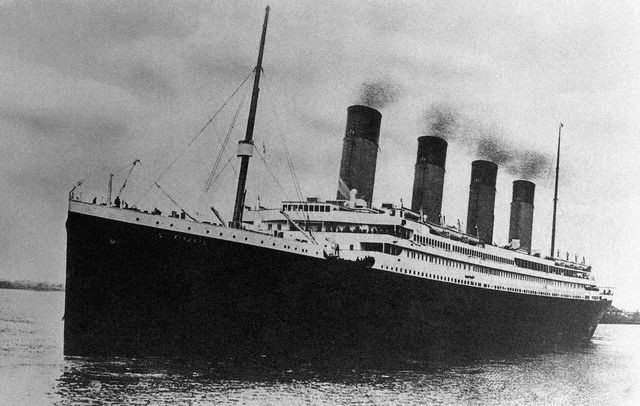
The Titanic may have struck an iceberg and sank helplessly because of a strange atmosphere-caused optical illusion, a new book argues. British historian Tim Maltin says super refraction, an extraordinary bending of light that causes mirages, prevented the Titanic’s crew from seeing the fateful iceberg.
It also may have prevented nearby ships from seeing the doomed Titanic, Maltin argues. His theory is the subject of a new book and a documentary airing next month in time for the 100th anniversary of the accident.
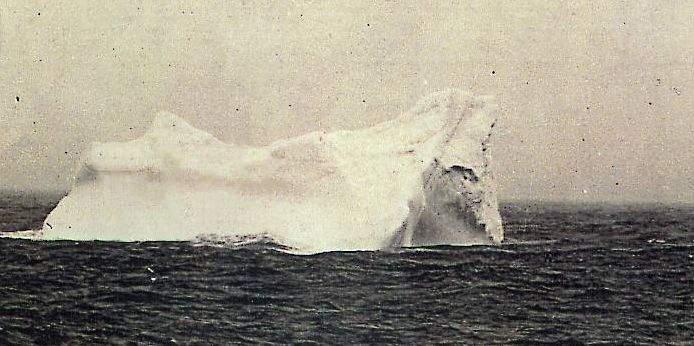
Apparently a British investigation in the 1990s brought up super refraction, but no one ever studied it in depth, according to Smithsonian magazine, which just published an excerpt from Maltin’s new book. Maltin studied old weather records, shipping logs and survivor testimonies to determine the atmospheric conditions on April 15, 1912. He argues conditions were ripe for super refraction, caused by a thermal inversion in the area south of Newfoundland were the ship was sailing. This abnormal bending of light waves would have created a false horizon, and the iceberg lay beneath it, out of view of the ship’s lookouts.
They sounded the alarm when the iceberg was a mile away, but it was too late. The same bizarre atmospheric conditions could have prevented a nearby ship, the Californian, from seeing or hailing the doomed Titanic, Maltin says. It’s a frustrating, sad explanation. Click through to the Smithsonian for more detail.
[Smithsonian Magazine via Slashdot]

The incredible innovations, like drone swarms and perpetual flight, bringing aviation into the world of tomorrow. Plus: today's greatest sci-fi writers predict the future, the science behind the summer's biggest blockbusters, a Doctor Who-themed DIY 'bot, the organs you can do without, and much more.


Online Content Director: Suzanne LaBarre | Email
Senior Editor: Paul Adams | Email
Associate Editor: Dan Nosowitz | Email
Assistant Editor: Colin Lecher | Email
Assistant Editor: Rose Pastore | Email
Contributing Writers:
Kelsey D. Atherton | Email
Francie Diep | Email
Shaunacy Ferro | Email
Ok, interesting theory. So in history, how many reports of this atmosphere-caused optical illusion has happen before and icebergs spontanously come into view by passing ships?
..........................................
See life in all its beautiful colors, and
from different perspectives too!
We all of course know that it was time travelers who sunk the Titanic!
-Spouting a fountain of nonsense since 1995-
A recent report states that the sun and moon were aligned in a way that created a rare, very deep tide near the Greenland coast. This caused icebergs, which usually drag the ocean floor there, and remain until they have melted enough to float on, instead to continue on their way unobhstructed.
The iceberg being in that place at that time was rare, and was not expected, possibly causing the captain not to believe radio reports.
You know, taking full responsibility for the passengers gives rise to going down with the ship. But watching the dramatic movie of Titanic, the Captain staying at the wheel, until the ice cold water crashed through the window and killed him is more like overwhelming regret and suicide.
Had the Captain gotten on top of the deck and commanded and supervised the launch of the emergency boats, I think more people would have survived! But this opinion was based upon a movie and I was not there.
Staying with the ship to supervise is to be respected; to supervise and try to save as many people as you can.
Staying at the wheel was just hiding via the Titanic movie.
So what do you feel the Captain actually did?
.............................
Science sees no further than what it can sense.
Religion sees beyond the senses.