Data Age
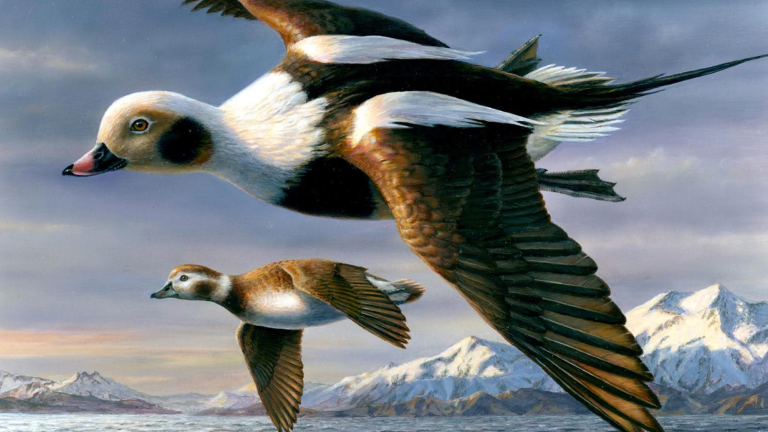
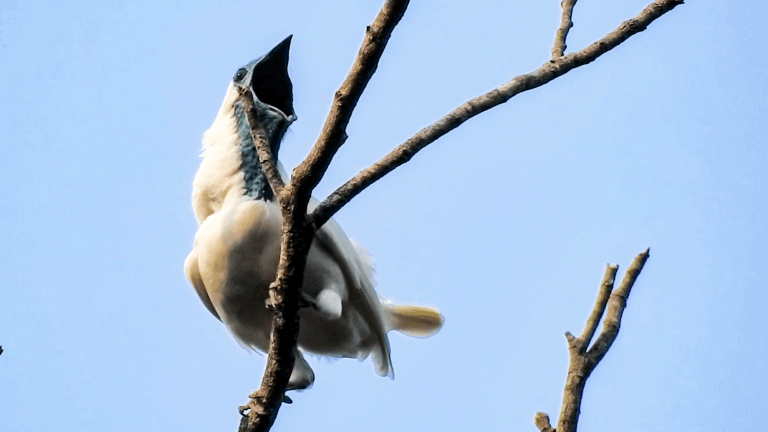
The EOL, a collaboration by the foremost authorities in biology, is a massive database that tracks every organism on Earth

Encyclopedia of Life Collage Wikimedia Commons

Four years ago, the Smithsonian Institution, the Field Museum of Natural History, Harvard University, the Missouri Botanical Garden, the Marine Biological Laboratory and the Biodiversity Heritage Library joined together to create a comprehensive collection of data about every living thing on Earth.

So far, the consortium’s researchers have collected and vetted information on 40 percent of the planet’s 1.9 million known species. Want observations describing the nocturnal behavior of the flying lemur? How about a map showing the distribution of the dark honey fungus, whose underground filament network spans thousands of acres and might make it the largest organism in the world? They’re in there.

The researchers gather information from hundreds of sources (including such databases as the Barcode of Life and Morphbank), work it into a consistent format, and organize it into individual species pages. Combining disparate data into a single, searchable database should make it possible to see new connections between different forms of life. By looking for lifespan patterns or similarities in resistance (or susceptibility) to disease—and by doing so across a broad range of EOL species pages—biologists will aim to find new species and genes to target in longevity studies, vaccine development and other medical research. At the current pace, EOL will hold data on every known plant, animal, insect and microbe species by 2017.

Check out the other nine most amazing databases in the world here.

5 Comments

I smell another Google-Earth app attachment. "Now you can see exactly what lives in your neighborhood".

But to expand on that: If this were made open-source (at least in part) everyday hikers and other sightseers in the wilderness (or just in the backyard) could act as extra sets of eyes for researchers to keep track of all these species. Maybe even act as an Amber Alert-like system to find, report, and rescue endangered ones from extinction. All you need would be smartphone pictures to prove it (with an added app).

I'll be keeping my eyes on this one.

So is this going to be an open to the public information site/app type of thing or is it only going to be used by scientists/etc.?????

This library of sort, this knowledge is just beautiful!

It is free, open source/open access, and is open to the public at eol dot org

A website for storing species data collected in the field is www.observado.org and is open to everyone. An app for Android (ObsMapp) as well as an HTML5 application (WebObs) for other platforms were recently published and can be used worldwide.


June 2013: American Energy Independence

Five amazing, clean technologies that will set us free, in this month's energy-focused issue. Also: how to build a better bomb detector, the robotic toys that are raising your children, a human catapult, the world's smallest arcade, and much more.


Online Content Director: Suzanne LaBarre | Email
Senior Editor: Paul Adams | Email
Associate Editor: Dan Nosowitz | Email
Assistant Editor: Colin Lecher | Email
Assistant Editor: Rose Pastore | Email

Contributing Writers:
Rebecca Boyle | Email
Kelsey D. Atherton | Email
Francie Diep | Email
Shaunacy Ferro | Email

circ-top-header.gif
circ-cover.gif