Then, if something goes wrong, a quick whiff will let them know

Knowing Your City's Scent Could Help DARPA Prevent Chemical Attacks Andrew Mason on Flickr

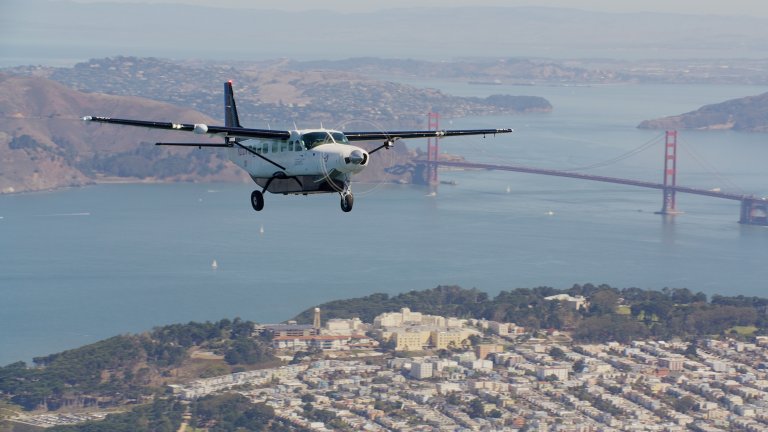
Don't mind those folks sniffing around the gas station - they're researchers. DARPA has a new scheme to identify the distinctive chemical scent of your city, to help protect you from chemical terrorist attacks.

The idea is to gather small amounts of chemicals from “residences, gasoline stations, restaurants and dry cleaning stores,” (maybe not the defining landmarks of a city, but ones with particularly distinctive chemical emissions) and come up with a model to categorize that city’s specific chemical smell. Researchers will also gather meteorological and topographical data allowing DARPA to create a map using “chemical cartography.”

Readings gathered over 30 minutes or less at each location will be adjusted for factors like humidity and time of day. Researchers will also map changes in the chemical scent at different times of the year. All of this data will then be rolled up, chewed and spat out into a map that shows “trace gas concentrations of ten parts per trillion” across an entire city.

This chemical cartography will allow DARPA to establish a baseline for what chemicals are normally present in your city. That way, if they detect anomalous chemical traces, they’ll know something’s afoot. DARPA is accepting proposals on how to build models for the maps, till January 6.

[Danger Room]

10 Comments

dear god...good luck with nyc.

This idea could be used for so many purpose besides simply checking for chemical agents. Think about the possibilities.
By geographically mapping the chemicals (pollutants) we could overlay it with various reported medical conditions and form links between various cancer's and chemical exposure.

If we tracked it yearly with a system like Google Streetview, we could identify new causes of toxic exposure before it starts to kill us, where litigation is only useful for the victims.

We could identify probable locations of Meth labs, based on the pollutants they emit. We could verify that companies are sticking to the EPA regulations.

I am not an environmentalist, but there are so possibilities with this idea I really hope it becomes a reality.

This post caught my mind judt by looking at the picture. I didn't read the article but just by the picture i can tell its serious.

"Readings gathered over 30 minutes or less at each location will be adjusted for factors like humidity and time of day."

I seriously hope they took construction/tar roads/etc into consideration here. lol that was be a scene

*would

damn it.


June 2013: American Energy Independence

Five amazing, clean technologies that will set us free, in this month's energy-focused issue. Also: how to build a better bomb detector, the robotic toys that are raising your children, a human catapult, the world's smallest arcade, and much more.


Online Content Director: Suzanne LaBarre | Email
Senior Editor: Paul Adams | Email
Associate Editor: Dan Nosowitz | Email
Assistant Editor: Colin Lecher | Email
Assistant Editor: Rose Pastore | Email

Contributing Writers:
Rebecca Boyle | Email
Kelsey D. Atherton | Email
Francie Diep | Email
Shaunacy Ferro | Email

circ-top-header.gif
circ-cover.gif