How It Works: The Dreamliner’s Super-Efficient Powerplant
The GEnx engine, the powerplant of Boeing’s 787 Dreamliner, burns 15 percent less fuel than conventional jet engines by using fewer components and lighter composite parts. Flying in 2009, the engine will also be quieter and more durable
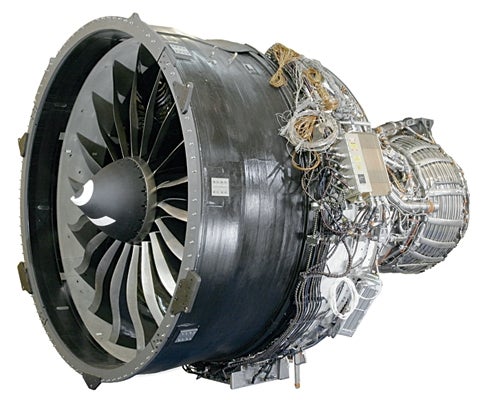
In a “high-bypass” turbofan engine like the GEnx, 90 percent of the thrust comes from spinning fan blades in front that draw in massive quantities of air and force it out in a ring around the engine’s center, or core. The GEnx’s primary innovation is in its fan blades, which have been reshaped to move air more efficiently with fewer blades and are made of carbon fiber to save weight.
In order to keep that fan turning, a small percentage of the incoming air instead flows into the core, where it passes through two compressors, mixes with fuel, and ignites in a combustor. That combustion powers turbines that drive the fan up front. The exhaust of that core air provides the other 10 percent of the engine’s thrust.
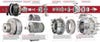
Exploded View
Click the image below to expand our piece-by-piece look at the GEnx’s innovative construction (will open in a new window.) Source images courtesy General Electric
GEnx: Exploded View
More How It Works:
- A hybrid with motors in the wheels
- The toy dinosaur that thinks for itself
- A pill camera that shoots movies of your gut
- An HD camcorder that steadies shaky hands
- A [laser cannon that melts tanks from the air
- An [earbud with a subwoofer inside
- Flash memory that can take a dropkick
- A satellite that can photograph home plate from 425 miles up