A proposed NASA mission to intercept an ill-omened rock in the sky

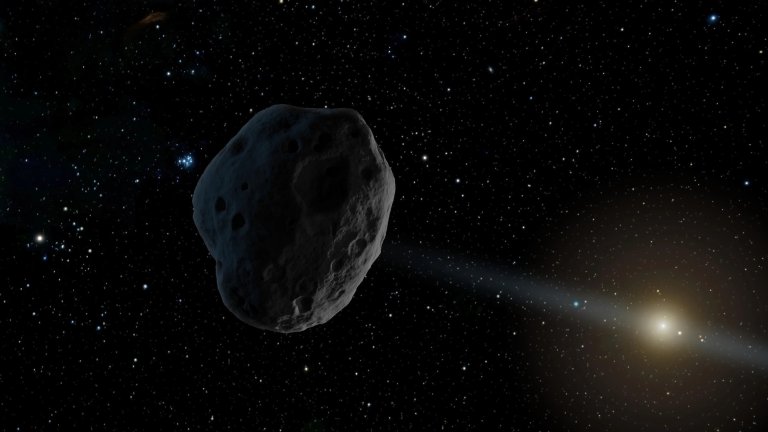
Asteroid Ida and Its Moon, Dactyl NASA

Partly to help explain solar eclipses, the ancient Egyptians had a story about the serpent god Apep, the Uncreator, who tried to swallow the sun god Ra as he crossed the sky.

Apep -- the Greeks called him Apophis -- personified death, destruction and chaos. His opponent was the goddess Ma'at, who represented all that was light and truth.

Now, a group of NASA scientists is hoping Ma'at will once again help humans ward off the harbinger of destruction.

The MAAT satellite -- Measurement and Analysis of Apophis Trajectory, a conveniently descriptive acronym -- is still just an idea. But if it's built, the modestly priced probe could help illuminate one of the solar system's most famous and most misunderstood asteroids.

A few months after its discovery in June 2004, asteroid 99942 Apophis was briefly thought to pose a serious threat to Earth in either 2029 or 2036. But further calculations showed it is unlikely to hit the planet, unless it passes through a gravitational "keyhole" that might send it swinging Earthward seven years after its initial visit.

This would be bad, explained David Morrison, director of the Lunar Science Institute at NASA's Ames Research Center at Moffett Field, Calif.

Apophis is about 1,000 feet across and roughly the size of a 25-story building. The 1908 Tunguska meteoroid, which caused a massive fireball and flattened a forest in Siberia, was about 10 times smaller and about 1,000 times weaker in terms of energy. "Where Tunguska would have destroyed a city, something like Apophis is rather worse. It would ruin your whole day," Morrison said. "That's big enough to destroy a state in the U.S., or a small country. It's not something that you would want to sit back and (ignore)."

Thankfully, Apophis is not likely to hit Earth, but it's worth studying because it comes so close and there are many other asteroids like it, Morrison said.

It does seem like a good starting point for missions to understand these sub-kilometer asteroids," he said.

As of Saturday, March 21, there were 6,163 known near-Earth asteroids, about 770 of which are a dangerous half-mile in diameter or wider, according to the Near Earth Object Office at NASA's Jet Propulsion Laboratory. Their paths around the sun occasionally bring them across Earth's orbit. With enough warning -- and so long as we know about the asteroid's existence, we'd have some warning -- humans could send a spacecraft to a threatening rock and kick it away by slightly altering its trajectory.

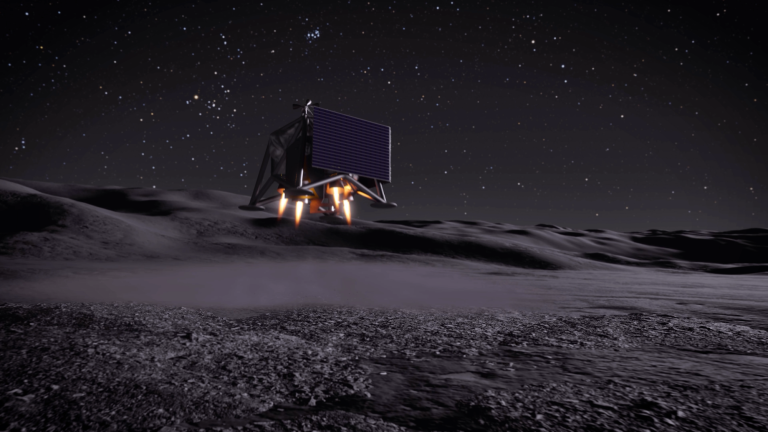
The MAAT probe would be designed to match Apophis' orbit and tell us if we need to move it. More cost studies are needed before NASA has a price tag, but Morrison said the mission is intended to be relatively inexpensive, around $100 million. It will piggyback onto a satellite going up to a geosynchronous orbit, about 18,000 to 22,000 miles above Earth, and continue until it hooks up with the asteroid. It won't land or crash, unlike previous asteroid missions such as Deep Impact, but it will shed some light on the space rock by flying in formation with it.

It would carry several cameras, a radio system and a laser range system to measure the distance between MAAT and Apophis so scientists can determine the asteroid's mass and trajectory. "If we ever face one that will hit us, the first question they are going to ask is its trajectory. It's only in Hollywood that asteroids change orbit. Once you determine the orbit carefully, then you can predict where it will be in the future," Morrison said.

Scientists hope a refined understanding of Apophis' path around the sun will erase lingering worries about its odds of striking Earth. "It would be nice to have a press conference and tell you for sure it's not going to happen," Morrison said.

Scientists' level of certainty has varied wildly since the asteroid was discovered in June 2004. That December, observations from some amateur astronomers set off alarms at JPL's Sentry asteroid-watching program. Around Christmas 2004 -- when most of the world was reacting to an Earth-based disaster, the Sumatra tsunami -- the odds of Apophis hitting Earth in 2029 peaked at 2.7 percent, a frightening statistical possibility.

The number was soon revised down after a flurry of observations; as of now, the chances of Apophis hitting Earth in 2029 are about 1 in 45,000. In 2029, it will pass within about 18,000 miles of Earth, well within the range of geosynchronous satellites, but scientists at JPL say its trajectory won't endanger the satellites.

That's where it gets interesting, however. Earth's gravity will dramatically affect Apophis' orbit, leaving scientists to estimate where it will end up next.

If Apophis passes at 18,893 miles above Earth, it will pass through a gravitational "keyhole" about half a mile wide, which would nudge it just enough to send it on a course for collision with Earth seven years later, on April 13, 2036. MAAT will provide more data to check these estimates and tell us whether we should do something to move Apophis from that keyhole using a solar sail, some added weight or a space tugboat of sorts. It's also a way to test a type of asteroid- tracker that might be really important someday.

We don't know exactly where Apophis is going to go, but it's very unlikely that it will end up on an impact trajectory," Morrison said. "But it is a prototype of the type of object that we might have to deal with."

Scientists at JPL are confident further observation will show Apophis will pass about 49 million miles from Earth on April 13, 2036, which happens to be Easter Sunday.

That date is one of many numerological coincidences that have helped make the asteroid famous: For one thing, Apophis is Near Earth Object 99942 -- 999 upside down is 666, the "number of the beast," a number associated with the end-times prophecy in the New Testament chapter Revelation. It is expected to pass Earth the first time on April 13, 2029 -- a Friday the 13th. What's more, 2 + 0 + 2 + 9 = 13.

Feeling unlucky yet? Maybe the probe named for goodness and light will be able to help illuminate this dark nomad of the sky.

Near-Earth Asteroid Talk

Interested in space rocks? Log on to a chat with NASA's asteroid hunters Wednesday, March 25, at 7:30 p.m. Eastern. Participants include Don Yeomans, manager of NASA's Near-Earth Object Office at the Jet Propulsion Laboratory, and two NEO office scientists, Steve Chesley and Paul Chodas. Join the discussion at http://www.ustream.tv/channel/nasajpl

Want to read more articles on the military, aviation, and space? Subscribe to Popular Science today, for less than $1 per issue!

7 Comments

My son's science fair project proposed we could capture Apophis in orbit between the Earth and the Moon. Our conservative estimate would take a nuclear fission rocket about a week. (Okay, an L4 orbit makes more sense)

Our point was if it was in a stable orbit, we could keep track of it and it would provide the proving ground for the next generation of interplanetary space travel.

Our first issue of PopSci was a day late to take part in yesterday's chat :(

I like this idea Hawkman4, why build fancy space ports when we can just grab big rocks and make them do our bidding?

Land a probe VASIMR engine lifted from the Mars exploration program on it or place a mass driver and some small mining robots on the asteroid and push it out of the way that way.

If you have several years of warning even having a small chemical stage will have enough impulse to move it enough.
We can change an object of this size off course with hardware we have on hand today.

Nice article. Must have hit a bit of a gravity keyhole for yourself as well here. You scored a hat trick on combining ancient Egyptian mythology, Triskaidekaphobia(fear of the number thirteen), and the sign of the beast from Bible study all in one story.

I think the technology is there right now to nudge an object like this off of a collision course with the Earth. The problem is though that it has never been tested. I think too that there would be useful science to be gained by testing ideas. A little practice under our belt wouldn't hurt either if we ever had to move one for real.

Early detection will be vital if this object, or another like it that we just have not noticed yet, heads our way. We need to keep cataloging what's out there.

hey, heres a good plan

watch Stargate

then blow it up with C4

problem = solved

Evolutionary theory dictates we should do nothing about this and never try and disturb nature's course by preserving life, especially of the weakest of the species. The fittest will no doubt adapt and survive. Then and only then, maybe they will be better able to text and drive without crashing their car or driving too slow and obstructing traffic.

Yo MechTech...

It just so happens that whatever we end up doing is natures course. We (mankind) are a part of nature, therefore, anything we do is completely natural. Nature's course and our course are one and the same - they can't be separated.

Everything that men do is natural human behavior, and is a part of the natural universe? In other words, at any given time, things are supposed to be exactly the way they are - otherwise they would be different, which they aren't. So if we go out and nudge an asteroid off course, that is exactly what was supposed to happen. If we don't and it smacks us into extinction, then that is exactly what was supposed to happen. Both ways are natures course.

Rodney


June 2013: American Energy Independence

Five amazing, clean technologies that will set us free, in this month's energy-focused issue. Also: how to build a better bomb detector, the robotic toys that are raising your children, a human catapult, the world's smallest arcade, and much more.


Online Content Director: Suzanne LaBarre | Email
Senior Editor: Paul Adams | Email
Associate Editor: Dan Nosowitz | Email
Assistant Editor: Colin Lecher | Email
Assistant Editor: Rose Pastore | Email

Contributing Writers:
Rebecca Boyle | Email
Kelsey D. Atherton | Email
Francie Diep | Email
Shaunacy Ferro | Email

circ-top-header.gif
circ-cover.gif
bmxmag-ps