agriculture

From Space To Soil, Farmers Enlist Satellites For More Bountiful Harvests


There was a time when a farmer simply tasted a clump of dirt to tell the fecundity of the soil. Now, a wide range of chemical analysis help instruct farmers on the optimal mix of fertilizer, pesticide and water. However, tests on soil samples are expensive and time consuming, and few farmers can afford to waste either time or money. And that's where the satellite imaging comes in.

[ Read Full Story ]

Scientists Want UK to Invest Billions on Future of Food, ASAP

The Royal Society warns that, to keep the planet fed, food production must increase by 50 percent over the next 40 years

A second Green Revolution can't come soon enough for UK scientists, who say that their government should invest $3.3 billion in crop research to help feed the world. That world will only grow hungrier, and will require a 50 percent boost in food production over the next 40 years.

[ Read Full Story ]

Breeding Super-Hygienic Bees to Take the Offensive in Colony Collapse Fight


For almost two years, the honeybees that support almost all human agriculture have fought a plague right out of a sci-fi movie. Varroa mites, a deadly parasite, have hid in the labyrinthine combs of beehives, feeding off the juices of still-living insects, and causing the the problem we know as Colony Collapse Disorder.

To help our bee allies fend off the alien invaders, the Agriculture Research Service division of the Department of Agriculture has created a new breed of super-vigilant bees that will take the fight to the mites.

[ Read Full Story ]
Feature

The State of the Art of Electronic Noses

Three new e-noses use three different methods to sniff out everything from freon to fatty acids

A rose by any other name would smell as sweet; we all know that. But what about a rose smelled by a non-human nose? What would it smell like?

Well, an electronic nose is no Shakespeare, so you'd lose some of the poetry. But a new generation of e-noses is is poised to give a whole new meaning to the sense of smell.

[ Read Full Story ]

Carbon Nanotubes Shown to Boost Plant Growth, Could Spawn Super-Fertilizers


Carbon nanotubes have improved existing technologies in fields ranging from electrical circuitry to architecture to materials science. So is it any surprise that when researchers in Arkansas applied the miraculous microscopic structures to tomato seeds, the plants grew faster, stronger, and more plentifully?

[ Read Full Story ]

Better Tomatoes Via a Fertilizer of...Human Urine?


You say tomayto, I say tomahto.

You say Miracle-Gro, I say ... pee.

Apparently, human urine works remarkably well as a fertilizer for tomatoes, according to a new study out of Finland.

Plants fertilized with a mixture of stored human urine and wood ash produced 4.2 times more fruit than plants without the pee, the study found. The urine-fertilized tomatoes had more beta-carotene than unfertilized ones, and much more protein than traditionally fertilized plants.

[ Read Full Story ]

Genetically Engineered Rice Plants Grow "Snorkels" To Survive Floods

Scientists introduce deepwater rice genes into high-yield rice for better survivability

Rice farmers in Asia may no longer need to fear monsoon season's devastating floods. Japanese scientists have identified genes that allow deepwater rice to grow hollow "snorkels" to avoid drowning, and have also introduced those genes into other rice variants.

[ Read Full Story ]
Feature

The Future of Farming: Eight Solutions For a Hungry World

The challenge of growing twice as much food by 2050 to feed nine billion people—with less and less land—is everyone’s problem. But scientists are hard at work fomenting a second green revolution.

Today’s crops crisscross the globe: Mexico’s tomatoes end up on your plate, our wheat heads to Africa. As a result, the challenge of growing twice as much food by 2050 to feed nine billion people—with less and less land—is everyone’s problem. But scientists are hard at work fomenting a second green revolution. Here’s how nitrogen-spewing microbes, underground soil sensors and fruit-picking robots will help keep food on our tables.

[ Read Full Story ]

Japanese Researchers Tap Chemical Composition To Give Flavor Ratings to Food


It’s been said there’s no accounting for taste, but if Japanese researchers have their way, there soon will be. Research initiatives underway in various corners of Japanese agriculture will remove taste from the subjective realm and create objective standards for flavor that consumers can use as a yardstick--without ever having tasted a product at all.

[ Read Full Story ]

Finer Wine

Spotting fake wine with an atom smasher, and growing perfect grapes

Robot Sommelier

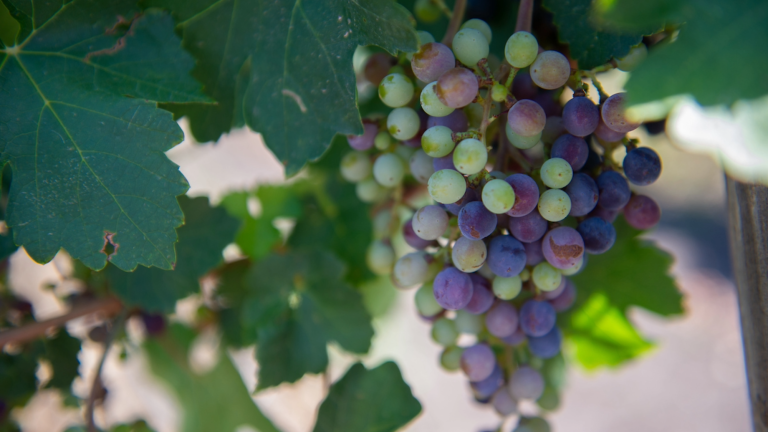
Is your $30,000 bottle of Chateau Petrus Bordeaux truly a rare vintage, or is it just $30 merlot? Counterfeits plague rare-wine auctions, but researchers in Spain have built a handheld "electronic tongue" that detects them instantly. It measures the signature chemicals, acidity and sugar content in a drop of wine (typically one bottle from a case) and runs those against a database of certified vintage wines to catch fakes that might fool human tasters.

[ Read Full Story ]
Page 1 of 2 12next ›last »


Download Our iPhone App

Stay up to date on the latest news of the future of science and technology from your iPhone with full articles, images and offline viewing


Follow Us On Twitter

Featuring every article from the magazine and website, plus links from around the Web. Also see our PopSci DIY feed


Become a Fan On Facebook

Share links with friends, comment on stories and more


December 2009: Best of What's New

In our December issue, Popular Science names the 100 best innovations of the year: bombproof wallpaper, self-parking cars, the fastest helicopter, and 97 more. Plus inventor profiles and videos.

Check out the best of what's new here.

Popular Science Photo Pool


Share your photos in the Pop Sci pool at www.flickr.com!
tags_sprite.png
POP_embeddedForm_cover_May09.jpg