Susannah F. Locke

Lawsuit Banning Human Gene Patents Continues, Court Rules


The ACLU is one step closer to getting patents on human genes banned after a federal court today ruled that its lawsuit can continue. The defendants (The US Patent and Trademark Office and the owners of the BRCA breast cancer gene patent) had asked the court to dismiss the case.

About 20 percent of the human genome is currently patented, including genes associated with many diseases such as breast cancer and Alzheimer's. The patents mean that outside researchers need permission to study the genes and that tests can be astronomically expensive. (The test for BRCA is about $3,000.)

[ Read Full Story ]
READ MORE ABOUT > , , , ,

DeepDyve Launches iTunes Store-like Service for Science Papers


Today, a company called DeepDyve launched the largest online rental service for scientific papers, which allows users to rent any article for just 99 cents. Journal articles currently trend toward the obscene ($30 or more), unless you're the lucky dude with a password for a university library. DeepDyve saw an opening in the market and made deals with major scientific publishers to stock 30 million (and growing) articles of tech, med, and scientific interest.

DeepDyve is part of a greater trend of getting scientific info back to the hardworking taxpayers who funded it.

[ Read Full Story ]

Successful Gene Therapy For Blindness Restores Eight-Year-Old Boy's Vision, Maze Navigation Skills

In a rare success for gene therapy, sight is regained in one eye

Lab mice, perk up your fuzzy little ears. You are not the only species that struggles through mazes in the name of science. Here, it's an eight-year-old boy who can't see too well. But don't feel bad, in the second video he aces the test when he's allowed to use his eye that's been treated with gene therapy. This procedure is one of the few successful applications of gene therapy, a technique that people once thought would cure nearly all ills, but problems getting the genes into the body's cells has plagued the field every step of the way.

[ Read Full Story ]

For the First Time, Geneticists Diagnose Disease Through Whole-Genome Analysis


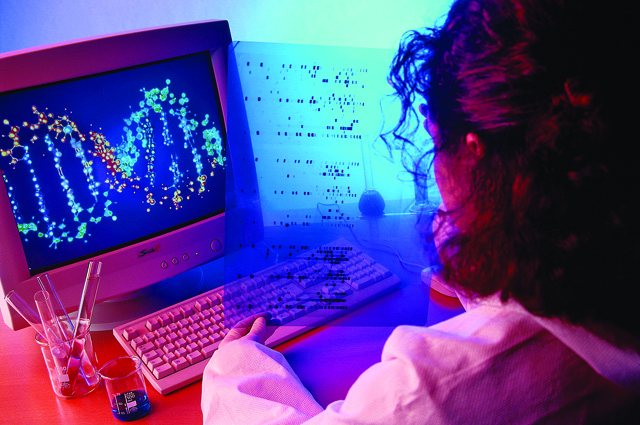
For the first time, researchers have made a clinical diagnosis by sequencing the entire protein-coding parts of a person's genome.

"We have shown that one can use whole genome sequencing to make clinically meaningful diagnoses- it is technically feasible . . . and can provide new clinical insight that directs treatment," Richard Lifton, a geneticist at Yale who spearheaded the research, told Popsci.com.

Protein-coding DNA only makes up about one percent of the human genome, but is responsible for about a large portion of diseases with a genetic component.

[ Read Full Story ]
READ MORE ABOUT > , , , , ,

New Neurological Evidence That the Internet Makes People Smarter


Your grandma might think that the Internet is rotting your brain, but it's possible if she did a little face-time with Google that she could stay sharper in the noggin herself. In a new study, Internet novices who were instructed to search the web showed increased activity in areas of the brain associated with making decisions and memory in just two weeks, according to a poster presented today at the annual Society for Neuroscience conference.

[ Read Full Story ]

New Uncrawlable Material for Household Surfaces Gives Cockroaches the Slip


A new coating turns insects' sticky climbing feet into a slippery mess, and could be the future of pest repellent, according to a new research paper. You hear that, bugs? If you can't crawl up my kitchen counter from the floor, you can't go waving your disgusting antennae all over my pizza, you insects-who-shall-not-be-named of apartment horror.

[ Read Full Story ]

Robots That Eat Bugs and Plants for Power

Controversial robots devour biomass to gain energy independence

No matter how intelligent a robot might be, it’s nice knowing you can pull its plug to halt the anti-human insurrection. Whoops, not anymore. A new cohort of ’bots that make energy by gobbling organic matter could be the beginning of truly autonomous machines.

[ Read Full Story ]

How Your Body Packs Two Meters of DNA Into a Six-Micron Cell Nucleus


I can't seem to manage to keep my iPod in my bag for a day without creating an awful tangle of headphones, but my body's cells can work with two meters of stringy DNA into a tiny nucleus without making a knot. The secret is a structure called a fractal globule, according to a research paper to be published tomorrow in the journal Science.

[ Read Full Story ]
The Sex Files

Cheap Artificial Hymens: the Easy Way to Revirginate


It only takes about 20 minutes after the last time you had sex to become a "virgin" again. That's if you've shelled out $29 for the Artificial Virginity Hymen.

The product has been getting some press, after conservative Egyptian politicians said they want the product banned. They're concerned that brides might use the product to fake their virginity, according to a report by the Associated Press.

[ Read Full Story ]

Cocaine Vaccine Nullifies the Effect, Helps Abusers Quit


Researchers have shown for the first time today that a vaccine can help reduce drug abuse. There's currently no FDA-approved treatment to get people off of cocaine (or crack), so this could really help out the 2.5 million Americans dependent on cocaine.

Thirty-eight percent of drug abusers who were given the vaccine produced anti-cocaine antibodies. Over the course of seven weeks, these subjects were 45 percent likely to have a cocaine-free pee test, as opposed to 35 percent for those who got placebo vaccine instead.

[ Read Full Story ]
Page 1 of 5 12345next ›last »


Download Our iPhone App

Stay up to date on the latest news of the future of science and technology from your iPhone with full articles, images and offline viewing


Follow Us On Twitter

Featuring every article from the magazine and website, plus links from around the Web. Also see our PopSci DIY feed


Become a Fan On Facebook

Share links with friends, comment on stories and more


December 2009: Best of What's New

In our December issue, Popular Science names the 100 best innovations of the year: bombproof wallpaper, self-parking cars, the fastest helicopter, and 97 more. Plus inventor profiles and videos.

Check out the best of what's new here.

Popular Science Photo Pool


Share your photos in the Pop Sci pool at www.flickr.com!
tags_sprite.png
POP_embeddedForm_cover_May09.jpg