Elizabeth Svoboda

New Lawsuit Challenges the Right to Patent Human Genes for Profit

Five breast cancer patients, with the help of the ACLU, are heading to court to dispute a company's right to monopolize parts of the human genome

When Lisbeth Ceriani was diagnosed with breast cancer, she wanted a blood test to find out if she carried one of the two dreaded BRCA genes, which could increase her risk of ovarian cancer by up to 50 percent. She decided that if she were a carrier, she would have doctors remove her ovaries. But the sole purveyor of the BRCA tests, Utah-based Myriad Genetics, refused her insurance. Myriad holds the patent on the BRCA genes, and thus exclusive R&D rights, so there were no alternative tests, and Ceriani found herself unable to make a decision about her future health.

[ Read Full Story ]

Cloning Hair to Fight Baldness

Going bald? Send in the clones

Surgical solutions for restoring lush locks have always involved a painful trade-off — transplanting hairs from the rear of your head to the top could leave you thin in the back. But Bessam Farjo, a hair-loss specialist at the British company Intercytex, has devised a less barbaric fix: cloning patients' hair cells. "The concept is to create a limitless supply of donor hair," Farjo says.

[ Read Full Story ]

Invention Awards: An Escape Harness for Skyscrapers

The Rescue Reel lets upper-floor workers descend in safety in case of disaster

Trapped on a high floor? Reach for today's featured Invention Award winner.

As the 9/11 inferno unfolded on television, one question kept dogging Kevin Stone: Why weren't the people trapped in the World Trade Center able to make their way to safety? "I said to myself, This is crazy," recalls Stone, an orthopedic surgeon and seasoned inventor in San Francisco. "There should be a better way to exit a skyscraper when something like this happens."

[ Read Full Story ]
Instant Expert

The Essential Guide to Stem Cells

Everything you need to know about the hottest topic in 
medicine, from big-league breakthroughs and new therapies to emerging health risks and the patients willing to take them

For more than a decade, researchers have touted stem cells as the most promising advance in medicine since antibiotics. And this winter, when President Obama lifted the Bush administration's ban on federal funding for embryonic-stem-cell research, talking heads buzzed that his decision could bring scientists that much closer to cures — not just treatments — for conditions like heart failure, spinal-cord injuries and Alzheimer's disease. Biologists around the world toasted their new prospects with champagne. "Lifting the ban will free us up to use additional cell lines," says Jack Kessler, director of the Feinberg Neuroscience Institute at Northwestern University. "It's very important for science."

[ Read Full Story ]

Conrad Innovation Awards Announces Winners

High-schoolers' inventions lead the way to outer space; Popular Science was there

What if you knew that a ten-minute podium presentation could alter your life's course for decades? Seasoned entrepreneurs sweat out this kind of tension when they make elevator pitches to venture capitalists. But at the Pete Conrad Spirit of Innovation Awards Summit, the presenters on the hot seat are all between 14 and 18 years old.

[ Read Full Story ]
How It Works

The Next Phage

How to heal an infection that defies antibiotics? Another infection. Doctors in Eastern Europe have used lab-grown viruses to safely cure millions of wounds. So why can't we do the same here?

It seemed like nothing at first. The red patch that appeared on Roy Brillon's thigh could have been a spider bite. But as the weeks passed, it grew and grew. By December 2004, the innocuous-looking bump had become an open wound the size of the palm of his hand. Brillon's doctor, Randy Wolcott, prescribed just about every antibiotic he could think of to cure the infection, but the lesion just got worse. "It was really bad," says Brillon, a 62-year-old retired housepainter from Lubbock, Texas. "I had to give up work because I couldn't climb ladders anymore."

Brillon felt like he was being eaten away from the inside out. And in a very real sense, he was.

[ Read Full Story ]

The Neural Puppeteer

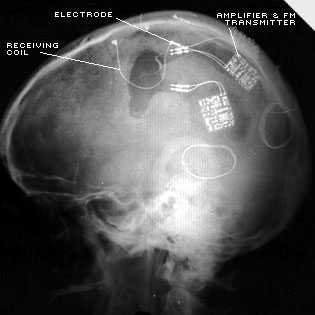
He plugs straight into the brain to map our thoughts, neuron by neuron

"Here's what happens when we turn on the light," Karl Deisseroth says. He points to a mouse, ordinary save for the thin optical fiber protruding through its skull. When a lab tech presses a lever, blue light shoots through the fiber, and the mouse -- which had been sauntering straight ahead -- starts to run in circles. "He's doing that because the blue light turns the neural circuit on," Deisseroth explains. "As soon as we stop the stimulation, he'll walk straight again."

[ Read Full Story ]

Ghost Heart

Reanimating lifeless organs brings new hope for the millions on transplant waiting lists

In late 2005, cardiac researcher Doris Taylor revived the dead. She rinsed rat hearts with detergent until the cells washed away and all that remained was a skeleton of tissue translucent as wax paper—a ghost heart, as Taylor calls it. She injected the scaffold with fresh heart cells from newborn rats. Then she waited.

[ Read Full Story ]
READ MORE ABOUT > , , , , ,
Instant Expert

The Latest Man-Made Organs

How science is rebuilding you, bit by bit

Almost 100,000 people languish on organ-transplant waiting lists. But new tissue-fabrication techniques should make swapping in a man-made liver as easy as snapping Lego bricks into place.

Blood vessels
Method: 3-D printer
When: 5 years
Gabor Forgacs, a tissue engineer at the University of Missouri, is making blood-vessel networks by culturing three types of vessel cells and loading them into a fridge-size bioprinter. This machine prints out the cells to build capillaries in preprogrammed patterns.

[ Read Full Story ]


Download Our iPhone App

Stay up to date on the latest news of the future of science and technology from your iPhone with full articles, images and offline viewing


Follow Us On Twitter

Featuring every article from the magazine and website, plus links from around the Web. Also see our PopSci DIY feed


Become a Fan On Facebook

Share links with friends, comment on stories and more


November 2009: Astronaut 3.0

Inside NASA's astronaut bootcamp and the grueling new training regimen for deep space. Plus, ten young geniuses shaking up science today, one writer's quest to analyze every man-made chemical in her body and more.

Check out the issue's full contents online here

Popular Science Photo Pool


Share your photos in the Pop Sci pool at www.flickr.com!
tags_sprite.png
POP_embeddedForm_cover_May09.jpg