
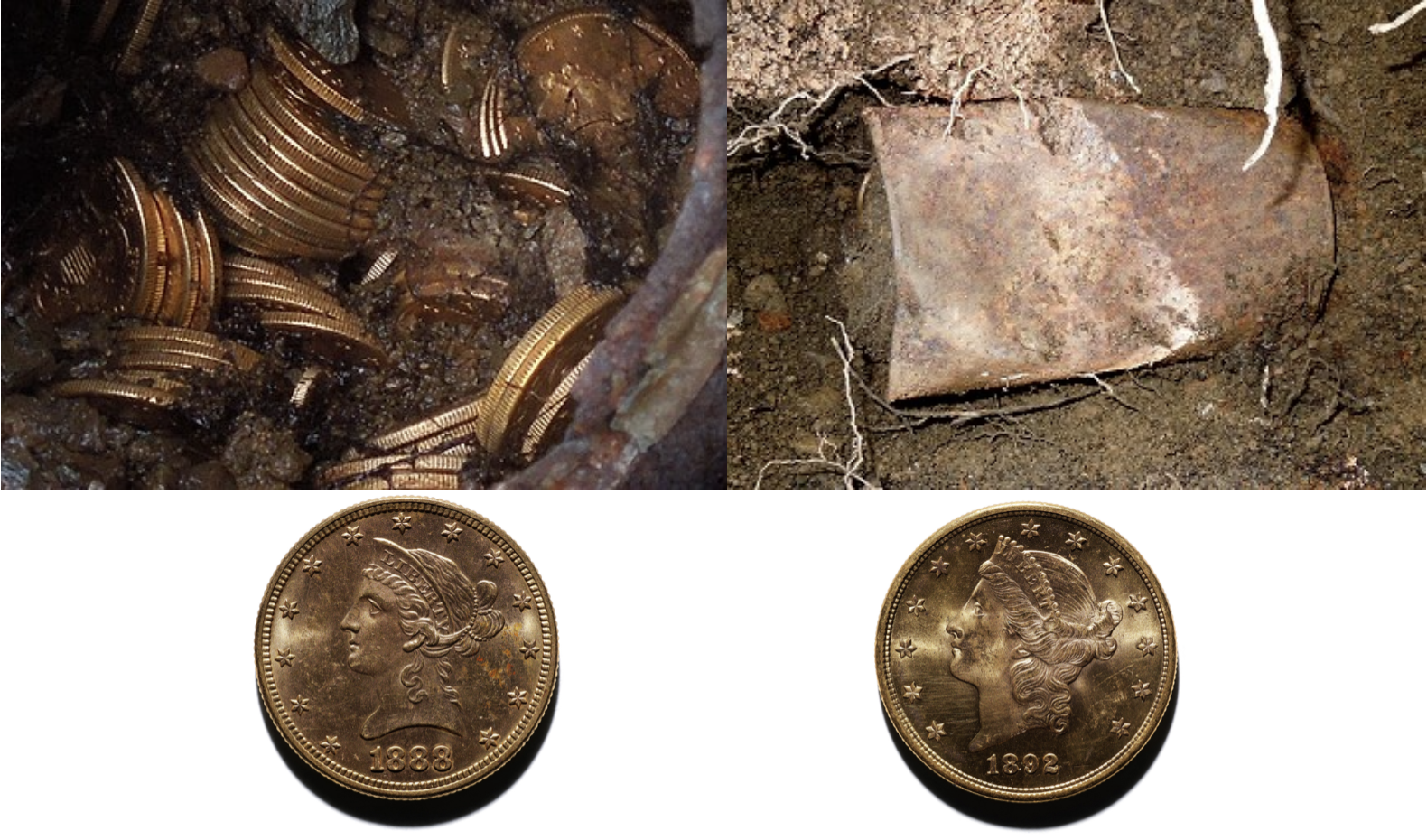
It’s something out of a dream or TV show: a married couple takes their dog for a walk and finds a buried treasure worth $10 million. But it actually happened, back in 2013.
The treasure is the Saddle Ridge Hoard, the largest ever stash of gold coins found in the United States. The couple, who go by John and Mary in the press, have been careful to obscure their identity and the exact place where they live to prevent would-be treasure hunters from showing up on their property. What we do know has mostly been told to the press by David McCarthy, the Senior Numismatist and Researcher at Kagin’s, who helped the couple assess and ultimately sell the hoard.
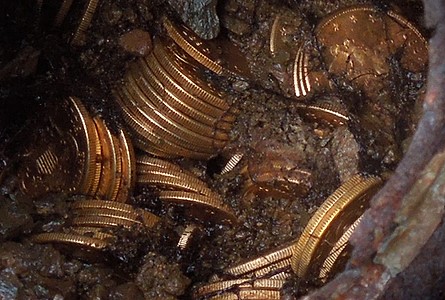
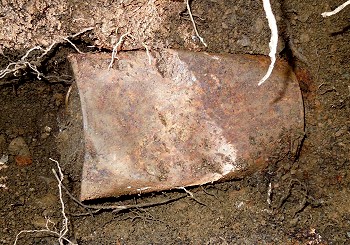
“One day, when they were on that path, for whatever reason one of them looked down and there was this can,” McCarthy said in a 2014 interview. “They were used to finding cans and nails and bullets and other weird things from the 19th century on the property, and they were in the habit of digging stuff like that up because they love history.”
The couple tried to open the can with a stick, failed, and tried to carry it home. “They got back to the house and pried the top off and there, nested in the dirt, was a single gold coin…the edge of a single $20 gold piece poking out.”
Excited, the couple went back to look for more cans—and found one. So they kept looking for more.
“For about two weeks they kept going back to the site and finding more and more stuff,” said McCarthy. “They found eight cans after going over the area with a metal detector.”
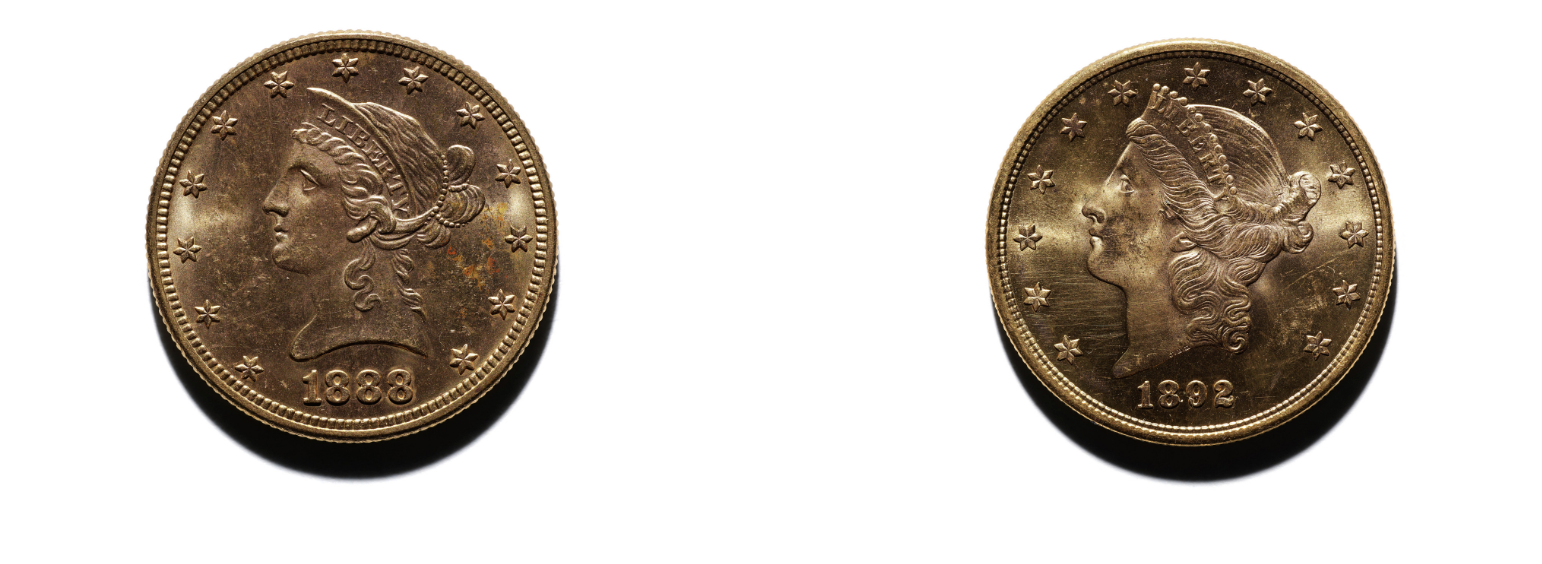
The total was 1,411 coins with a face value of around $28,000. The modern value was much higher, in part because of inflation but also because so many of the coins were pristine coins highly sought after by collectors. The couple, unsure what to do after finding a stash of coins this big, eventually got in touch with Kagin’s, a company that evaluates and helps sell rare coins that is also McCarthy’s employer.
Where are the coins from?
There is no definitive history of where the coins came from, but there are a few hints according to McCarthy. First, the cans are in varying states of decay, and the coins themselves were minted in years ranging from the 1860s all the way up to the 1890s. This suggests someone was burying coins in the same place at different points in time. The location, within 200 miles of the California Gold Rush, is another potential hint.
Burying gold was common in Northern California in the 1800s, according to McCarthy, mostly because many people lived hundreds of miles from anything resembling a bank. “If you had 10, 20, 30 thousand dollars in gold that you’d acquired over time, you’re not going to leave it in your house,” he said. “If you don’t have a bank to put it in, the only logical choice is to bury it in the ground. It’s pretty typical human behavior.”
The idea is that the person hiding the coins died before they could spend them, but also failed to tell their next of kin about the stash. The specifics, though, are odd. Many of the coins were in pristine condition, which implies they were never in circulation. And some were minted thousands of miles away in Georgia, implying their origin has little to do with the gold rush.
The truth is there’s never been a definitive explanation. We may never know who buried the coins, or why.
Where did the coins end up?
John and Mary decided to sell the majority of the coins. Many of them were available on Amazon, the first time a major coin discovery was sold via the online retailer. The money was used to pay off debts and donated to charity. Two coins were donated to the Smithsonian. And the couple kept a few of the coins for themselves—they intend them to become family heirlooms.
Has anyone found buried treasure since then?
McCarthy, in 2014, speculated there could be other hoards of coins out there. “There could be dozens of other finds like this,” he said. “Someone at the right time at the right place might find one. I hope so.”
Just such a find happened in 2023, when 700 gold coins were found in a Kentucky cornfield. The collection was dubbed “The Great Kentucky Hoard”. The oldest coin in the hoard dates to 1863, the height of the American Civil War. This implies the collection may have been buried to keep the coins from being seized by the invading Confederate army. Again, though, we may never know the exact reason the coins were buried.
What we can see is how the coins were found. There’s a YouTube video showing the exact moment, in case you want to experience the joy of discovering treasure second hand. Who knows? Maybe you’ll discover the next stash yourself.
