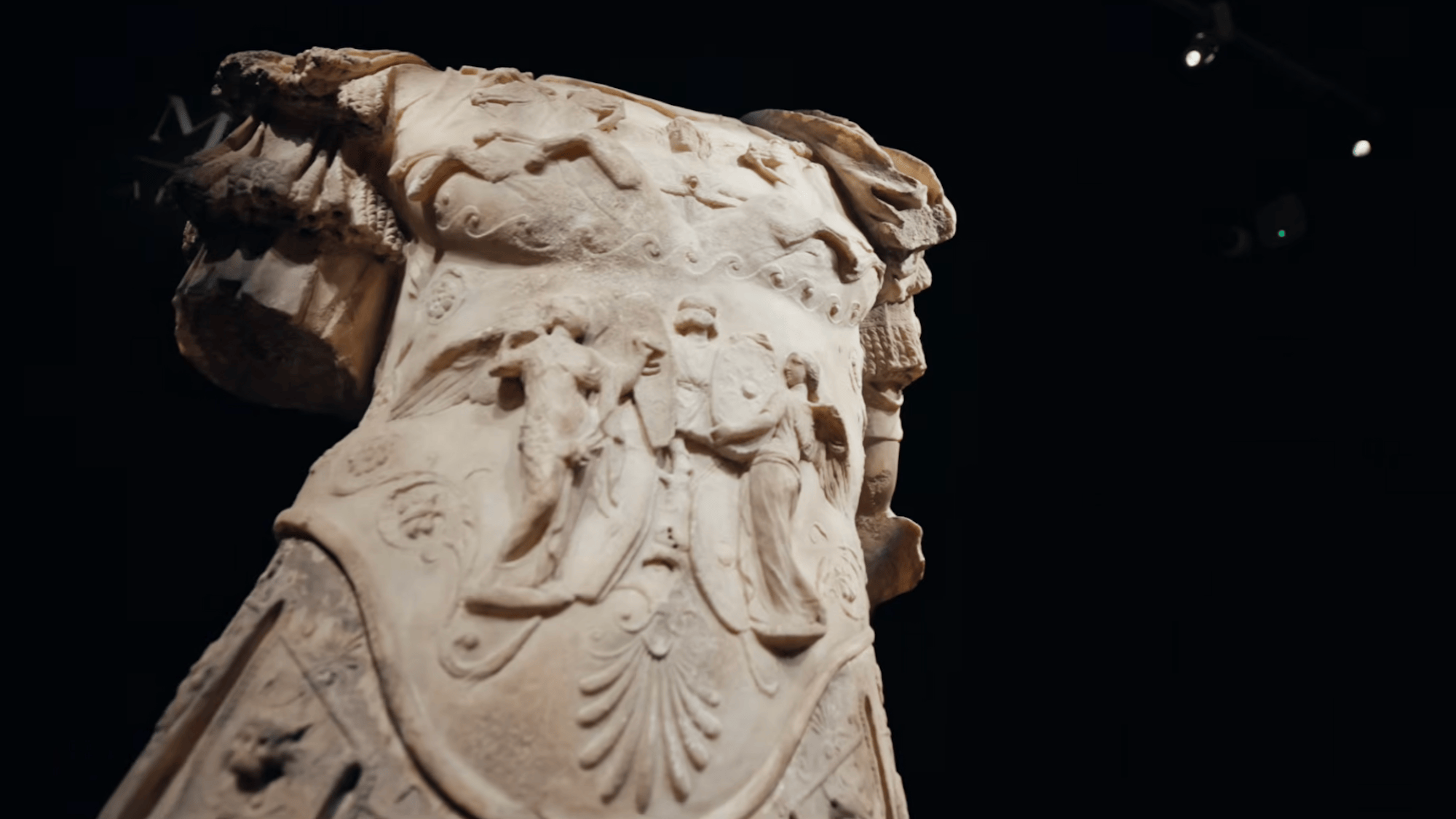
A 2,000-year-old marble sculpture slated for auction later this month is more than a well-preserved piece of artistic history. From its original vantage point inside an ancient temple in present-day Croatia, the depiction of an emperor’s decorative chestplate reminded the recently conquered residents that the age of the Roman empire had arrived.
The intricately detailed bust dates back to the Julio-Claudian era (27 BCE–68 CE), and was crafted from highly coveted marble mined from the Aegean island of Paros. While only the torso remains intact today, the fragment is appropriate given its larger context. Government officials intended sculptures like these to be a permanent temple fixture, so their limbs and heads were regularly updated to depict the current reigning emperor. The monument was more than a way to depict Rome’s ultimate authority—it embodied the very concept of imperial authority.

What is This 2,000-Year Old Roman Sculpture Trying to Tell Us About Power? | Sotheby's
Reinforcing Roman rule in a conquered town like Salona was vital during this era. The Julio-Claudian period saw Rome’s first five emperors consolidating power and expanding their territory. Erecting these monumental odes ensured the conquered saw visual reminders of the empire’s strength every day.
“The Romans at this period in time were asking, ‘How does this convey power? How do you legitimize a new imperial structure? What iconography do you land on to convey these things?’” Alexandra Olsman, an antiquities specialist on sculpture and works of art at Sotheby’s, explained in an accompanying video.
Every detail carved onto the cuirass ties back to this concept. Its centerpiece depicts the sun god, Sol, riding his four-horse chariot known as a quadriga over the sea to announce the dawn of a new day. According to Olsman, the intentional choice of subject matter declares the victory of order over chaos. Beneath Sol are two images of the goddess Victoria on either side of a tropaeum—a visualization of defeated armies’ abandoned shields, weaponry, and even a conquered enemy’s head. Finally, the smaller images of ram and feline faces on overlapping leather straps represent strength and wards against evil.
“This is Rome becoming Rome in a sculpture,” Olsman added.
The sculpture is scheduled for auction on October 21.