
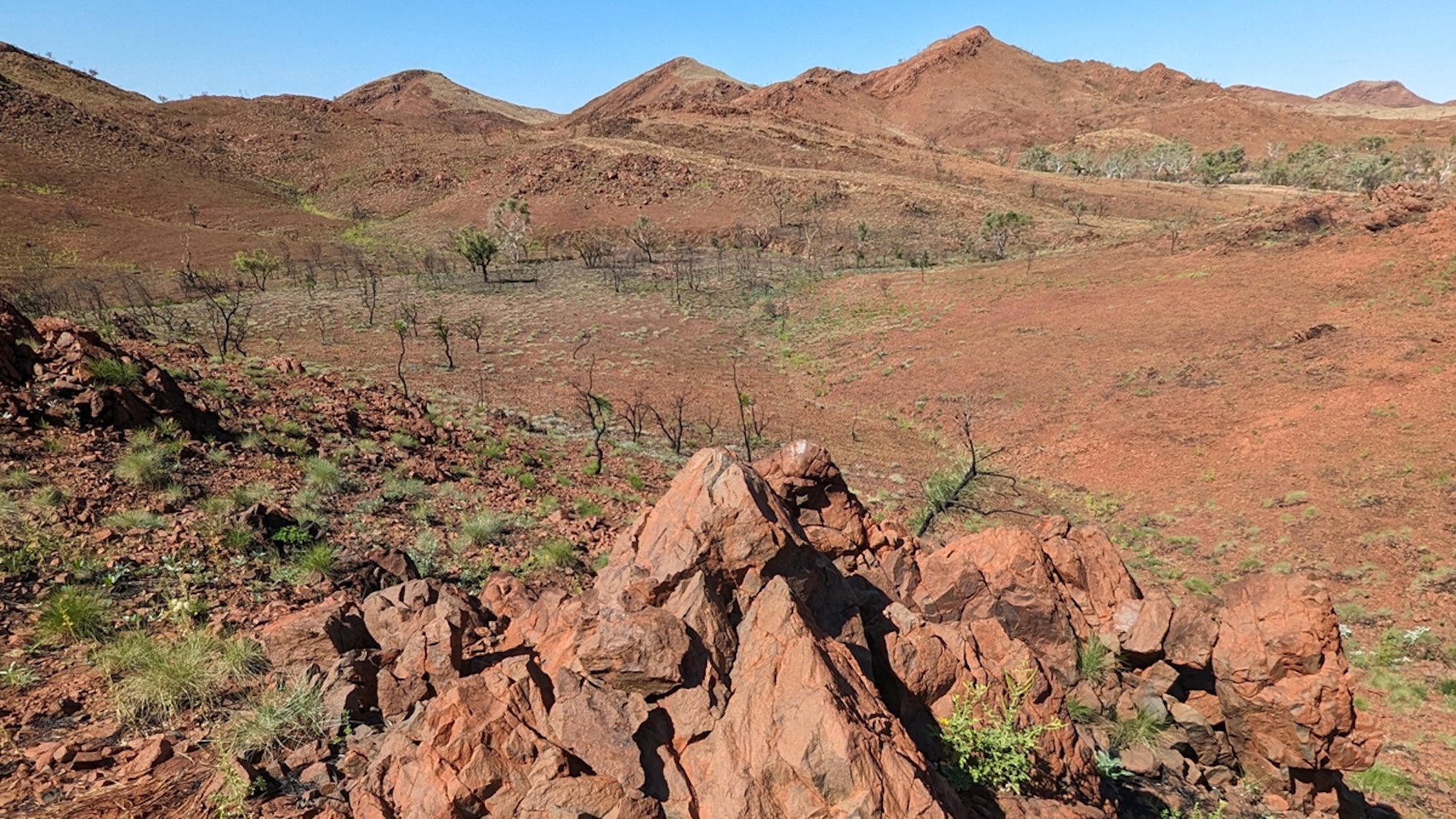
In 2025, paleogeologists announced the discovery of the world’s oldest known asteroid impact. Trace evidence of the strike is still standing in northwest Australia, and the team estimated the region known as the North Pole Dome (NPD) formation dated back around 3.5 billion years ago.
However, the timeline needs to be corrected a bit after months of further analysis. But at roughly 3 billion years old, however, the asteroid strike still remains the most ancient example of a cataclysmic interstellar event on Earth. The details are laid out in a study published today in the journal Geology and hinge on miniscule trace minerals.
“The impact left a ‘mineral clock’ behind. By dating minerals that were remade or newly grown in the damaged rocks, we can now pin down when this extraordinary event happened,” Chris Kirkland, a Curtin University planetary scientist and study co-author, said in a statement.
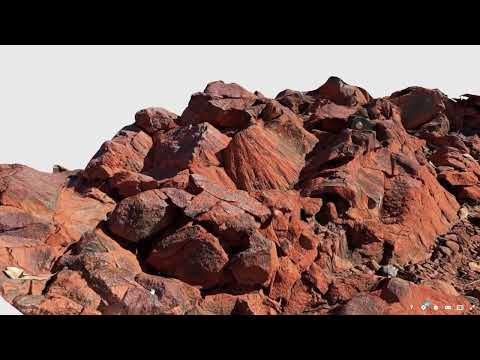
North Pole Dome (NPD) rotating
Kirkland explained the central evidence resides in the tiny, resilient mineral called zircon. At the NPD structure, some traces exhibited unique, skeletal shapes indicating they formed under extreme conditions.
“We interpret these as impact-modified crystals, formed when older zircon was disrupted, partly recrystallised, and in places regrown during the intense heating caused by the impact,” he said. These zircon crystals point to an event about three billion years ago, which is their best estimate so far about the age of the impact.
To further solidify their theory, Kirkland and colleagues also looked at apatite. This second mineral only forms while hot fluids transfer through rocks damaged by shocks. The dates on the apatite and zircon aligned within the same 3 billion-year-old window.
“The agreement between two different mineral systems gives us confidence that we are seeing the signature of a single major event—a meteorite impact,” said Kirkland.
The evidence reinforces the NPD structure as the oldest asteroid impact ever discovered. It also remains the only asteroid impact confirmed from the Archean Era about 4–2.5 billion years agoTKTK. The rarity of such ancient events is owed to Earth’s ever-shifting geology. Although imperceptible to humans, the planet’s rocky surface and interior are constantly influenced by immense pressure, heat, and fluids. This means that particularly ancient evidence like the NPD impact almost never survives to the present-day.
“This discovery pushes Earth’s impact record deeper into geological time than any previously well-dated crater, offering a rare glimpse of the violent processes that shaped the early Earth,” said Kirkland.
Although the oldest known to researchers, the NPD structure is far from the most famous. The Chicxulub impactor struck Earth much more recently, about 66 million years ago. And while that doesn’t earn it any timeline records, it is largely responsible for wiping out the dinosaurs.
