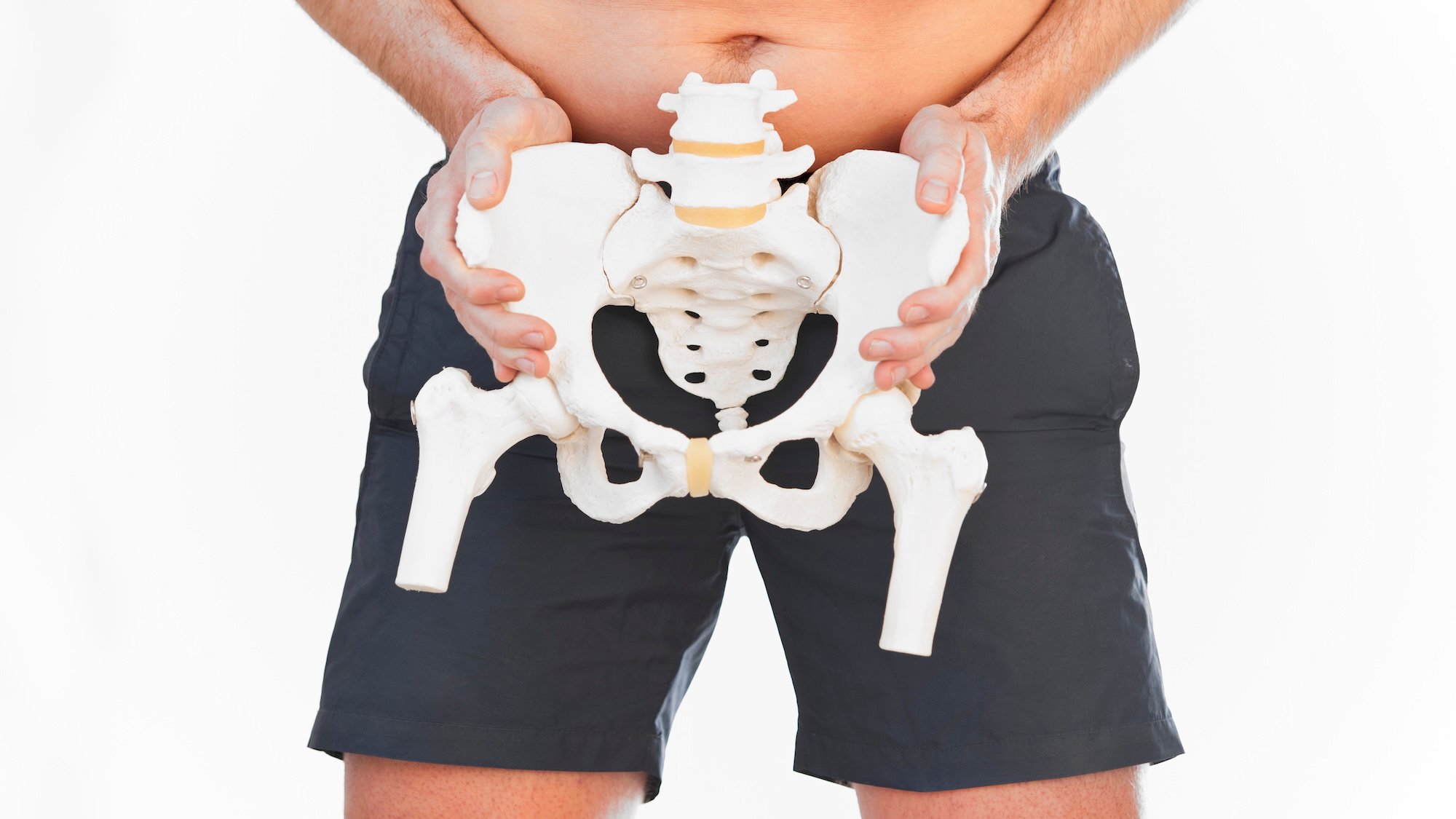
Neanderthals (Homo neanderthalensis) are in the midst of an extensive image rehabilitation campaign. Recent paleoarchaeological discoveries have led to major revisions in what researchers know about our extinct ancestors’ intelligence, cognitive abilities, and communication skills. However, a new analysis of their physical anatomy reveals at least one way that Neanderthals remained firmly behind the curve. According to a study recently published in the journal Scientific Reports, the male Neanderthal pelvis lacked the necessary benefits of his human male descendents.
Neanderthals were comparatively strong and sizable archaic hominins. At roughly five feet tall, they regularly reached similar heights as pre-Industrial European humans, while attaining a body mass index similar to people living in the United States and Canada during the 20th century. One of their key anatomical differences from other hominins resides in the hips. Male Neanderthal pelvises were around 30 percent larger than present-day human (Homo sapien) men, making them more similar to female hips. Furthermore, there is no evidence of sexual diamorphism in the species, meaning Neanderthal men and women had comparatively similar hip–to–body ratios.
Evolutionary biologists have long assumed that there was something about Neanderthals that could explain their unique skeletons, but a reexamination of two nearly complete pelvises suggests an alternative theory. After comparing the pair to dozens of Homo sapien hip bones, researchers now believe it’s humans who are the evolutionary exception to the rule, not Neanderthals.
The main difference concerns male human hip joints, which are positioned farther forward on the pelvic ring than both human females and male Neanderthals. This fundamentally altered humanity’s bipedal mechanics, so that anterior thigh muscles attached to the front of the pelvis act like springs while body weight exerts force on the posterior.
Whenever someone walks on two legs, their center of mass drops with each step. This puts repetitive stress on joints while also creating a need for more energy to raise the body for yet another step forward. In human males, the pelvic geometry allows thigh muscles to cushion each drop, store energy, then release it as a boost of momentum. Although not confirmed, biologists surmise this gifted humans a major improvement to long-distance, energy efficient foot travel. As human men covered more distance, their hip joints also thickened along the pubic bone while deepening the pelvic anterior.
Meanwhile, female human anatomy didn’t allow for these shifts due to childbirth, which requires a shallower pelvis and wider birth canal. This is why their pelvic setup still resembles those of male Neanderthals—there was no need to improve on a good thing.
“This study demonstrates that questions about human evolution are not confined to the distant past,” Ella Been, a study co-author and Ono Academic College anatomist, explained.
Recontextualizing humanity’s timeline doesn’t just explain a long time evolutionary mystery. According to Been and her colleagues, a better understanding of our skeletal changes may help improve injury prevention, physical rehabilitation practices, and biomechanical robotic research. So although Neanderthals may have lagged behind in pelvic anatomy, the details remain fascinating and vital to their descendents.
“The perspective provided by the Neanderthals helps us better understand the modern human body,” added Been.