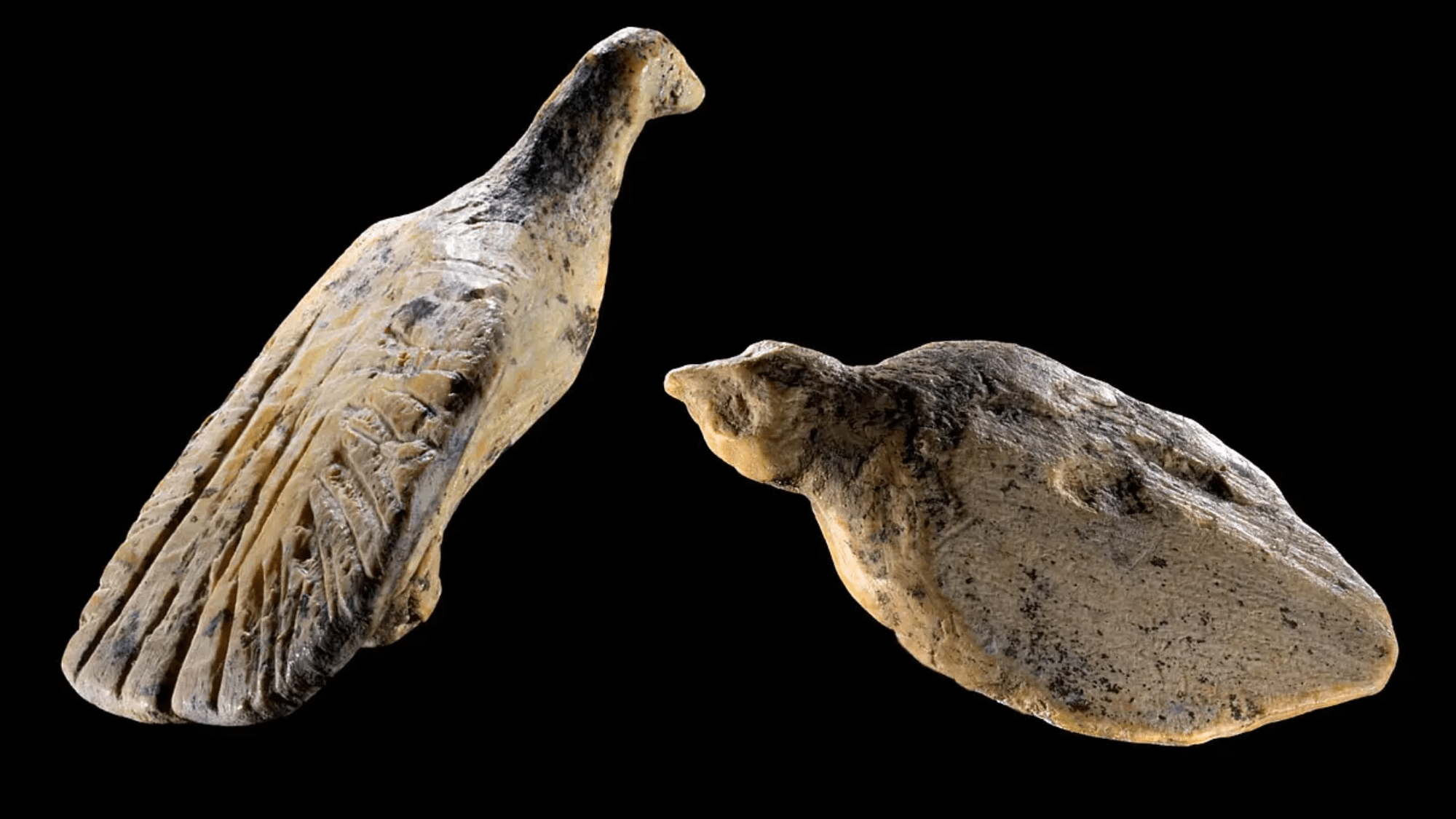
For decades, the prehistoric Hohle Fels cave in Germany has been a treasure trove for archeologists. Excavations have unearthed ancient musical instruments, jewelry, and even the world’s oldest human figurine. Now, scientists have discovered artefacts that show our relationship with birds goes back thousands of years: a pair of thumbnail-sized bird figurines carved from mammoth ivory.
The two birds were found in 2025, in layers dating back some 40,000 years to the Aurignacian period, which represents some of the earliest known culture in Europe.
“The figurines demonstrate that the earliest artists were skilled ivory-carvers, who could depict delicate motifs in miniature form,” Nicholas Conard, an archeologist at the University of Tübingen who led the excavation, said in a statement.
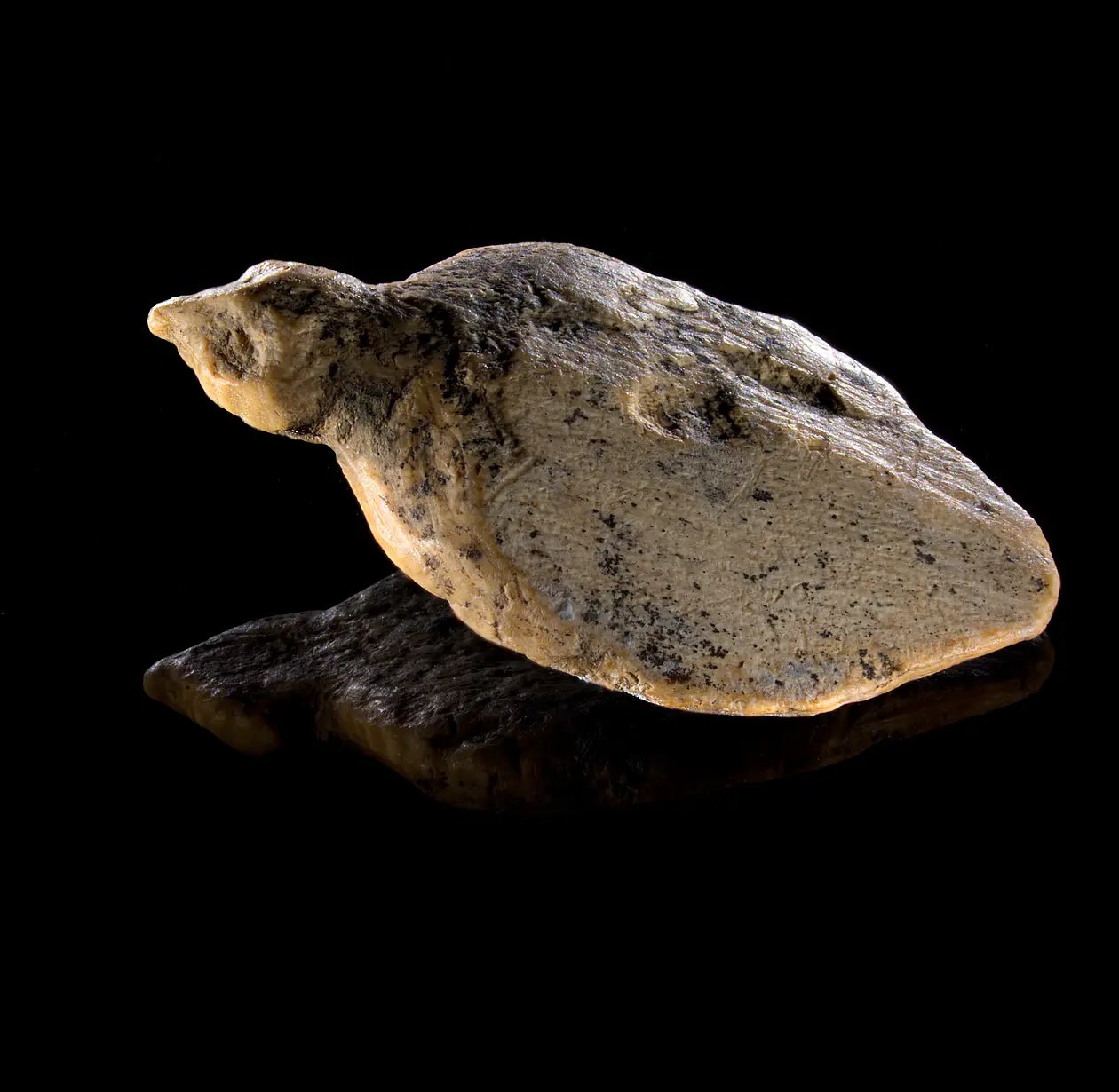
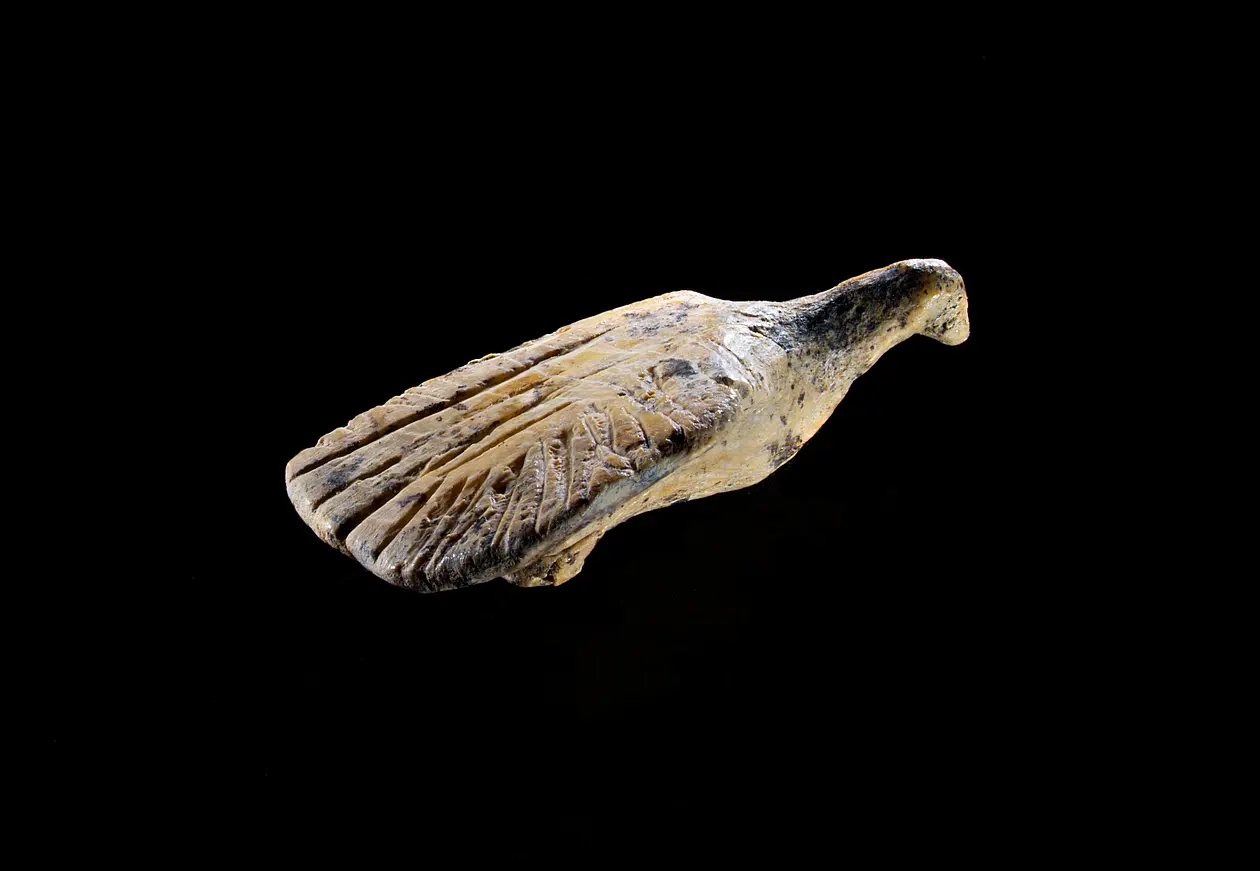
They were discovered less than five feet away from each other, which suggests they may have been carved by the same artist. The birds are extremely small, each measuring less than half an inch. Usually, figurines from this period measure between one to four inches. One of the figurines is complete and depicts what the researchers believe may be a brooding bird, while the incomplete one depicts a bird with outstretched wings that may be in flight or landing.
“The carvings are not highly stylized but instead include many specific and unique features,” Conard added. “Here, the artist has recorded detailed observations that allow us to consider which kind of bird is represented and what the bird could be doing.”
For instance, the bird with spread wings could be flying, landing, or mid-courtship.
The researchers believe one of the birds may be a ptarmigan, a bird in the grouse family that is often seen in artefacts from Hohle Fels and is still living today. The other bird could also be a ptarmigan, but it’s also possible that it’s another bird in the grouse family or a bird of prey. Whatever they may be, the figurines offer a window into not just the natural world at the time, but also how our ancestors interacted with it.
“Our region and landscape have always been the home of a vast range of birds, and nearby Lake Schmiechen is today a bird sanctuary,” added Stefanie Kölbl, the managing director of the Museum of Prehistory and Ice Age Art in Blaubeuren. “Even 40,000 years ago birds were here. Their song filled the air, and some species came to the region in the course of annual migrations. Their calls signaled warnings, and the residents of the region often used their hollow bones and even mammoth ivory to make flutes that produced magical sounds.”
Despite their tiny size, the figurines also raise many questions, including what meaning they may have held for the cave’s residents. Were they personal talismans? Could they be symbols of identity for specific groups like a sigil? Perhaps the cave has more answers waiting to be uncovered.
If you happen to be in Germany soon, the figurines will be on display at the Museum of Prehistory and Ice Age Art in Blaubeuren until April 2027.