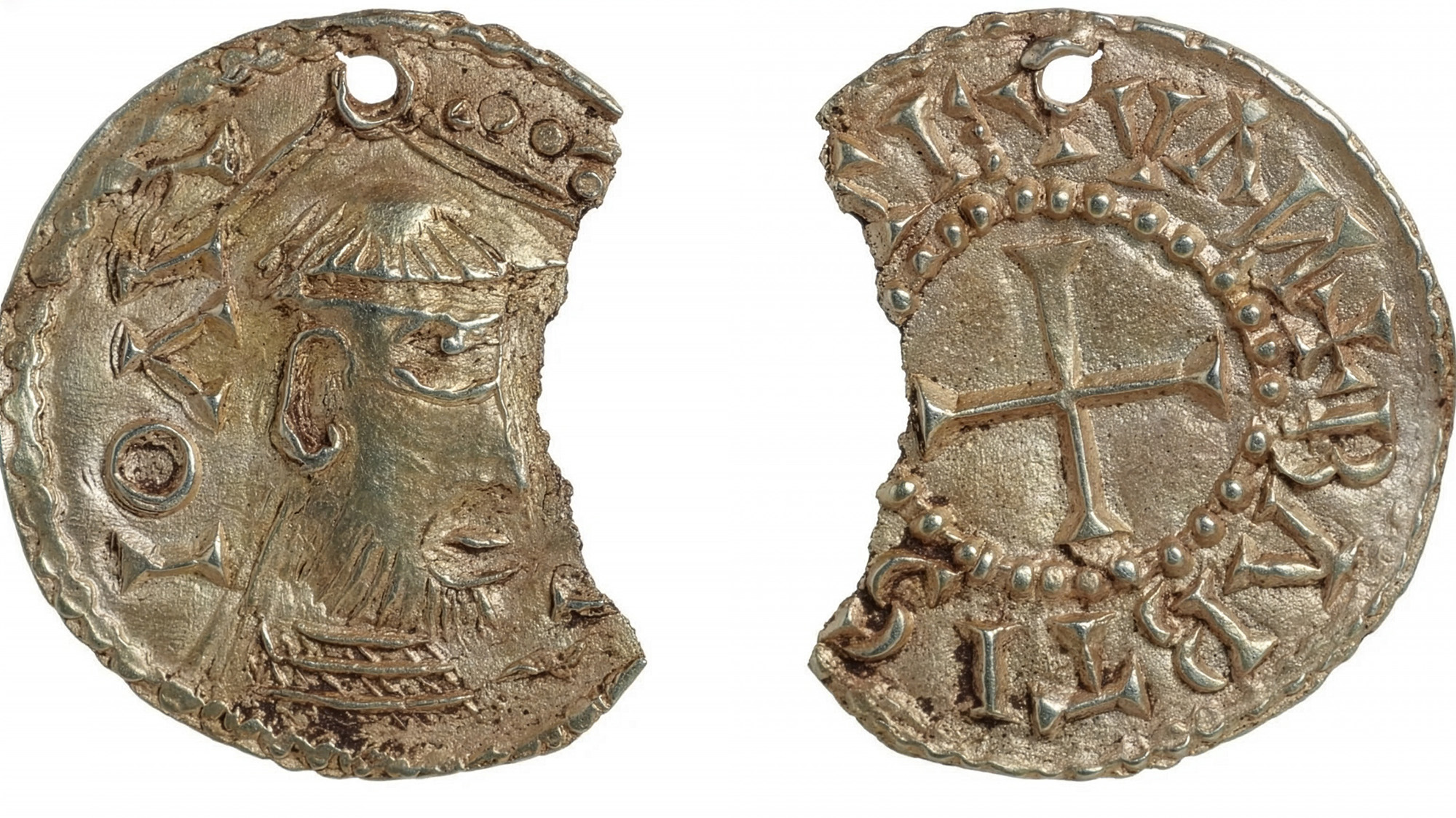
Less than a 30 minute drive from the University of Cambridge, a metal detectorist followed beeps to a remarkable treasure: a ninth century gold coin pendant.
Now finding long-lost coins in the English countryside isn’t exactly unheard of. In 2025, another metal detectorist discovered a gold coin dating back to the Iron Age in East Yorkshire. Before that, a Viking silver cache was discovered in North Yorkshire.
But this newly discovered gold coin isn’t like the others. This coin might just rewrite history, at least a little bit.
What makes this coin a bit of a head scratcher is what it depicts: a bearded profile of Saint John the Baptist. Thanks to a Latin inscription, experts have no doubts the coin shows the Christian saint. But what experts don’t yet understand is why the Vikings, who had conquered the English kingdom of East Anglia (where the coin was found) and who weren’t Christians, minted or wore a coin with a Christian saint on it. Why would pagans want a coin with a Christian on it?
In an interview with BBC, numismatics expert Simon Coupland compared the coin to “a child trying to fit a hexagonal object into a square hole.” The coin just doesn’t fit into history the way it should, which suggests we may have some of the history wrong.
Maybe pagan Vikings liked wearing pendants showing Christian saints as a way to assimilate into East Anglia’s largely Christian population? Or maybe a Christian East Anglian wore the pendant? Or maybe a Christian Viking wore the pendant, even though most historians believed the invading Danes were pagan, not Christian?
And just like that, one small gold coin can upend history—rewriting England’s cultural landscape during the island’s perilous ninth century.