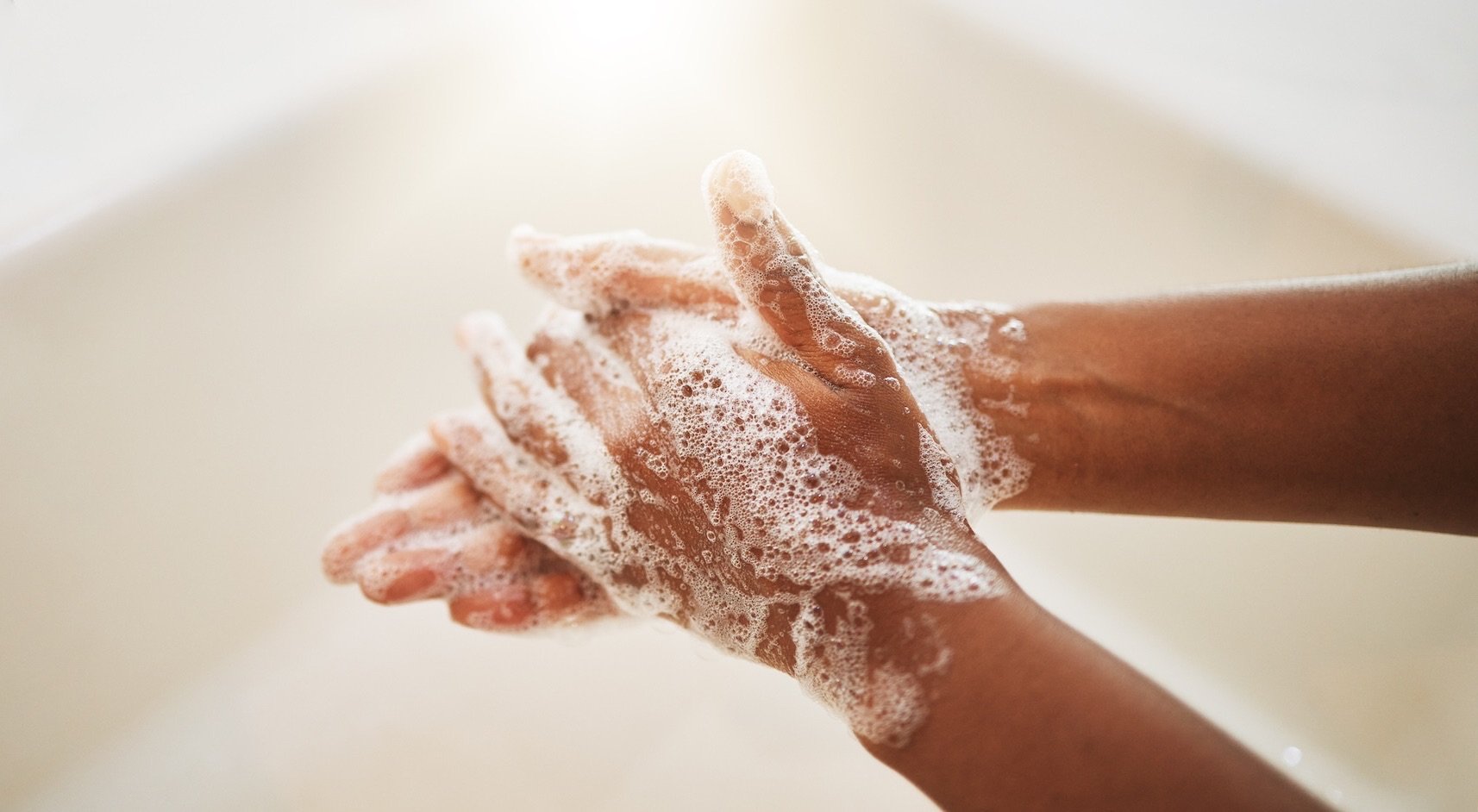
You would think, post-COVID, that we would all understand the importance of frequent and thorough handwashing. And yet, spend any time in a public restroom and you’ll see an alarming number of people who still see it as optional.
We know it can help curb the spread of illness when you’re sick, but on an average day, just how gross is it to not wash your hands?
“Your hands have a microbial flora that is always present. These are mostly good bacteria that help protect your skin,” Allison Pappas, PhD, Director of Business Development at Gillson Sciences, tells Popular Science. “On unwashed hands, your normal flora is going to be the most abundant group of inhabitants and they’re nothing to worry about. If you’re not washing your hands, they won’t become overgrown by deadly bacteria. However, your hands will accumulate an increasing number of pathogenic bacteria and viruses from your environment.”
Pappas explains that eating a sandwich or wiping your nose after exposure to these pathogenic bacteria are quick ways to then introduce those germs into your body. She describes it as a “tug-of-war,” with germs pulling one way and handwashing your only way to tug in the opposite direction. There are also physical characteristics that come into play as well. People with longer fingernails or rough, coarse skin give bacteria more places to hide. And it’s not always visible. As Pappas puts it: “Your hands can look clean but be utterly disgusting from a microbial perspective.”
According to the Center for Disease Control (CDC), germs like Salmonella, E. coli, and norovirus that cause diarrhea, as well as some respiratory infections like adenovirus and hand-foot-mouth disease can all be present on unwashed hands. Why? Because there might be…wait for it…invisible poop.
“It’s extremely gross, but assume you’ve got poop on your hands,” says Pappas. “That sounds crazy, but studies have found fecal bacteria on children’s hands and toys and on the hands of 28 percent of commuters in the UK. Even if you don’t have a child and don’t commute via subways, you’re still touching all the same door handles and common utensils as the people who do. That poop is transferring to your hands, you just can’t see it.”
So how gross is not washing your hands? It’s “you have poop on your hands” gross.
“Yeah,” says Pappas, “Please wash your hands.”
What is the right way to wash your hands?
Recent studies suggest that most people wash their hands too briefly to actually kill germs. So, if you want to avoid getting sick and spreading illness, it’s time to forget everything you thought you knew, and follow these instructions for proper hygiene:
- Wet your hands with water at a comfortable temperature. You can’t actually get the water hot enough to kill microbes without burning your skin, so just do what feels nice. The CDC actually recommends shutting the tap off while you lather your soap to conserve water.
- Lather your hands with soap. Don’t worry about buying something with anti-microbial ingredients; research shows that outside of a hospital setting, these additives don’t provide a significant benefit, and their use contributes to the rise of antibiotic resistance.
- Make sure you lather the backs of your hands, between your fingers, and under your nails, as dangerous microbes can lurk on any part of your skin.
- Continue scrubbing for 20-30 seconds before you start rinsing. It’s longer than you think. One study showed that most adults lather for just six seconds. Try singing “Happy Birthday” twice in your head (or out loud, if you’re feeling fun) to help keep time.
- Turn the tap back on and rinse. The CDC notes there’s little evidence that using a paper towel to turn the tap on and off after washing will improve your health.
- Dry your hands with a clean towel if possible, or with an air dryer. The CDC says that wet hands more easily transfer microbes. Plus, you don’t want to walk around with clammy hands all day.