
For the largest muscle group in the body, glutes get relatively little attention outside their cosmetic contributions. Bridges, squats, and kickbacks help develop size and shape, but they paint an incomplete picture; for total hip health and function, your regimen should include a wide variety of movements. This includes glute stretches that take your body’s second-most mobile joint through its fullest possible range of motion.
“Our hips are where we move from. They’re our center point, where we’re supposed to be bending from. And if we’re not bending well from them, then the body’s going to tense up,” says Dr. Jen Fraboni, PT, DPT, co-host of The Optimal Body Podcast.
That tension has the potential to wreak all sorts of downstream havoc for your health, including pain in the surrounding areas and increased risk of injury. But Dr. Jen has hand selected a fire playlist of glute stretches and movements intended to nip hip complications in the butt.
What causes tight glutes?
Dr. Jen says there’s a good chance you’re not moving right. As natural as getting up and walking and bending over may seem, the biomechanics underlying our most basic movements are surprisingly complex.
Nowhere is this more evident than the hips, which are powered by your glutes. This group of muscles comprising the gluteus maximum, gluteus medius, and gluteus minimus can fossilize for a number of reasons.
Too little movement
When’s the last time you did a crab walk? The answer is likely a very long time ago because most of our movements take place in a narrow band of the motion spectrum: get up, walk forward, bend over. These are called sagittal-plane movements that involve moving forward or backward.
“Most people lack the understanding of how to move into our hips, more so our glutes, in a way where we’re maximizing our (muscle) length so that we’re getting that increased mobility under load,” Dr. Jen says. “Essentially, tension mostly comes from people not moving into their hips in a wide enough variety.”
She says the other planes of movement—side-to-side and rotational—are too often neglected, limiting the opportunities to take the hip joints through their fullest ranges of motion.
Of course, movement doesn’t get much more limited than sitting for lengthy durations, and up to 80 percent of jobs in the U.S. are sedentary. Lack of movement via protracted sitting poses a perfect inert storm for glutes, which can get stuck in a weak, lengthened state as a result.
Overuse
On the other end of the dial, repetitive actions like running, cycling, or squatting without sufficient recovery can lead to inflammation and protective tightening in your glutes.
“Your body wants to create safety and stability, so tension often comes from a lack of stability and strength,” Dr. Jen says. “That’s why we feel so tense and tight, especially in the hips.”
Intense, prolonged exercise without proper warm-up and cooldown can heighten this effect.
Poor posture, body awareness
Ever notice how physical trainers and dancers carry themselves almost performatively erect as they sit, stand, and walk? They bring workout form to every movement, ensuring mindful motion at all times. But that’s not the case for most of us.
“A lot of times, there’s a lack of neural control around how we move from our hips, so we just end up rounding from our back or bending from our knees,” Dr. Jen says. “If we don’t access different types of movement patterns, that’s where we can find increased tension, tightness and lack of awareness in our body.”
Stress
“We live in a society of increased stress. A lot of times, that increased nervous system tension overall [puts us in an ongoing] sympathetic state, and we tend to clench,” Dr. Jen says.
She suggests bringing more awareness to how your body responds to stress throughout each day to avoid this state of constant tension, which invariably finds its way to our glutes.
“Sometimes it’s easier to ask your partner, ‘Can you see if there are lines on my pants?’ If my pants are bunching together at my glutes, that’s a really good indication I’m squeezing and tensing without even realizing it,” she advises.
Consequences of Tight Glutes
Unsurprisingly, many of the costs of glute tension resemble its causes, exacerbating deficiencies when it’s not outright creating new ones.
Compensatory issues
If you’ve ever limped due to a sprained knee or ankle, you’ve experienced the kind of anatomical outsourcing caused when limitation in one part of the body touches off cascading accommodations elsewhere; the healthy leg bears more load, the rest of the body wrenches and contorts to spare the affected ankle. Glute tension works similarly.
“If I have tension in my glutes, I’m always kind of tucked under, well then I’m rounding from my spine, I’m bending from my knees forward, I’m not maximizing how I move into those hips,” Dr. Jen says. “I could be leading into pelvic floor tension, increasing sensations of pain during sex, leaking and other symptoms. I could be experiencing tension in my upper back because I’m clenching down. That’s rounding into my upper back. That’s rounding into my chest.”
Eventually, that kind of long-distance compensation can cause repetitive-stress wear and pain just about everywhere:
- Hips
- Lower back
- Upper back
- Neck and shoulders
- Sciatic nerve
- Knees
- Ankles
- Feet
Injury risk
Unnatural movement resulting from tight gluteal muscles can lead to all kinds of instability, which can consequently put you in danger of a catastrophic misstep or back spasm.
“There’s a risk of increased tension onto my knees because now I’m not moving well through my hips,” Dr. Jen says. “There’s a potential increased risk of tension into my low back. There’s a potential increased risk into even my shoulders and my neck.”
Impaired posture and mobility
Tight muscles can limit range of motion, adversely impacting exercise performance and everyday movement. When it’s specifically the glutes that are tight, that can mean a hampered gait while walking or inhibited squats, lunges and down dogs when working out.
Benefits of Glute Stretches
- Improved mobility
- Greater stability
- Healthier gait and posture
- Relief and prevention of pain in the hips, back and knees
- Reduced risk of injury
7 Glute Stretches and Exercises for Maximum Mobility
Tightness, pain and restriction might drive you to seek out glute stretches, which are a good start. But they’re just that; a start. Because any plan for hip mobility should also include movements that strengthen—not just lengthen—your glute muscles.
“I don’t think stretching alone is the answer,” Dr. Jen says. “Improved range of motion is great, but If you don’t know how to use that mobility, the body’s still going to feel tense and tight.”
That means movements that not only passively stretch your glutes, but some that also take them through a full range of motion under load. Dr. Jen has seven favorites.
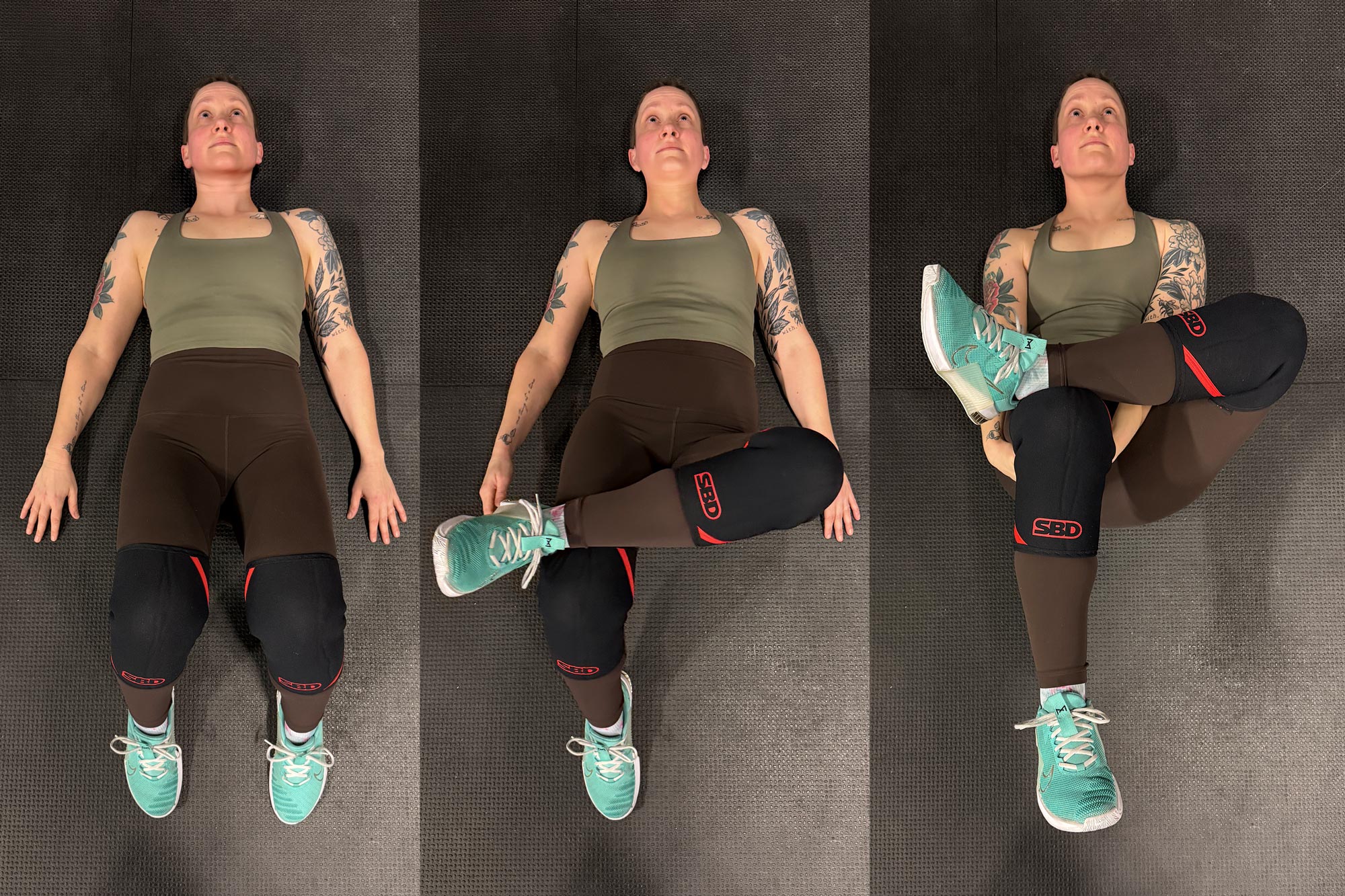
1. Lying figure four stretch
External rotation of the crossing leg in this stretch especially targets the gluteus medius and other abductors.
- Lie with your back and feet flat on the floor.
- Cross your right ankle over your left thigh, just above the knee.
- Clasp your hands around the back of your left thigh or front of your left shin and gently pull your left leg toward you as close as is comfortable.
- Hold for 15 to 30 seconds, then switch legs and repeat.
“The key for a lot of these glute stretches is that you have to maintain a straight spine,” Dr. Jen says.
Variations:
- For some people, crossing the leg alone may provide a sufficient stretch.
- Those who have trouble getting down onto the floor can perform the stretch on a bed.
- For a more relaxing stretch, put your supporting foot on a wall, which replaces pulling.
- If you work a desk job, perform the stretch in a chair with your supporting foot on the floor and turn toward the crossing knee.
“Often, if we lack mobility at the hip, the knee is going to torque and take the brunt of that stretch,” Dr. Jen says. “So, make sure you’re not feeling more tension in the knee than the hip.”
2. Pigeon stretch
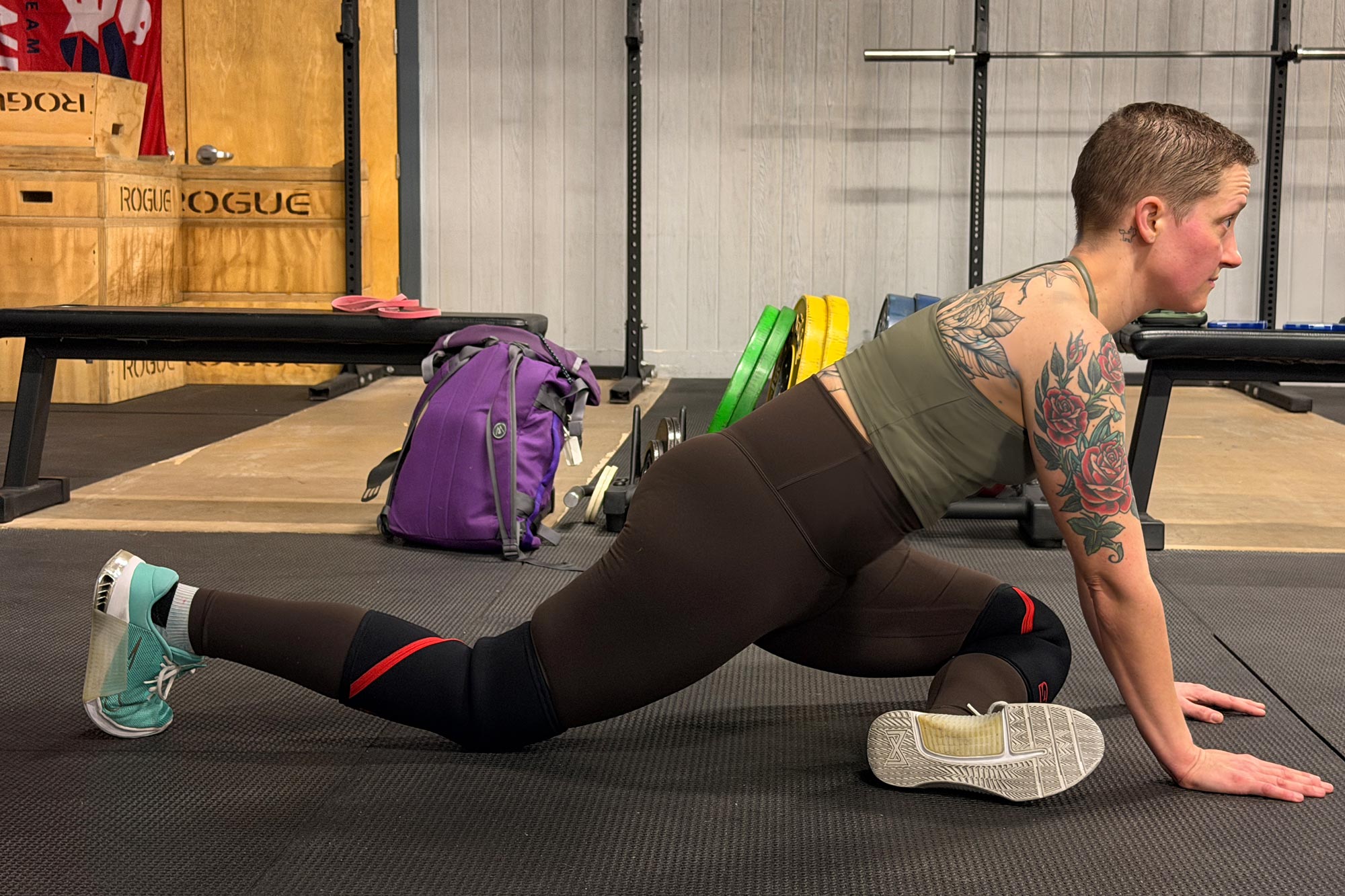
Commonly performed in yoga studios, pigeon is effectively an upended version of the lying figure 4 stretch, emphasizing all three glute muscles.
- Sit cross-legged on the floor, with your back straight and chest lifted.
- Shift your weight onto your right hip and, keeping your right leg bent, gently extend your left leg straight behind you. The top of your left foot should be on the floor.
- If you can, walk your hands forward, deepening the stretch in your right hip as far as is comfortable.
- Hold for 15 to 30 seconds, then switch sides and repeat.
Trainer tip: “I think from yoga it has kind of been preached that there’s one way to do a pigeon stretch, where the leg is [bent] 90 degrees and we’re leaning forward,” Dr. Jen says. “Many people do not have that range of motion, so feel free to bend that knee in as much as you need to.”
3. Hip 90-90
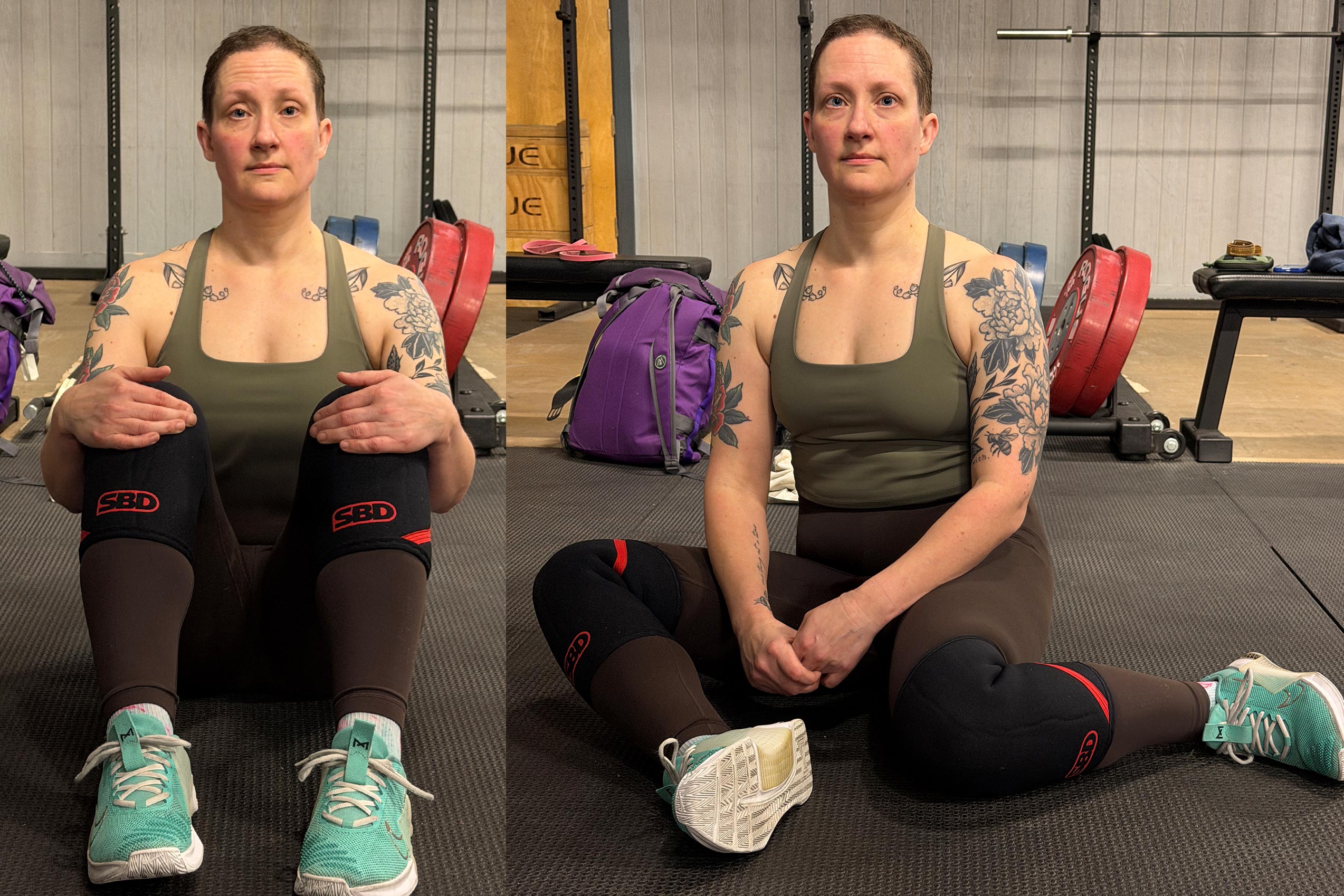
This one is Dr. Jen’s “ultimate favorite,” creating external rotation at the hip that helps stretch the side of the glute.
- Sit on the floor with your feet flat on the floor in front of you, your back straight and your chest lifted.
- Let both knees fall to your right, maintaining a 90-degree bend in both; your right thigh should point directly in front of you, your left thigh should point directly to your left, or as close to each as is comfortable.
- Hold for 15 to 30 seconds, then gently unwind the move, repeating on the other side.
Trainer tip: For those who have super tight hips, you’ll want to be elevated. Sit on a pillow, a folded blanket—something that elevates your butt and front leg to take tension off of your knees so they don’t feel like they have to take over rotating duties for the hips.
4. Step-up
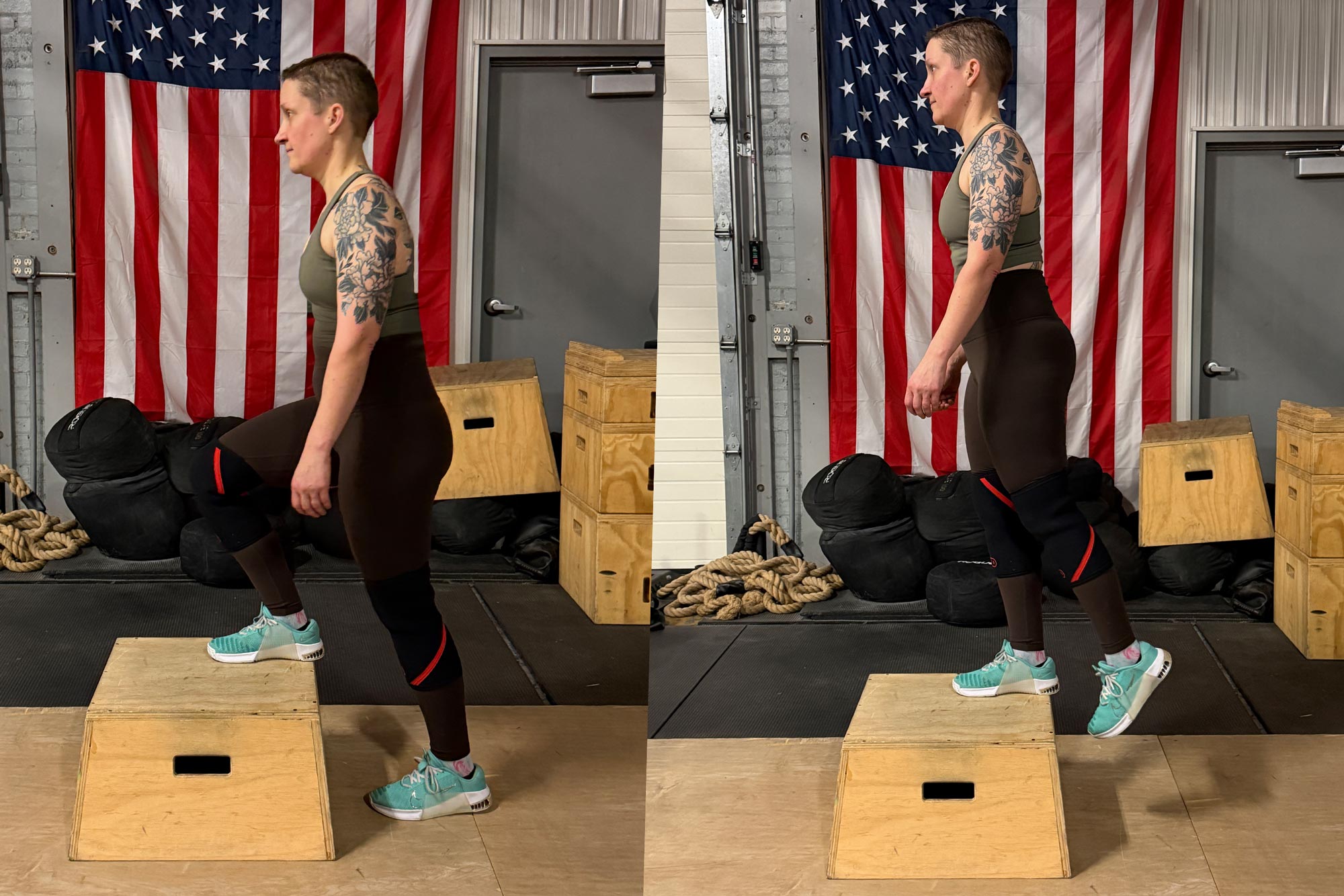
This leg-day staple trains strength throughout the movement, adding a serious stretch of the glutes at the bottom.
- Stand atop a bench or other elevated surface with your right foot planted and your left foot hovering just off the edge. Hold on to a doorway, rack or other stable surface for support if needed.
- Bend your right knee and, very slowly, lower your body down to the floor.
- Press into your right foot, straighten your right knee and push yourself back up to the bench.
- Perform as many reps as you’re able, then switch legs and repeat.
Trainer tip: You can use both hands for support, but if you just use the hand opposite the working leg, you’ll maintain a straighter position and access your hip with less compensation from your back.
5. Reverse lunge
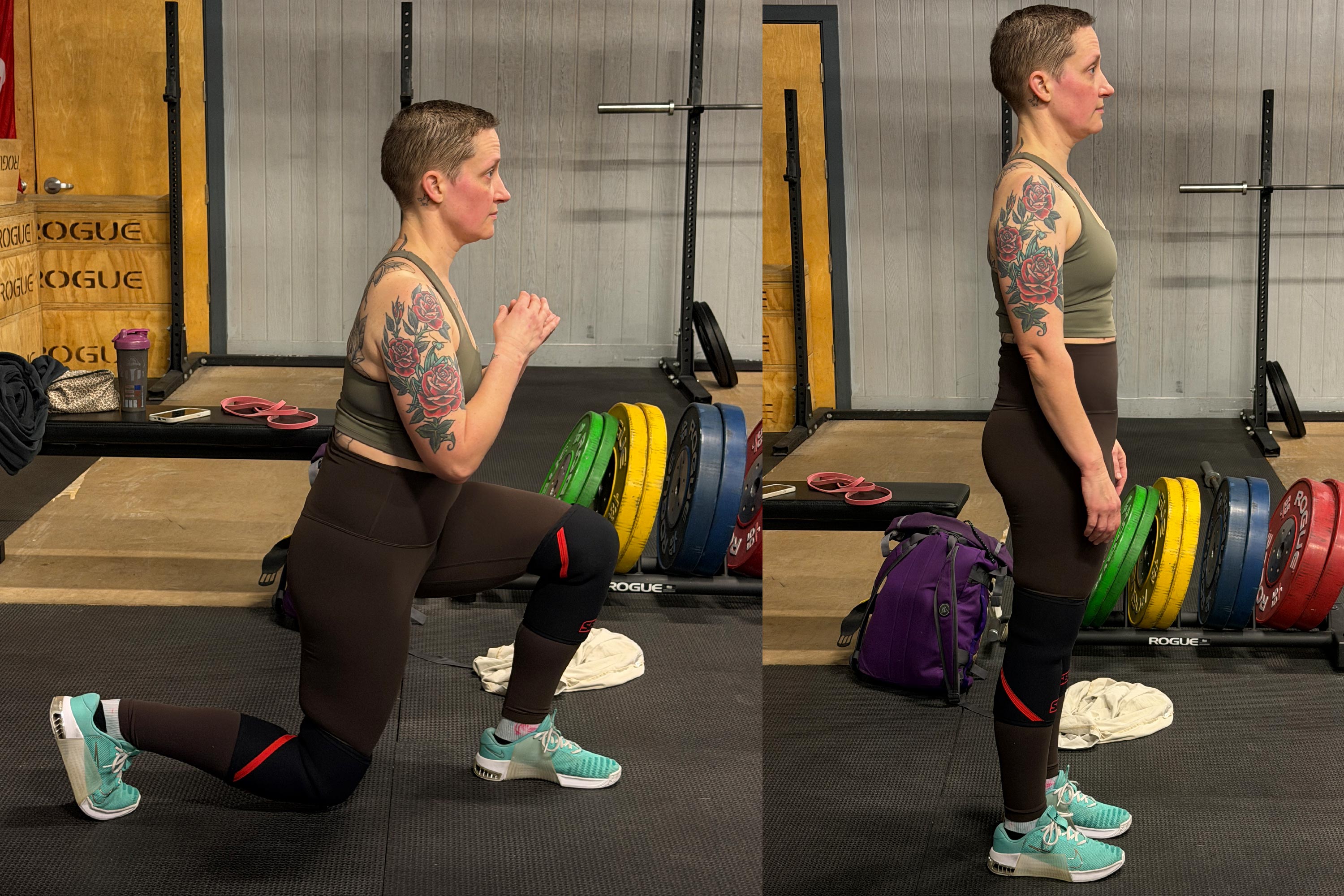
This lunge variation provides better glute activation than its forward counterpart with less impact on the knees.
- Stand tall, with your feet hip-width apart, your back straight and your chest lifted.
- Engaging your core, step your left leg back two to three feet, bend both knees and lower your body until your left thigh is parallel to the floor. Your knees should both be bent about 90 degrees at the bottom of the movement.
- Pause, then return to the starting position and repeat, performing an equal number of reps on both sides.
Trainer tip: Add pelvic rotation toward the front-leg side at the bottom of the movement to stretch the glute further. Dr. Jen recommends using the hand on your front-leg side to pull that hip back. “What’s often missed is that people just kind of rotate into it from the upper back, but if you drive your hip back, you’ll maximize the stretch.”
6. Lateral lunge
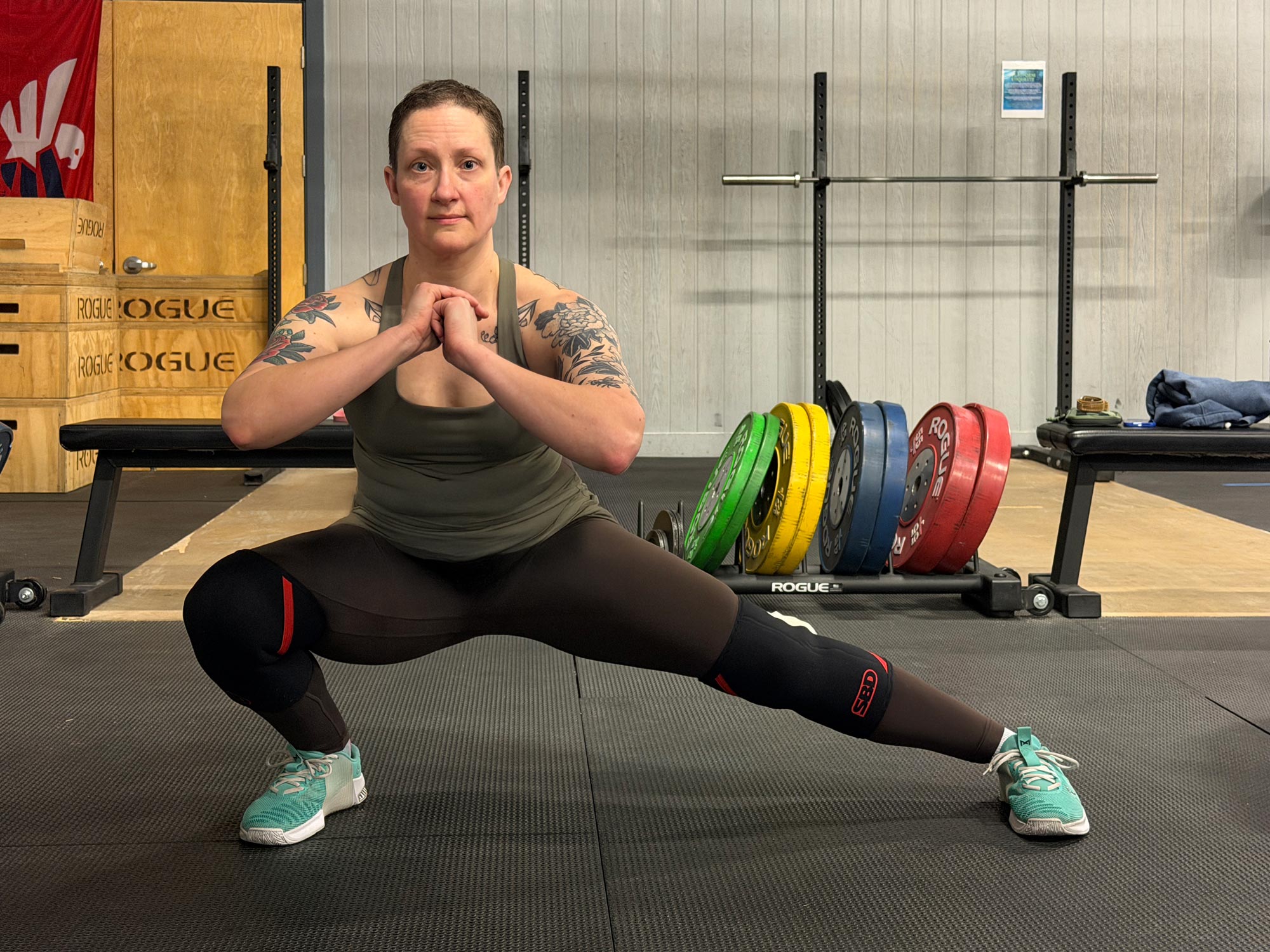
Emphasizing a different plane of motion, this lunge variation helps strengthen the side glutes (gluteus medius) for hip stability while stretching all three glute muscles.
- Stand tall, with your feet hip-width apart, your back straight and your chest lifted.
- Engaging your core, step your left leg wide to your left and, while keeping your right leg straight, sit your hips back and lower your body until your left thigh is parallel to the floor.
- Pause, then return to the starting position and repeat, performing an equal number of reps on both sides.
7. Banded deadlift
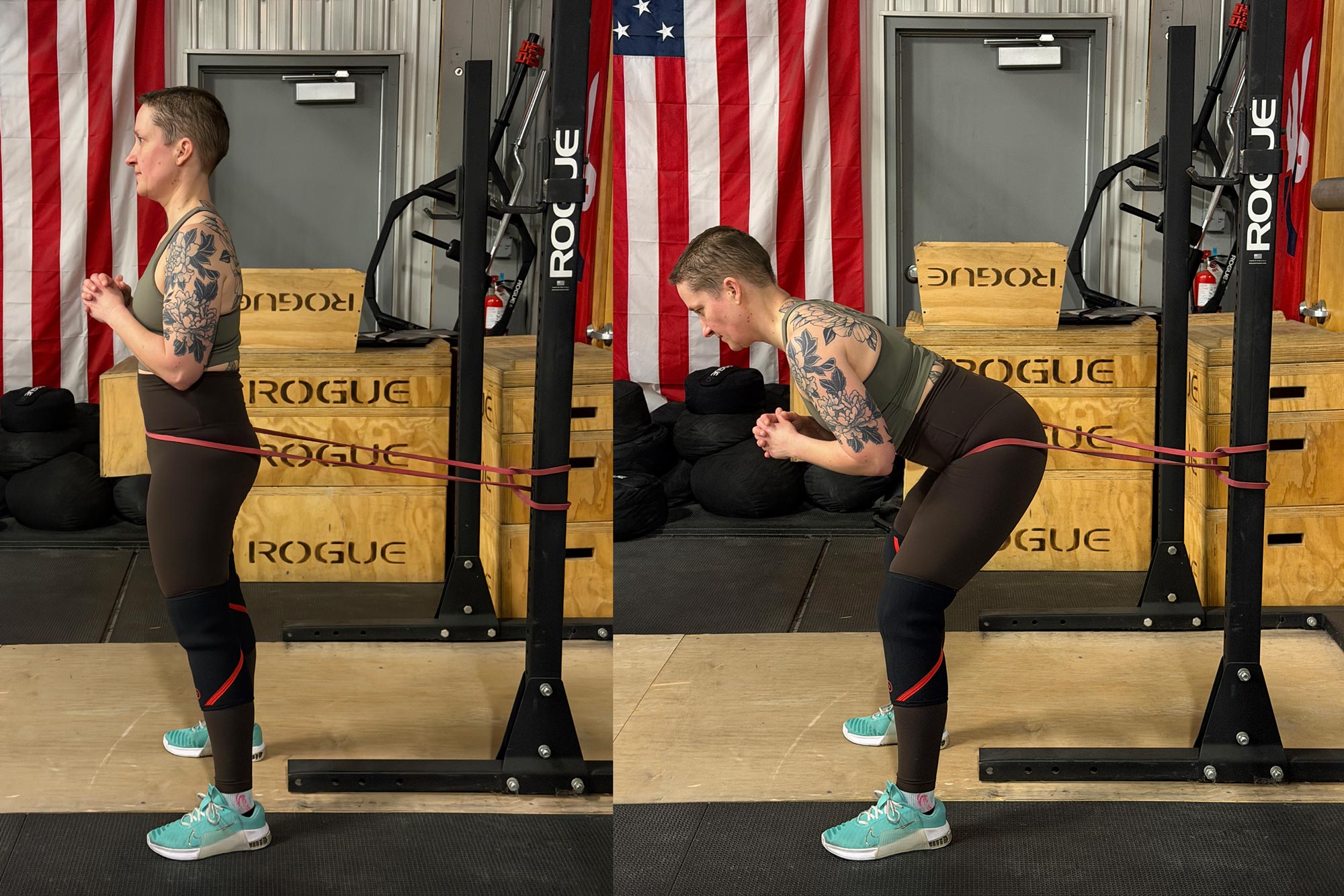
To really access the gluteus maximus—the body’s largest muscle—takes length and load. This movement combines range of motion with resistance to check both boxes.
- Attach a resistance band at hip-height to a doorway, rack or other stable anchor point, and loop it around your hips just below your waist.
- Facing away from the anchor point, step forward until there’s tension on the band. This is the starting position.
- Keeping your back flat (not arched), core engaged and knees slightly bent, hinge—slowly—at your hips and let the band pull you backward.
- Engage your glutes and push your hips straight forward to return to the starting position.
Trainer tip: The move is also effective from a kneeling position, which can help to take some of the lower back out of the equation.
“I don’t wanna think I’m pushing into the band as I’m coming up, but [rather] pushing the ground away,” Dr. Jen says. “If I push my feet down into the floor, I automatically engage my glutes.”
