
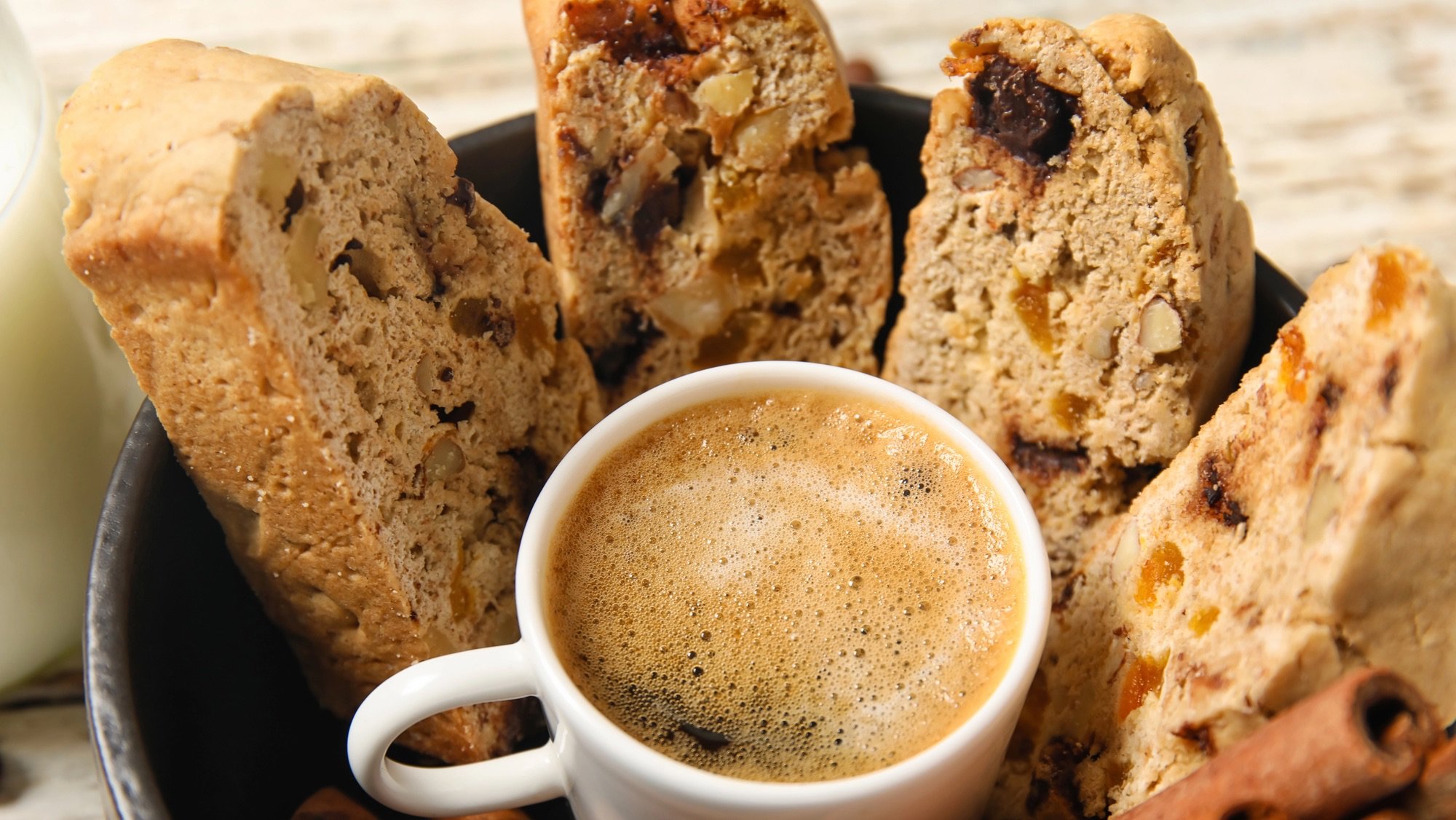
Step into a typical Italian restaurant in the U.S. and you’ll likely find “biscotti” on the menu. Typically served with a glass of sweet wine or cappuccino, these log-shaped crunchy cookies are a beloved treat that most of us associate with cozy dinners and Little Italy. But these crisp pastries were once a superfood used to power naval forces and shipping crews.
From ancient Rome to medieval Spain to Renaissance Venice, generations of mariners have relied on biscotti as a source of nutrition during months-long expeditions out at sea. It was only during the 16th century that these treats morphed into the sweet treats that accompany espresso.
Ancient Rome: the origins of “twice-baked” bread
The word “biscotto” literally means “baked twice” in Italian. It’s a term that refers to how the cookies go into the oven two times to create their characteristic extra-hard exterior. While the term biscotti (plural for “biscotto”) didn’t emerge until the Middle Ages, the cookies have been around since ancient Rome. That’s when the Roman government’s public ovens started baking a type of hard bread, made with flour, water, and a little salt.
Roman writer Pliny the Elder was the first writer to officially mention biscotti. In his first century book Natural History, he explains that a double-baked bread, known as panis nauticus, literally “bread of sailor,” was prepared in order to have the longest possible shelf life.
Ancient Roman bakers developed an ingenious technique to make panis nauticus last for long voyages out at sea. First, they baked the flour, water, and salt mix as if to make an “ordinary” type of bread. Then, they would bake the already cooked mixture a second time. Baking was done at low temperatures and for long periods of time to ensure that all moisture would evaporate. Thanks to this double baking process, panis nauticus could resist mold and bugs. It’s hard to guess what this long-lasting bread tasted like, they probably looked like rusks and tasted a bit like unleavened bread.
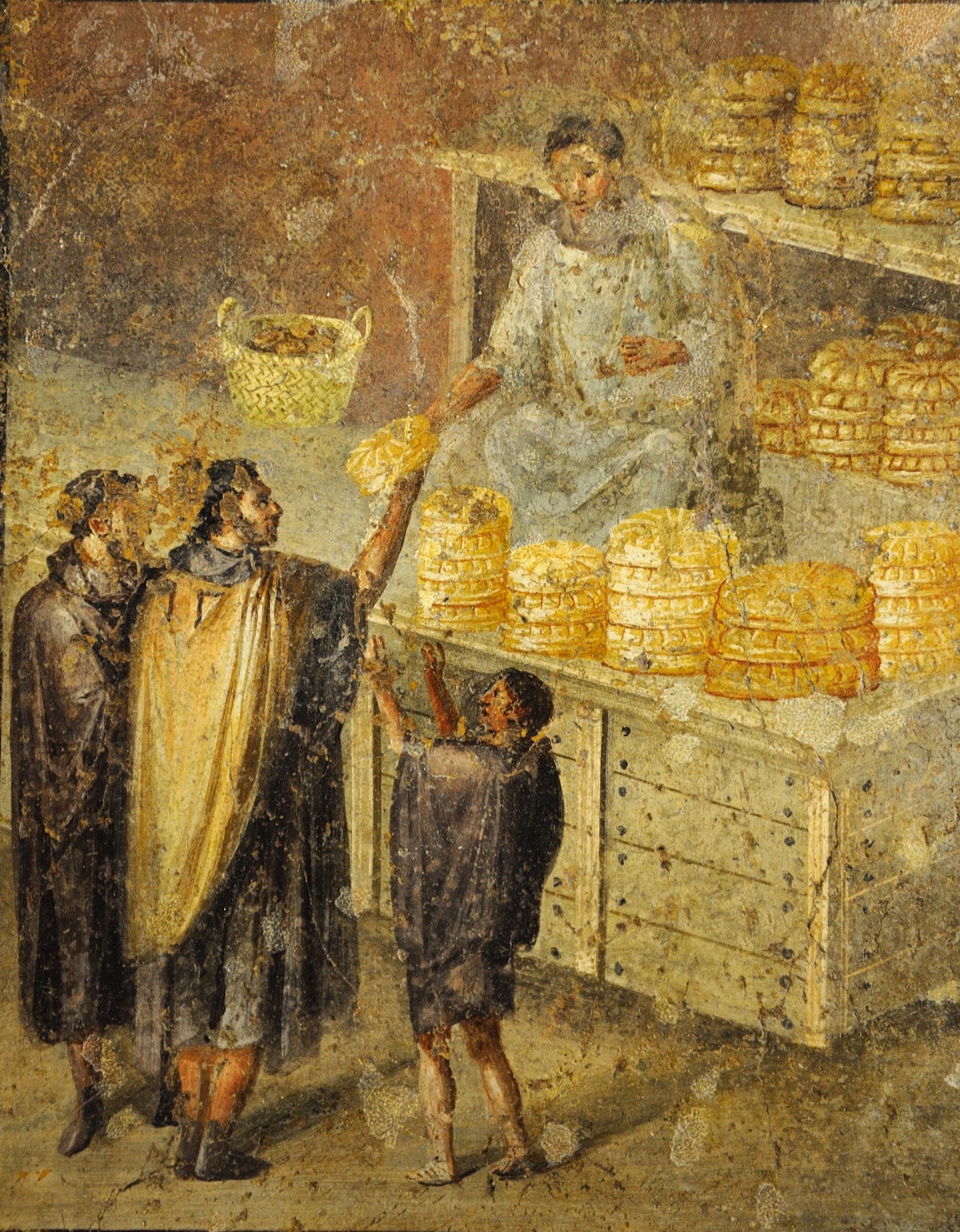
Twice-baked bread was such an important part of maritime life that the port city of Ostia, located 18 miles from Rome, was equipped with special bakeries tasked with making panis nauticus to supply navy fleets and trade ships.
These kinds of “maritime bakeries” were found in other parts of the Roman Empire, too. A recent archeological examination of the former Roman settlement of Barbegal in southern France found that Romans built an industrial-scale watermill complex to produce panis nauticus for sailors and vessels in the nearby port city of Arles.
Middle Ages: biscotti become a “superfood” powering maritime expansion
During the Middle Ages, panis nauticus became known as panis biscoctus, literally “bread cooked twice,” taking on the “twice baked” reference still used to identify biscotti today. Medieval Italian poet Giovanni Boccaccio even cited biscotti in his signature 1353 work, the Decameron, where one of the characters sends an enemy “out at sea without any biscotto.”
During the Middle Ages, biscotti became an important resource for maritime states. The Maritime Republic of Venice dedicated an entire area of the city to host bakeries tasked with making biscotti.
As architect Irina Baldescu explains in a study on the urban set up of medieval Venice, the so-called “Floating City” undertook a “massive biscotti operation” to supply its fleet during a quest to control eastern Mediterranean trade routes.
Venice’s “biscotti quarters” were strategically built in the area of Saint Biagio, located on the last stretch of Venice’s former navy yard, the Arsenal. Here, navy ships and trade vessels would make one last stop to stock up on biscotti—each Venetian sailor had a daily allowance of one biscotto and a bowl of soup—before setting sail for the Adriatic sea. While it is easy to conjure up images of sailors stocking up on cookies before setting sail, it is important to note that Venetian biscotti in the Middle Ages were salty, not sweet, and probably tasted like crunchy water biscuits.
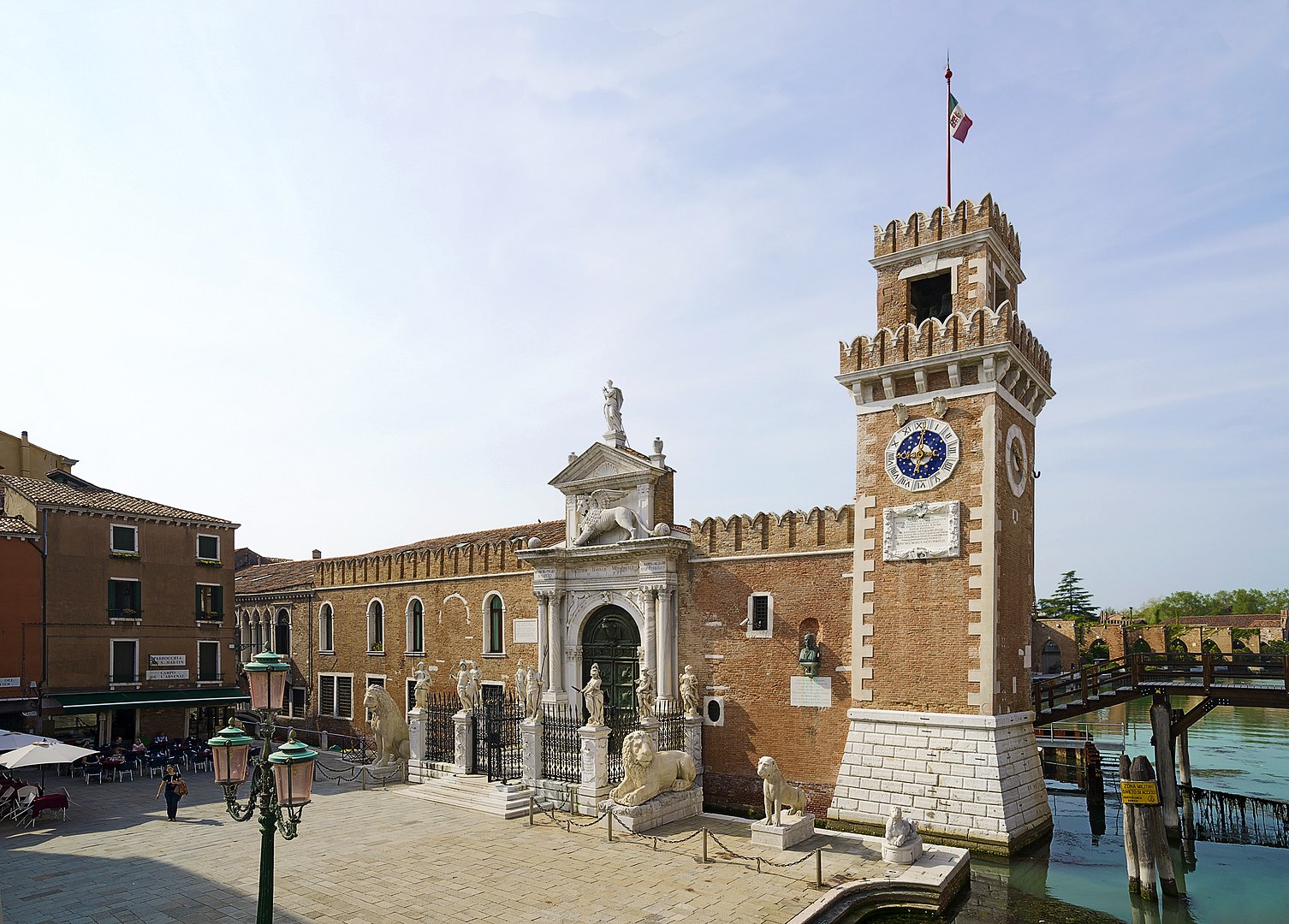
Venice’s L-shaped biscotti quarters, recognizable by the series of chimneys on their roofs, become an iconic part of the city’s skyline, and were captured in some of the earliest aerial maps of the city. Netherlandish painter Erhard Reuwich included the biscotti ovens in his 1496 map of Venice and Flemish-German cartographers Georg Braun and Frans Hogenberg captured them in their 1572 atlas Civitates orbis terrarum.
It wasn’t just Venice that powered its maritime expeditions with long-lasting biscotti. Tuscan maritime republics provided sailors with 400 grams of biscuits per day. An Aragonese fleet from Spain seized Naples in 1442 partly thanks to strategic supplies of biscotti from Sicily. And Christopher Columbus stocked up with 1,000 tons of biscotti (the equivalent of a small cargo ship) to power his expeditions to the New World.
“Biscotti made up approximately 75% of crews’ caloric intake during the Middle Ages and early Renaissance,” says maritime historian Lawrence V. Mott, author of a study on the diet of the Catalan-Aragonese fleet in the late 13th century. For his research, Mott examined ancient maritime archives and archeological remains to understand how a medieval maritime power like the Barcelona-based Crown of Aragon, which controlled parts of Spain, southern France, Sicily, and Sardinia, could sustain crews of 3000 rowers that needed approximately 4,000 calories per day and were out at sea for up to five months.
“The answer was biscotti,” he says. “All evidence indicates that long-lasting biscotti were sailors’ main source of carbohydrates.” Cheese, cured meat, and vegetable soup made up the rest of sailors’ caloric intake, Mott explains.
Of course, maritime biscotti were a far cry from the delicious treats that we munch on today. “After a few weeks at sea, biscotti would become hard as a rock,” Mott explains. Sailors typically crushed their daily ratio of the baked “superfood” and soaked it in soup or wine—a maritime version of biscotti’s current dessert combo.
Related Stories from 'The History of Every Thing' Series
“What really struck me as I went through the archives is the sheer amount of biscotti needed to power a navy fleet of that size,” Mott says. A fleet of 20 ships, each carrying 150 men, out at sea for a period of three months required a whopping 230 metric tons of biscotti, the equivalent of two adult blue whales. This colossal supply of biscotti was produced thanks to carefully coordinated biscotti-production on land.
“We tend to think of the Middle Ages as a period of low technological development,” Mott says, “but making enough biscotti for a fleet was a massive technological undertaking requiring coordination between galley managers, grain producers, watermill operators, and bakers.” Ensuring that biscotti could keep for as long as possible was also key. The Catalan-Aragonese fleet dedicated approximately 1.8 miles of fabric to make water-proof sacks that kept biscotti fresh while out at sea.
Renaissance: biscotti evolve from hardy sailor food to a refined sweet treat
During the 16th century biscotti started to evolve from a “maritime superfood” into a more domesticated treat. It’s hard to pinpoint the exact date, but at some point during the 1500s, when sugar started to become more available in Europe thanks to sugar cane imports from the Americas, biscotti, at least those baked for land-based consumption, started to take a sweet turn, featuring ingredients like almonds and sugar.
Bartolomeo Scappi, who worked as a chef for kings and popes, including Pope Pius IV and Pius V, featured a biscotti recipe in his famous 1570 cookbook, Opera dell’Arte del Cucinare, that called for flour, eggs, and sugar.
The Accademia della Crusca, a research entity for Italian linguistic studies, documented one of the first written instances of “cantucci,” the Tuscan name for biscotti, in a 1691 document featuring sugar as part of the recipe.
In the 19th century, Tuscan pastry chef Antonio Mattei enriched the biscotti recipe, adding almond flakes and anis. German writer Herman Hesse praised this recipe, which won awards for innovation in agriculture and industry at the 1867 World Expo in Paris, in his Italian travelogue.
During the 20th century, Mattei’s crunchy almond cookies became popular in Italy and around the world. Mattei’s biscotti’s rise as a global dessert staple coincided with the decline of the maritime biscotti.
As Mott explained, most navy fleets relied on biscotti, the salty version, as the key source of nutrition until the 19th century. Eventually, the development of the canning industry and advances in food refrigeration made it easier for fleets to take food out at sea, ending the centuries-old custom of stocking up on bags of biscotti before a sea voyage.
But for centuries before that, the biscotti powered generations of sailors, tradesmen, and explorers. “Biscotti were such the perfect food for sailors that fleets did not change their diets until they could take canned food on board,” Mott says. “After all, when you have something that’s working, why change it?”
In The History of Every Thing, Popular Science uncovers the hidden stories and surprising origins behind the things we use (or eat) every day.
