

In 1863, an eager young inventor in New York City spotted a newspaper advertisement that would change the course of material history. The notice offered a $10,000 prize to anyone who could invent a substitute for ivory in billiard balls. Playing pool was a booming leisure activity at the time, but the demand for ivory was already straining elephant populations. Enter 26-year-old John Wesley Hyatt. He had already been experimenting with a synthetic derivative of cellulose nitrate, and took up the challenge to create a faux ivory.
Building on earlier work by English inventor Alexander Parkes, Hyatt used photographic film bases to reproduce ivory’s look and feel. By the 1870s, his company was manufacturing a wide array of goods—from combs to piano keys—bringing what had once been luxury items within reach of the masses. Advertisements even claimed the new material was “saving the elephants.” At the time, ivory was prized for giving billiard balls their ideal weight, roll, and rebound, but a single elephant tusk yielded only four or five high-quality balls. Businessmen worried that the growing demand for the costly, temperamental material might soon outstrip the supply of elephants.
Celluloid, as Hyatt’s wonder material came to be known, carried its own quirks. It was dazzlingly versatile, easy to mold into objects that mimicked ivory, tortoiseshell, or coral—but it was also highly flammable. Newspapers and memoirs of the era traded stories of combs that singed too quickly at a curling iron, or billiard balls that cracked with a gunshot pop when struck just right. The very quality that made celluloid so malleable also made it volatile, a reminder that even the first plastic was as much alchemy as it was hazardous.

Plastics as conservation success
When plastic first entered the scene, it was celebrated as a conservation breakthrough. Early plastics were pitched as solutions to scarcity and as durable, affordable substitutes for wood, shell, and bone.
World War II marked the turning point from plastic as a novelty to necessity. The previously niche material suddenly became indispensable for the war effort: lightweight nylon for parachutes, plexiglass for aircraft windows, polyethylene for radar insulation.
Wartime necessity drove rapid innovation, scaling up production and diversifying applications. By the war’s end, plastics had proven themselves not just as substitutes for scarce natural materials, but as superior in strength, durability, and cost. That momentum only carried into peacetime.By the mid-20th century, plastics had become central to packaging, fashion, and household goods, accelerating a culture of convenience and disposability. As global bans on ivory and other natural materials took hold, plastic became the unquestioned default.
A world of plenty, a world of waste
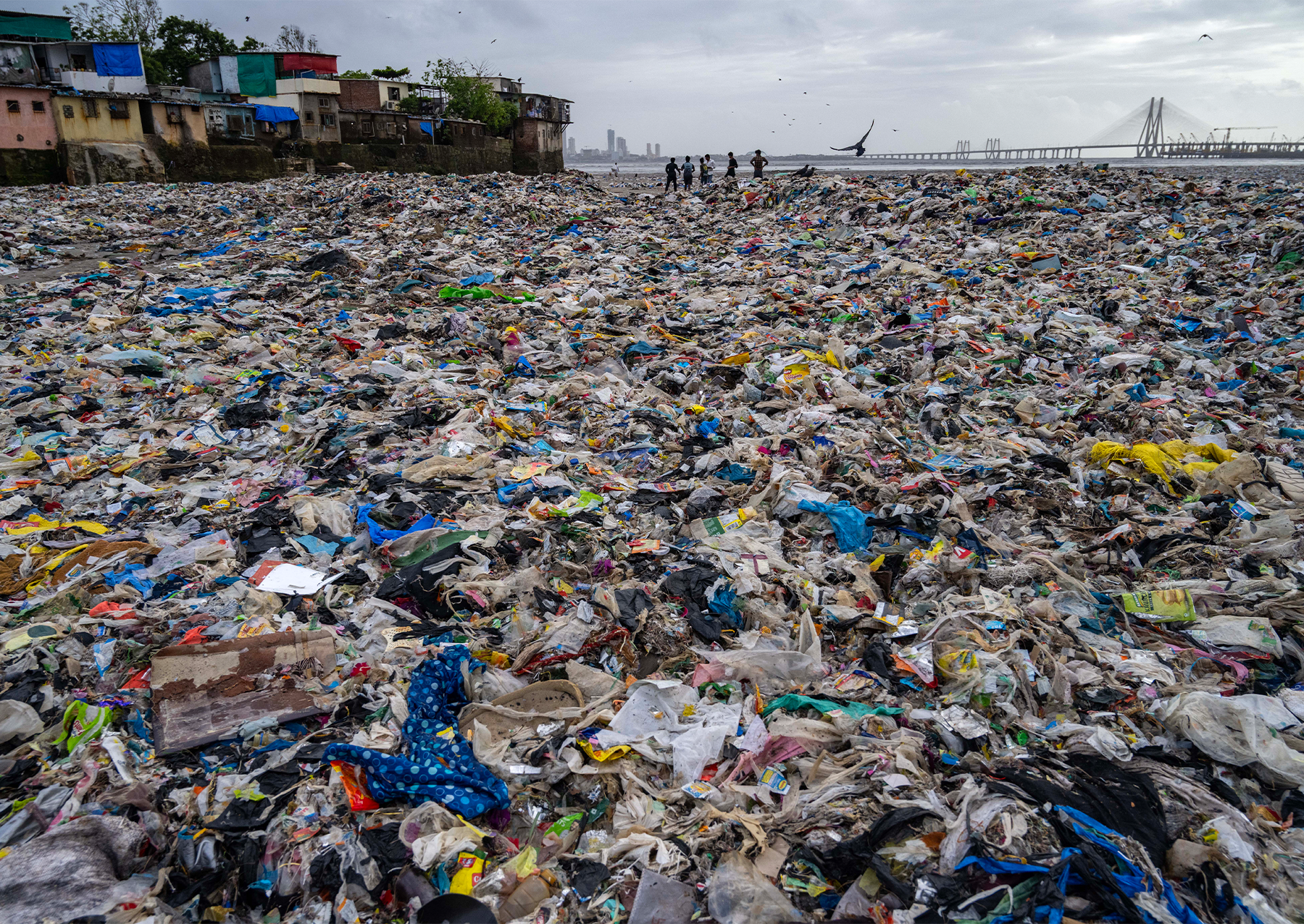
Over time, the very qualities that made plastic revolutionary, also fueled its transformation into one of the planet’s most pervasive pollutants. What began as a clever material solution and a nod toward conservationist thinking would evolve into a cornerstone of modern consumer culture over the next 100 years.
“By the 1950s, we had reached the ‘era of throwaway living’,” says Melissa Valliant, the communications director for Beyond Plastics. “Which was meant to be a great thing, because convenience was a luxury.It was something only the wealthy could really enjoy, and now the middle class was able to spend more time with family. It was seen as this wonder material, until people started noticing all of the pollution on their streets and in their waterways.”
Companies, wary of being held responsible for the growing waste crisis, turned to a new strategy: shifting the blame. Industry coalitions poured millions into glossy ad campaigns, persuading the public that the real issue wasn’t mass production but individual behavior—that if people simply recycled more diligently, the problem would disappear.
That cultural embrace of disposability was deliberate. Advertisements from the 1950s and ’60s celebrated families tossing plates and cups into the air, touting the marvel of “single use.” Convenience was marketed as freedom from drudgery, a symbol of modernity.
But companies were already aware that recycling alone could not keep pace with the rising tide of waste. By the 1970s, internal industry documents revealed what many scientists had already suspected: recycling would never be enough.
“Documents have exposed that truth, but companies were, and are, worried about their pockets,” says Valliant. “And that’s why we’re here in 2025 with a massive plastic pollution crisis.”
That crisis is driven by an unprecedented surge in production. Since 1950, plastic manufacturing has increased by more than 200-fold and is projected to nearly triple again by 2060, surpassing a billion tonnes a year.
The result is a world blanketed in waste. Researchers estimate that more than 8 billion tonnes of plastic have now accumulated across the planet—from the top of Mount Everest to the deepest ocean trench. Today, the residue is everywhere: microplastics in the oceans, in the soil, in the food we eat, and in our very bloodstreams.
The cost of convenience
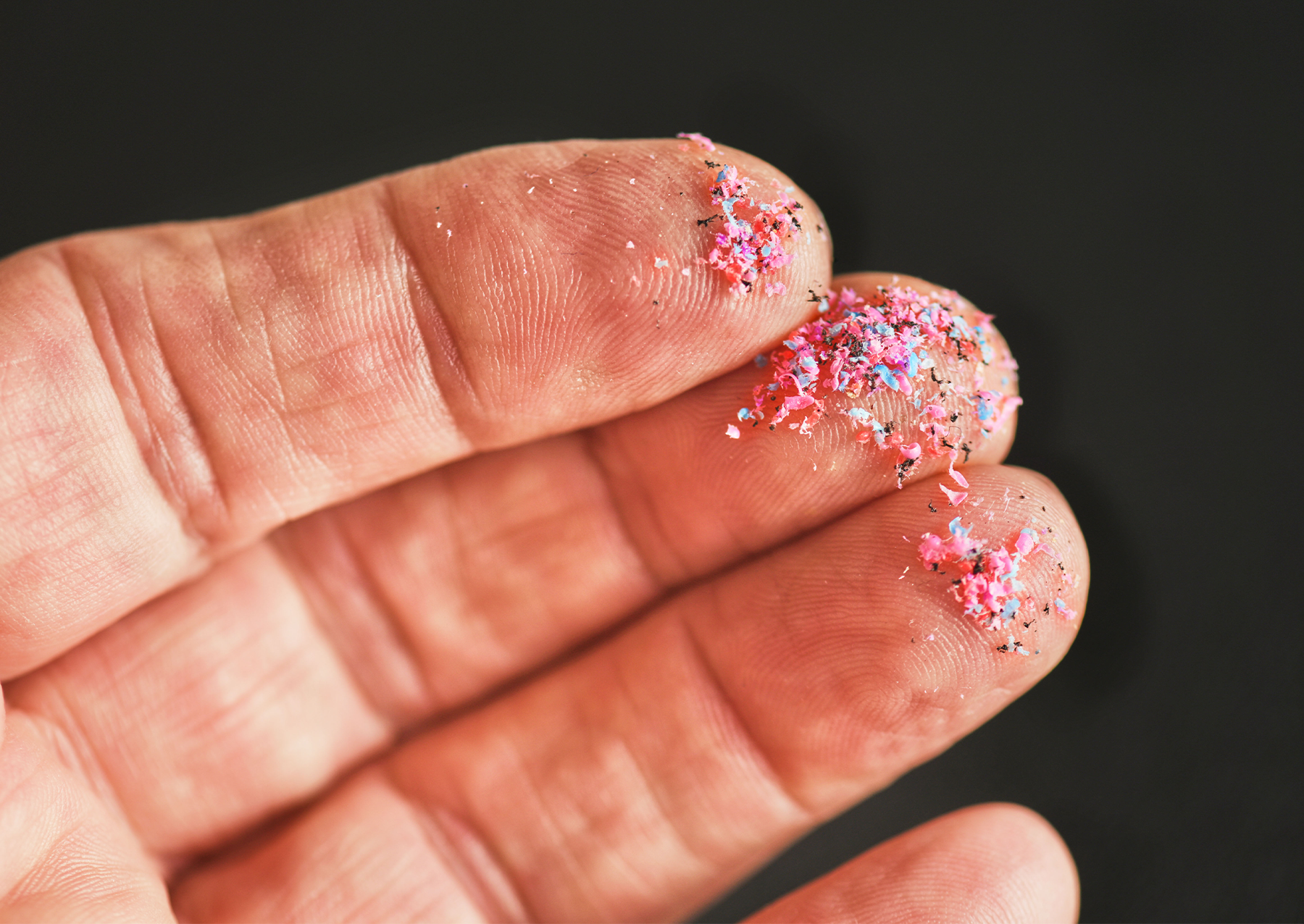
While plastic may look low-cost on the shelf, its true price is staggering. Researchers estimate that plastic is responsible for at least $1.5 trillion in health-related damages every year worldwide. More than 16,000 chemicals are known to be used in, or unintentionally present in, plastics.
Scientists have linked plastic-associated chemicals to cancer, nervous system damage, hormone disruption, fertility issues, and now even increased risk of heart attack, stroke, and premature death. One recent study suggests that the average human brain now harbors as much microplastic mass as a plastic spoon. And the exposure begins very early, as microplastics and nanoplastics have been detected in newborn babies.
“Essentially, humans are now being born pre-polluted,” notes Valliant. “It is quite concerning–and there’s so much that we don’t even know. I see plastic and its associated chemicals like lead: we may not fully realize the extent of the problem until it’s too late.”
[ Related: Plastic makers lied about recycling for decades. What do we do next? ]
And, the costs are not borne equally. Valliant points out that while companies often defend their reliance on plastic by calling it affordable, that claim ignores the hidden costs. Black and low-income communities living near plastic production sites, she notes, bear the brunt of the pollution through higher medical bills and chronic health issues. And ultimately, Valliant adds, the health consequences extend to everyone, regardless of where they live.
“There’s another paradox,” Valliant notes. “As taxpayers, we’re the ones footing the bill for the cleanup of all this plastic waste. It’s not the companies producing it—it’s us. We pay for the transport, the recycling, the landfilling, the incineration, all of it.”
But, “There’s reason for hope,” she says.
Around the world, governments are beginning to rein in unnecessary single-use plastics, from bags and straws to foam containers and hotel toiletry bottles, while some are taking legal action against the companies that make them.
“Individuals should not underestimate their power when it comes to instigating these kinds of changes,” Valliant continues. “Their voice and activism can be the catalyst for their institution or community ditching throwaway practices. Beyond Plastics has some guides to help restaurants, dry-cleaning businesses, and programs like Meals on Wheels shift away from single-use plastic and toward safer options for people and the environment.”
At the same time, scientists are in search of more solutions: a study published today in the journal Nature Communications detailed a new kind of plastic made from bamboo that rivals traditional plastics in strength and durability, yet biodegrades in soil within 50 days. The material can even be recycled in a closed loop while retaining most of its original strength, signaling a potential leap toward truly sustainable design.
Paired with the growing shift toward reuse and refill systems in communities and businesses, Valliant highlighted that solutions to the plastic crisis don’t lie in any single material, but in the collective imagination to build a different kind of future. One that learns from plastic’s past and reclaims what it was meant to offer: innovation in service of the planet, not at its expense.
