
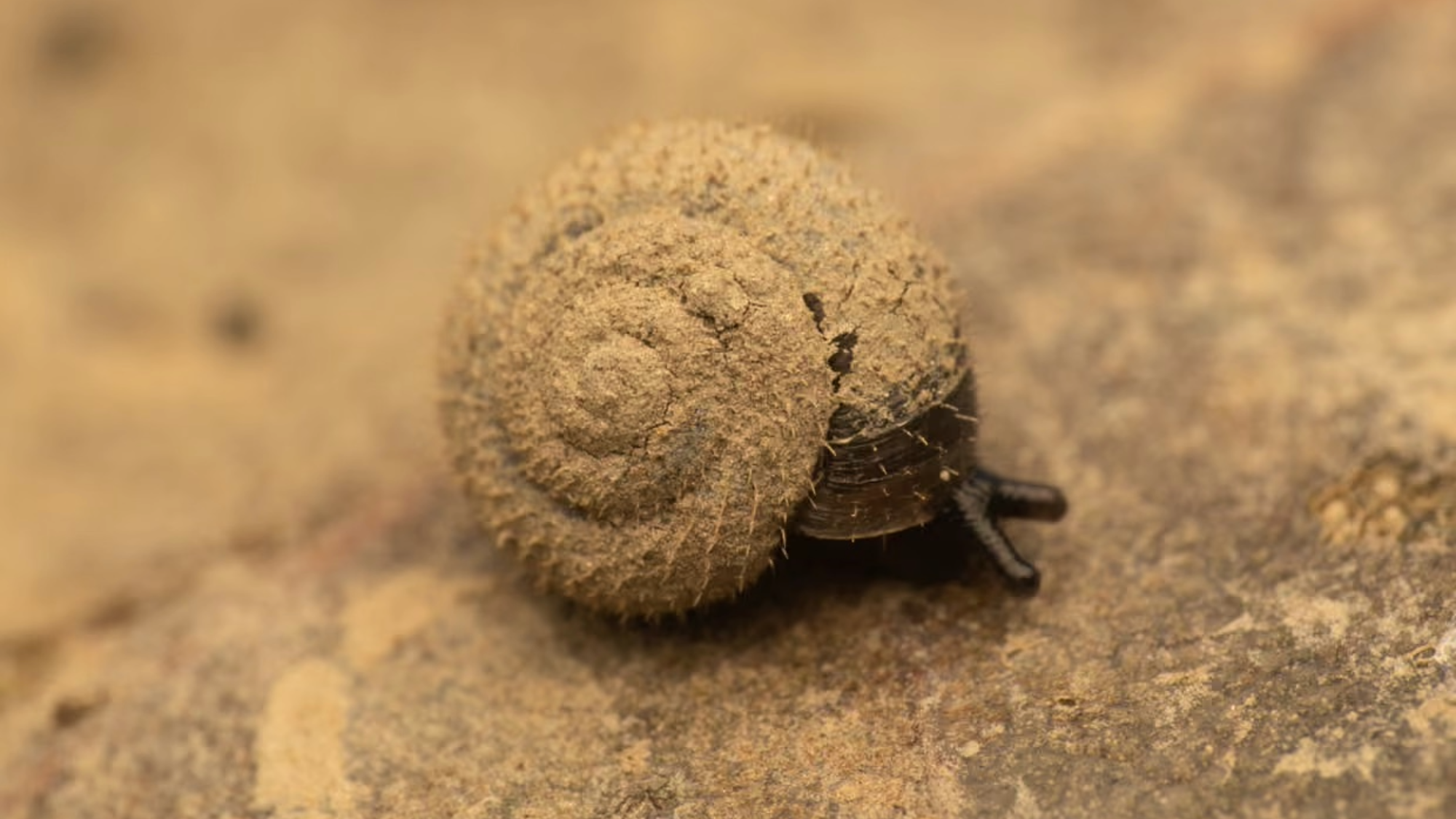
Meet the German hairy snail (Pseudotrichia rubiginosa): a tiny mollusk with a hairy shell that lives along the River Thames in England, among other places. Researchers believe that its signature hairs help the strange creature live in its damp, riverside environments by enabling it to sweat off moisture. By wicking off that excess moisture, the slime gets more sticky, so the snail can hold onto the slick riverside debris and the plants it eats.
However, the snail needs some extra support. The German hairy snail is one of the United Kingdom’s most endangered mollusks, with its original habitat along the river diminished to limited, disconnected areas. As such, rewilders, conservationists and citizen scientists in London have started conducting surveys to investigate the situation.
They are trying to better understand the snail’s presence in the city and contribute to future conservation efforts..
“These surveys will help us understand how the snail is faring and how we can protect it – not only securing their future for years to come, but also helping safeguard green spaces throughout London for people and wildlife for future generations,” Joe Pecorelli, Freshwater Conservation Programme Manager at the Zoological Society of London, said in a statement by the society.
According to the fossil record, the German hairy snail has existed in the UK at least since the Stone Age and perhaps even since the last Ice Age. At the time, mainland Europe was still connected to Britain, and the Thames was connected to the German River Rhine.
“This charming little snail has called our riverbanks and wetlands home for thousands of years – yet it is sadly now very rare in the UK, potentially restricted to just a few sites along the Thames,” Pecorelli added.
The snail has been known to exist across Europe. An assessment from 2013 identified eastern Russia, islands in the Baltic Sea, and Germany—where the mollusk is considered endangered—as parts of its range.
Getting a better picture about the distribution of this funky snail is important to its survival and could rally efforts to safeguard and restore London’s riverine habitats. Clearer waterways will only benefit all of the f other native animals, including the European eel, seals, and the short snouted seahorse, that live in London’s busy waterways.
