
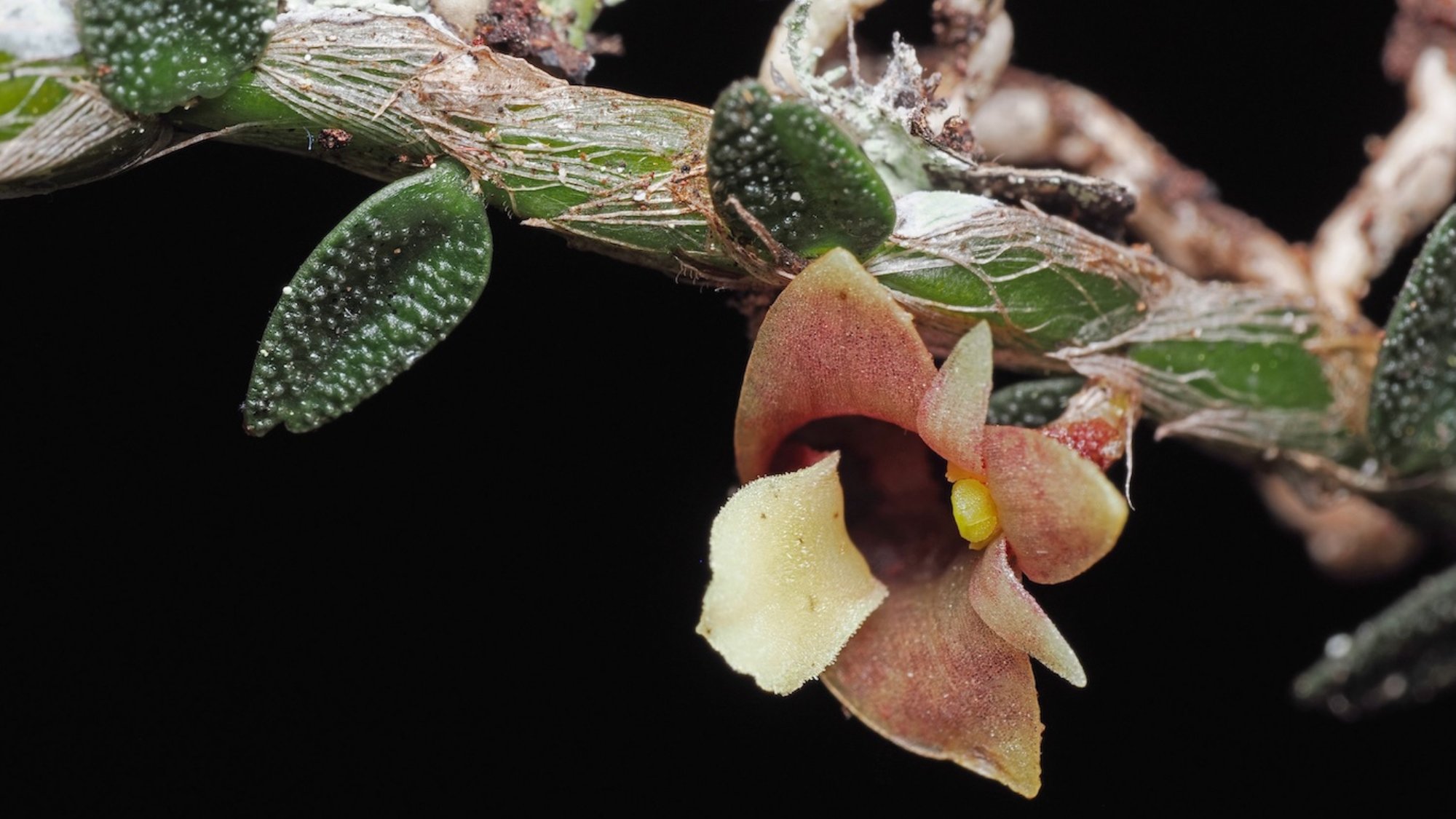
It’s easy to forget how much we still don’t know about our planet’s ecosystems. Every year, researchers identify thousands of plant and fungi species that were previously unknown to science. While it can be tough to highlight the most striking examples, an international team of scientists led by the Royal Botanic Gardens, Kew (RBG Kew) in London, have offered their personal picks for 2025. The selection of spider-infecting zombie parasites, stone-camouflaged plants, and a “fire demon flower” is certainly worth a closer look.
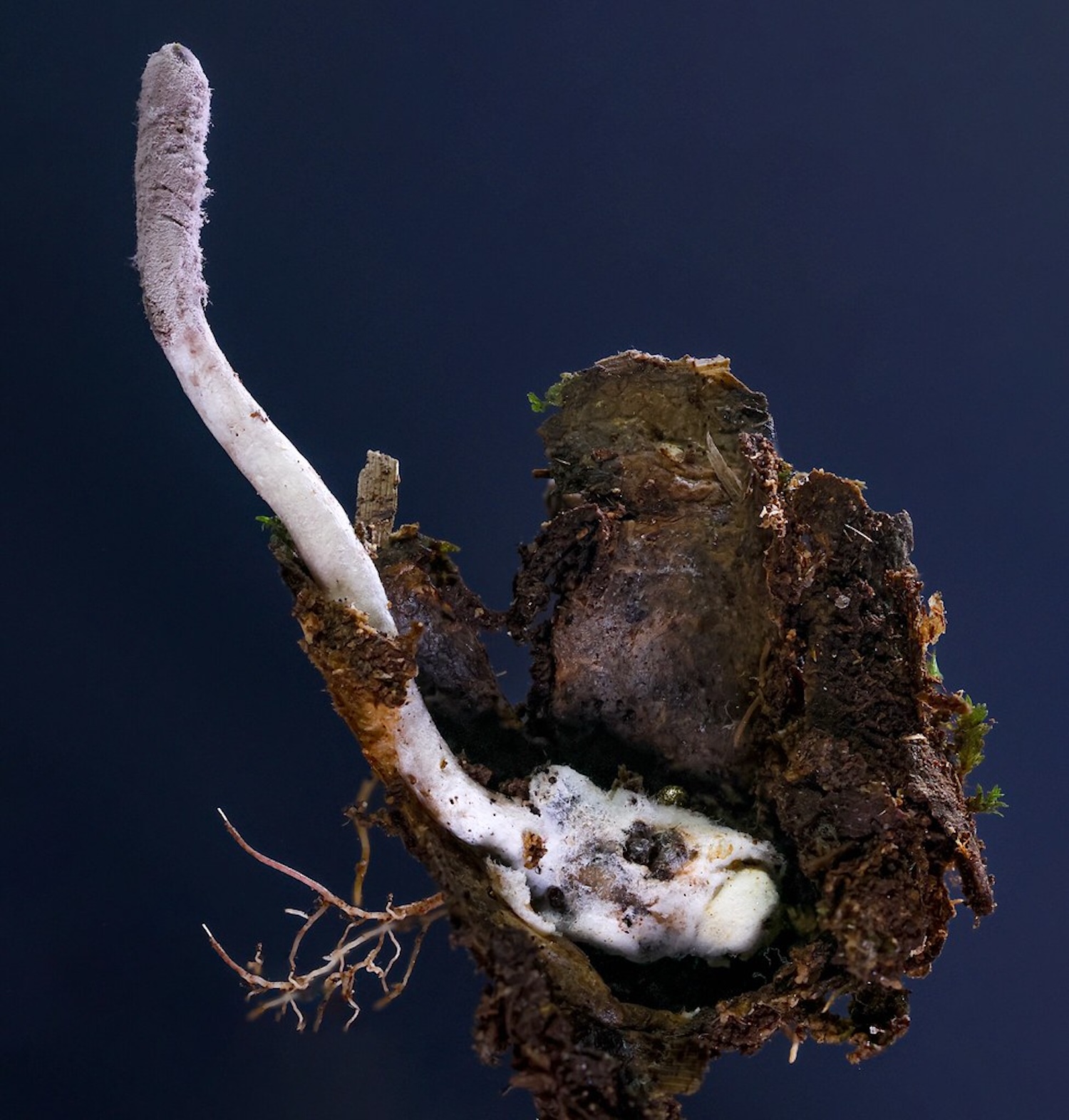
In Brazil, botanists described Purpureocillium atlanticum for the first time. This deadly fungus targets the region’s trapdoor spiders that reside in burrows on the rainforest floor. Once infected, P. atlanticum kills the arachnid after covering almost its entire body in fine threads of white root-like structures called mycelium. The fungus then grows a nearly 0.8 inch fruiting body through the trapdoor burrow entry. This extension eventually releases its own spores into a world of unsuspected spiders.
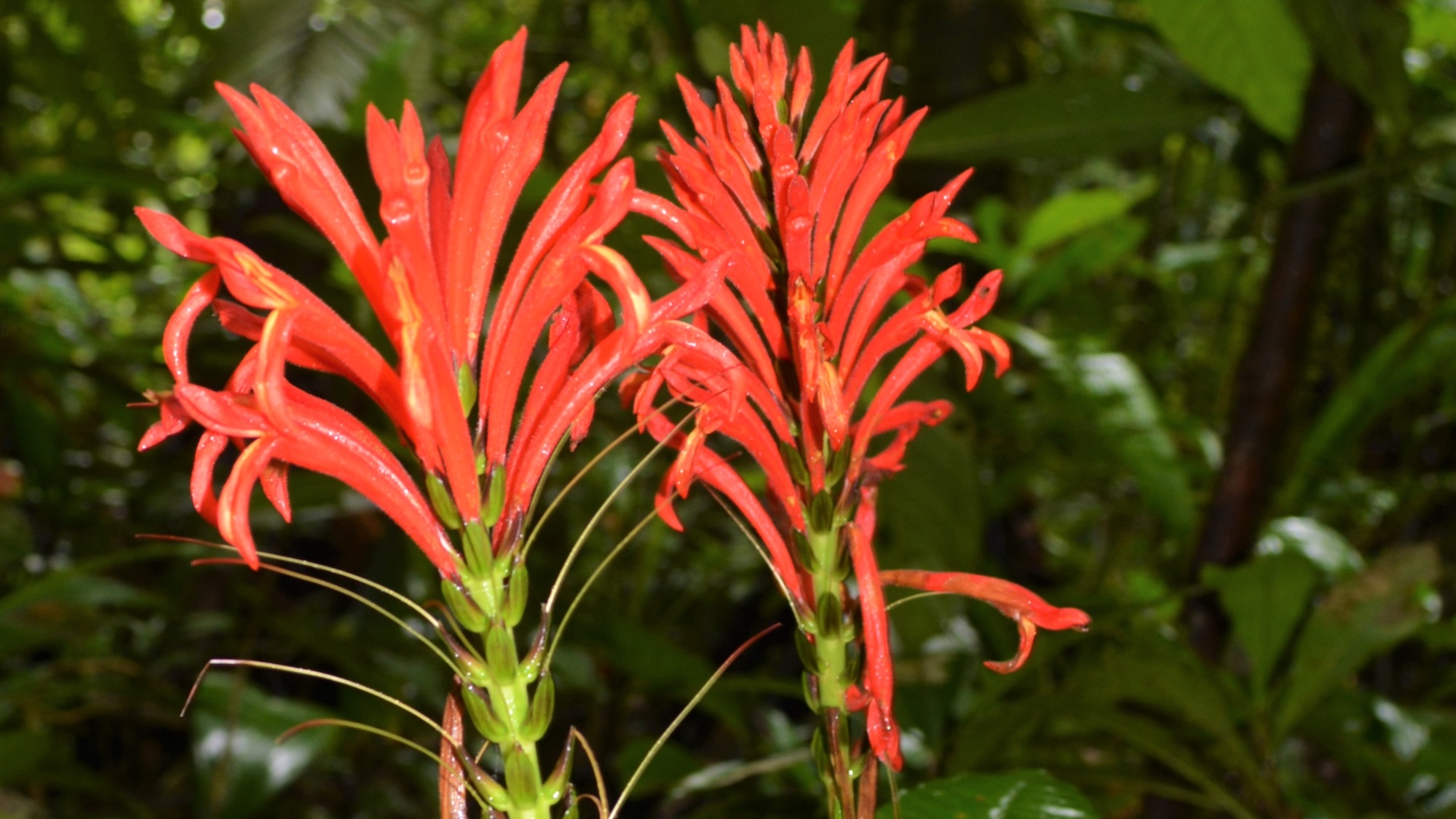
Other year-end selections are much larger than a zombie mushroom. In Peru, researchers described an acanth shrub that reaches upwards of 10-feet-tall. These plants feature fiery red, yellow, and orange flowers that reminded scientists of Calcifer, the fire demon in acclaimed animator Hayao Miyazaki’s 2004 classic, Howl’s Moving Castle. With that in mind, Aphelandra calciferi is an ode to the character—one with “great potential as a conservatory ornamental plant,” according to Kew.
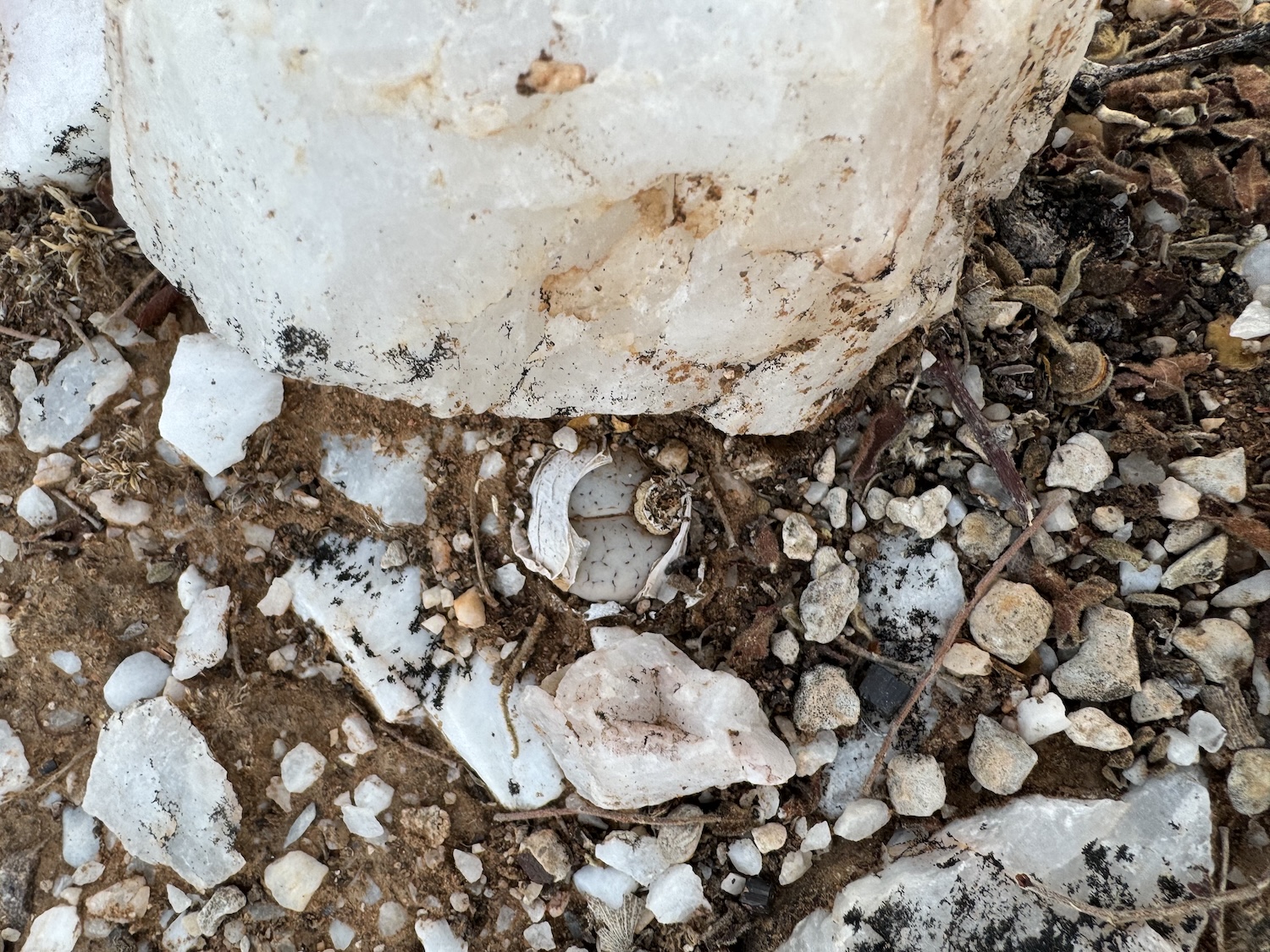
Not all species are recognizably plants or fungus, however. Namibia’s woodland savannahs feature a newly described subspecies of lithop (Lithops gracilidelineata subsp. mopane) also known as a “living stone.” The moniker is well-earned, too. Each succulent looks more like a tiny pebble than a plant, and grows a single pair of leaves that collect sunlight through filter-like screens. Unlike other lithops, the mopane is more grayish-white in coloration than other relatives with more brown-pink or cream hues.
Continuing to scour the world for unknown species is a critical role for today’s botanists, according to Martin Cheek, RBG Kew’s senior research leader for African species.
“It is difficult to protect what we do not know, understand and have a scientific name for,” Cheek said in a statement. “Each identification of a new species to science helps us better understand ecosystems. Without this foundational knowledge, species conservation efforts fail.”
RBG Kew estimates botanists add around 2,500 plants and even more fungi to taxonomic registers every year. Experts believe as many as 100,000 plant species and up to 3 million fungi remain undescribed. It’s a race against time to classify and conserve them—in a 2023 report, RBG Kew calculated as many as 75 percent of all undescribed plants face extinction threats.
“Wherever we look, human activities are eroding nature to the point of extinction, and we simply cannot keep up with the pace of destruction,” said Cheek. “If we fail to invest in taxonomy, conservation and public awareness of the issues now, we risk dismantling the very systems that sustain our life on Earth.”
