
Whether you’re on Windows or macOS, a desktop or a laptop, you’ve got options when it comes to how your computer uses power. On laptops, these can help you save battery life; on desktops, you can save energy and reduce your electricity bill.
It’s therefore worth familiarizing yourself with the options and what they do, so you can make the most of them. You may have always left the defaults in place and never considered making any changes—but here we’ll set out the settings you’ll see in your operating system.
These settings apply to the latest versions of Windows 11 and macOS 27 Golden Gate at the time of writing. If you’re using older or newer software, the screens may differ.
Microsoft Windows
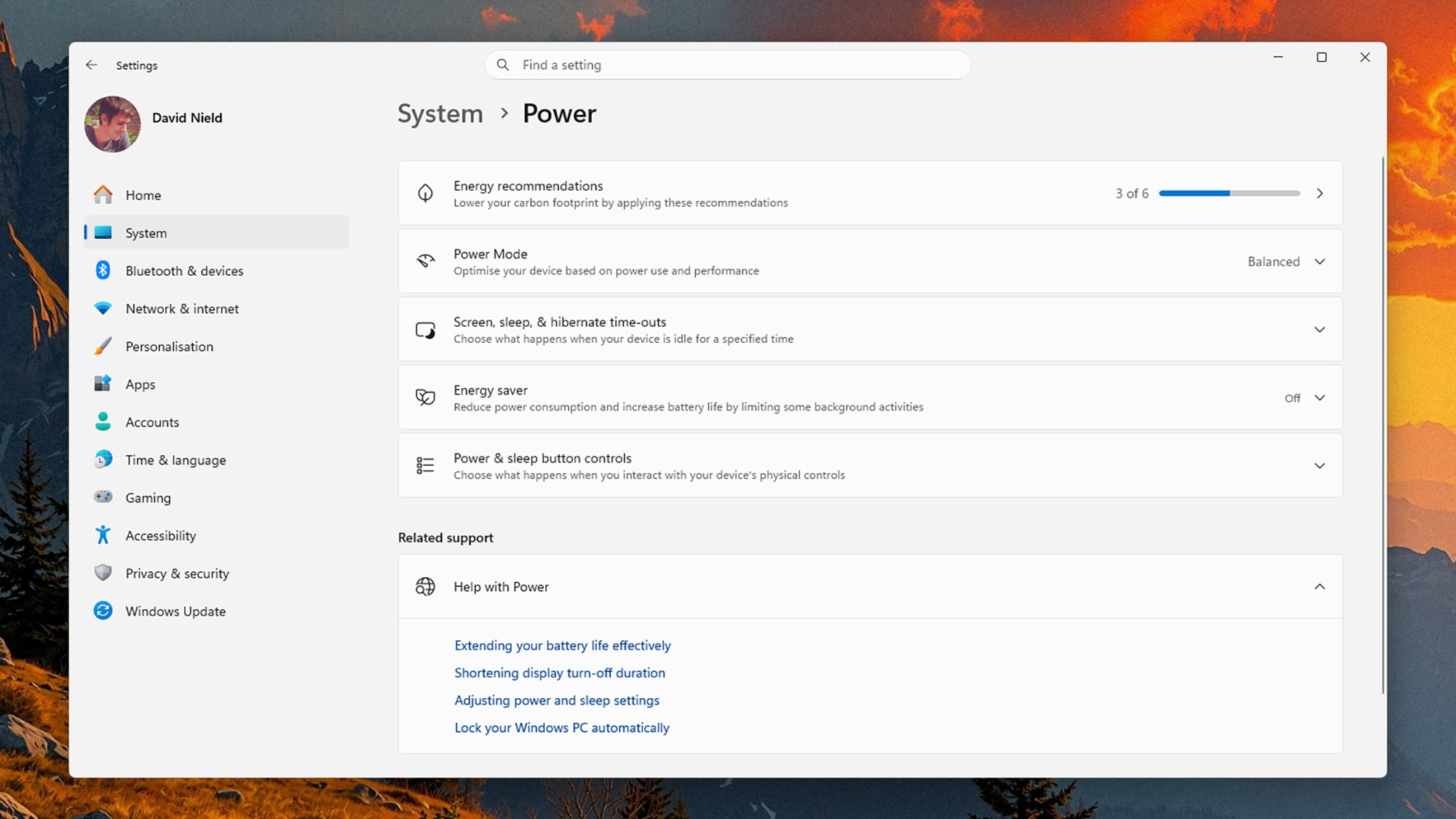
You can find the power options in Windows by opening up Settings from the Start menu, then choosing System > Power (desktop) or System > Power & battery (laptop). At the top, you’ll see Energy recommendations, which should put your system in the most energy-efficient mode—you can use these recommendations as quick shortcuts to the best settings, if you’d like.
Then, from the top, we’ve got Power Mode first. This gives you three choices for both battery power and when your system is plugged in or charging (on a desktop you’ll obviously only see the latter). Best Power Efficiency, Balanced, and Best Performance let you choose how Windows balances power demands and system performance, with Balanced as a decent compromise.
Next up is Screen, sleep, & hibernate time-outs. You can choose how long Windows waits before these modes kick in, both when your system is plugged in and (if you’re on a laptop) when you’re running on battery. In all three cases, shorter time-outs mean less energy usage.
Then there’s Energy Saver, which puts your Windows system into an economical, low-power mode. Background activity is reduced, display brightness is dialed down, updates are paused, and some visual effects are disabled. On a desktop or laptop, you can toggle this on or off manually, and on a laptop you can also set it to turn on automatically when your battery gets down to a certain level.
The last entry here you need to know about is Power & sleep button controls, which set what the physical buttons on your computer do. Make sure these are configured in the way you want—so you’re not, for example, thinking that you’re fully powering down your laptop or desktop when you’re actually just putting it to sleep.
Apple macOS
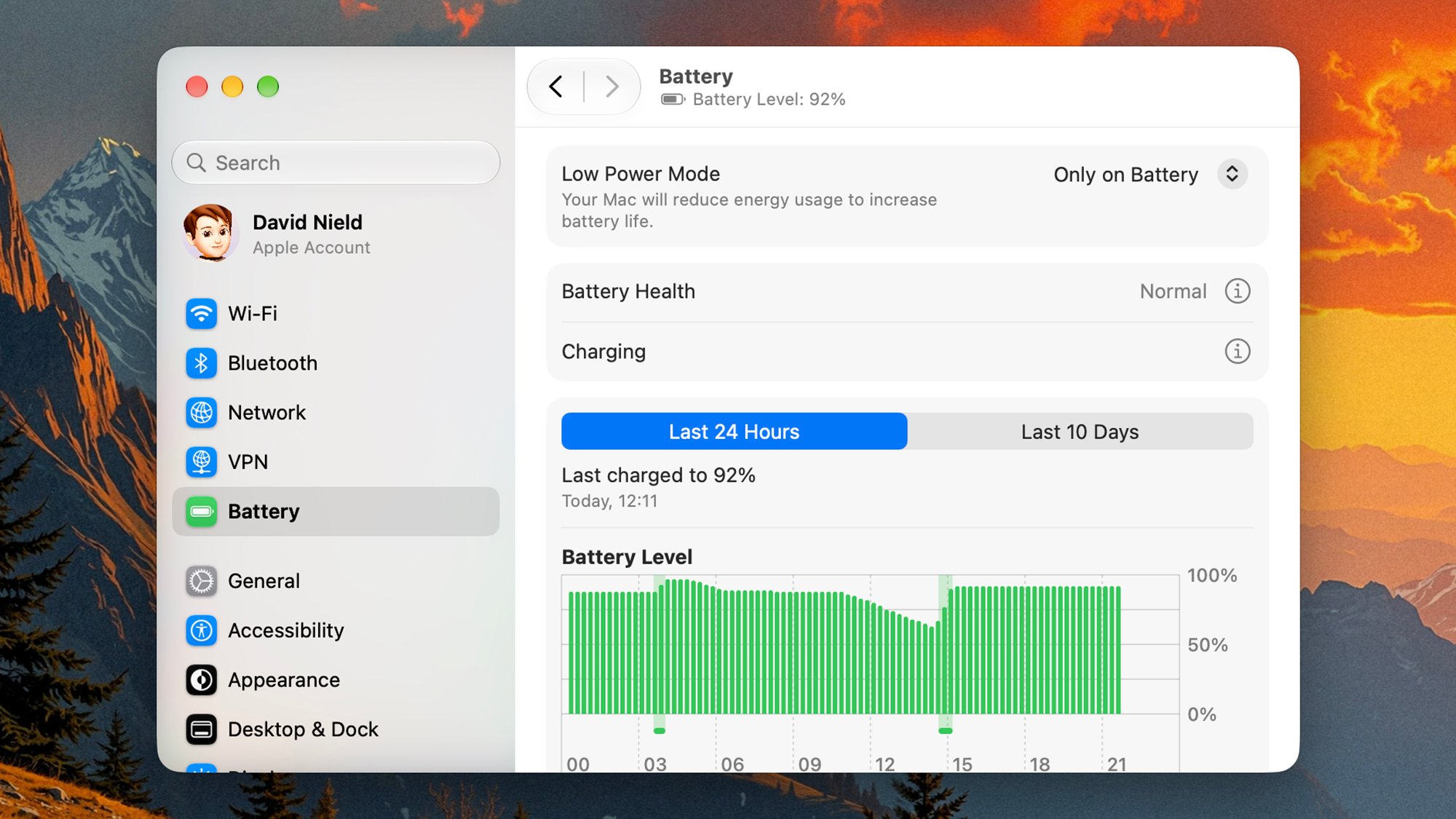
Over on macOS, the desktop and laptop separation is more distinct. Open up System Settings from the Apple menu on a desktop Mac and you’ll see an Energy menu, whereas if you do the same on a MacBook laptop you get a Battery menu.
The options are broadly similar, although on a laptop you’ve got battery-usage statistics and a choice of configurations for both battery and plugged-in power. The first drop-down, Low Power Mode, reduces some background activity, dims the screen, and applies a few more tricks to reduce energy use.
Some Macs—primarily those with the latest, fastest Apple Silicon processors, also offer you an Energy Mode drop-down. From here you can choose your preferred balance between power draw and Mac performance, and the options are Low Power, Automatic, and High Power (on a laptop, you can have a different setting depending on whether your MacBook is charging or not).
Behind the Options button there are a few more settings you can take advantage of, including one for preventing the system from automatically going to sleep when left idle, and (if you’re on a laptop) dimming the screen and optimizing video streaming performance when you’re on battery power. Again, these let you choose the mix you want between performance and energy use.
The screen time-out settings aren’t here; they’re actually under Lock Screen in System Settings. You can set the delay between your system being left idle and the display turning off, and the shorter that delay, the less power your Mac will be drawing (though with a really short delay, you’ll find the screen turns off when you’re still looking at it).
