
A well-placed window can brighten a room with natural light and offer scenic views of the outside world. They’re also massively inefficient. Buildings consume around 40 percent of society’s energy production, and much of that energy is wasted due to poor insulation in the winter and too much heat retention during the summer. Even the most eco-friendly windows inevitably add to this energy drain.
Given it’s unlikely that people will accept a world of windowless homes, what’s the solution? According to one team of researchers at the University of Colorado Boulder, the fix may be a new material that resembles the packing bubble wrap used in moving boxes.
“To block heat exchange, you can put a lot of insulation in your walls, but windows need to be transparent,” study co-author and University of Colorado Boulder materials physicist Ivan Smalyukh said in a statement. “Finding insulators that are transparent is really challenging.”
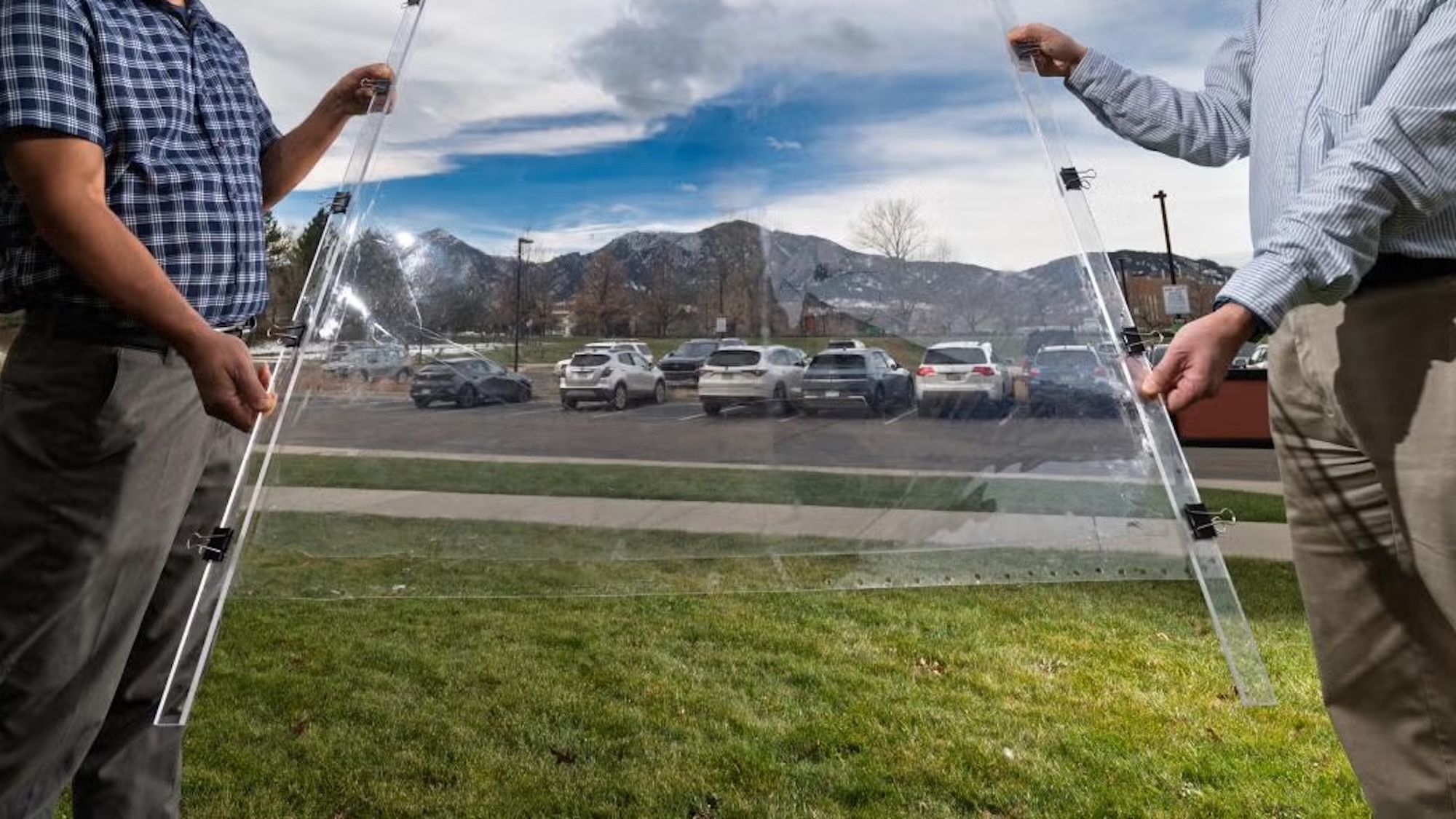
Instead of discovering the unsung benefits of an existing transparent material, Smalyukh and his colleagues describe their own invention in a study recently published in the journal Science. Mesoporous Optically Clear Heat Insulator (MOCHI) is a silicone gel that functions similarly to the protective aerogel placed inside NASA’s Mars rovers to protect their electronics. Both MOCHI and aerogels work by trap[ing air inside a microscopic web of pores, each smaller than the width of a single human hair.
What differs between the two materials is how those air bubbles are arranged. Aerogels generally contain randomly distributed pockets that reflect light and make them opaque. However, MOCHI relies on molecules called surfactants suspended in a liquid silicone solution. Much like oil and vinegar separating, surfactants tend to group into threads, while the silicone adheres to the thread’s exteriors. From there, the team swapped out the surfactants with air, leaving behind what Smalyukh described as a “plumber’s nightmare” of microscopic pipes.
MOCHI’s volume is 90 percent air in its final form, which is what makes it so good at reflecting heat. In a gas, heat transfers as energized molecules and atoms collide with one another. However, the air bubbles in MOCHI are so tiny that they prevent gas-transfered heat.
“The molecules don’t have a chance to collide freely with each other and exchange energy. Instead, they bump into the walls of the pores,” said Smalyukh.
MOCHI is so good at blocking heat that a 5 millimeter (about 0.20 inches) thick sheet is enough to shield your palm from an open flame. And unlike aerogels, MOCHI’s microscopic structures are arranged so that they only reflect an estimated 0.2 percent of incoming light. Taken altogether, MOCHI may not only block heat. It could be used in a device that traps the heat as a sustainable energy source.
“Even when it’s a somewhat cloudy day, you could still harness a lot of energy and then use it to heat your water and your building interior,” explained Smalyukh.
While MOCHI’s ingredients are comparatively inexpensive, the manufacturing process is still time-consuming and labor intensive. That said, Smalyukh and his team hope that further research will streamline the production steps in a way that could see the transparent material make its way into everyday architectural plans.
