
Neanderthals have received a necessary historical revision over the last few decades. Although many previous depictions presented our long-lost relative as a dimwitted evolutionary misfire, paleoarchaeological evidence now shows they were creative, artistic, and technologically proficient hominins. However, this more accurate picture isn’t entirely pretty. Judging from ancient evidence recovered from a cave in Belgium, at least some Neanderthal communities engaged in selective cannibalism.
The findings originate from inside the Goyet Caves, a series of interconnected cliffside caverns located about 40 miles southeast of Brussels. Hominin usage of the cave system ranges from around 120,000 to 4,000 years ago, yielding diverse remains and artifacts from both early humans as well as Neanderthals.
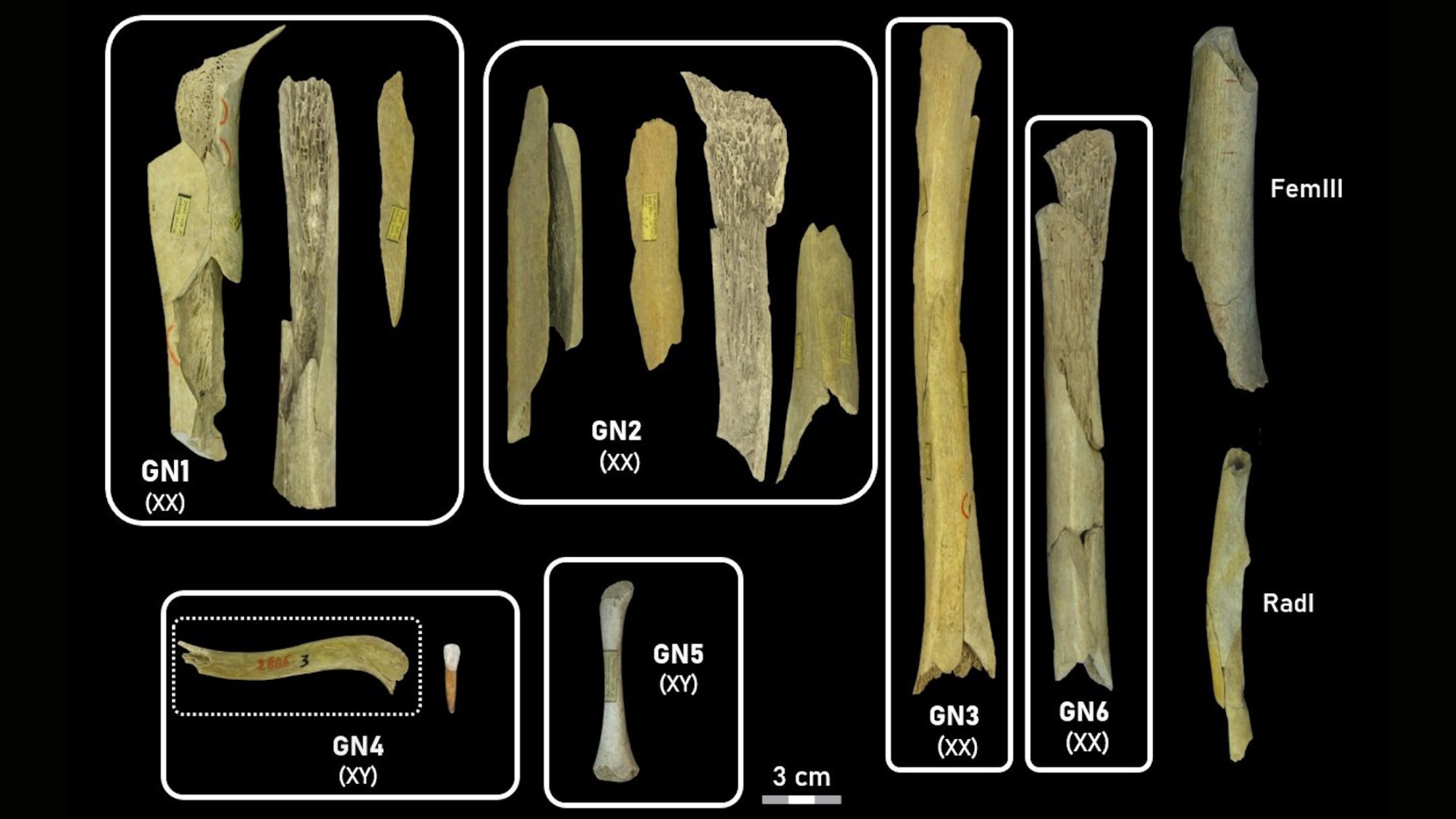
In the case of the macabre evidence detailed recently in the journal Scientific Reports, at least one group of Neanderthals dined on their fellow hominins while residing in the Goyet Caves. These conclusions are based on a decade of isotopic, DNA, and radiocarbon reassessments conducted by an international team including experts from the French National Center for Scientific Research, as well as the University of Bordeaux and Aix-Marseille University.
According to the researchers, the individuals lived between 41,000 and 45,000 years ago during the Middle Paleolithic,an era featuring wide cultural diversity among Neanderthal communities alongside the emergence of nearby Homo sapien. Biological examinations showed the victims likely came from outside of the immediate area, indicating that they were likely brought to the location to be eaten. Given that the bones displayed signs of butchery similar to other animal remains in the caves, the practice doesn’t appear to be rooted in ritualistic observances, but purely for food.
“If the causes leading to cannibalistic behaviors are always difficult to establish in archaeological contexts, the integrated approach developed here—combining taphonomic, isotopic, genomic, and morphometric data—provides an unprecedented characterization of the Goyet assemblage,” the study’s authors wrote.
While the exact details surrounding the cannibalism will never be known, the team suspects the practice was, “possibly linked to inter-group conflict, territoriality, and/or [the] specific treatment of outsiders.”
