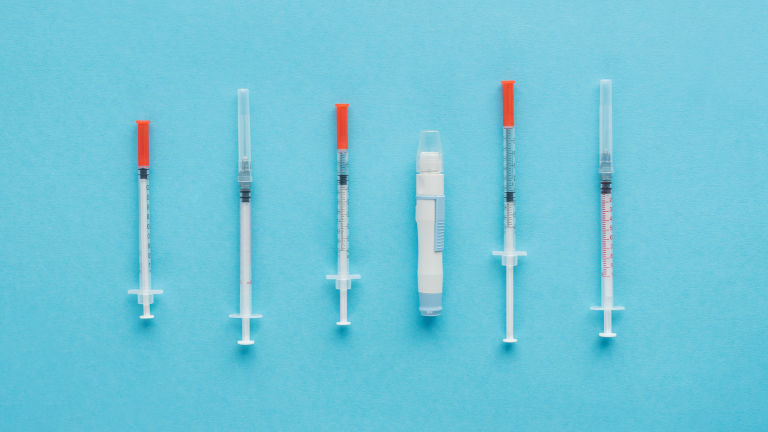
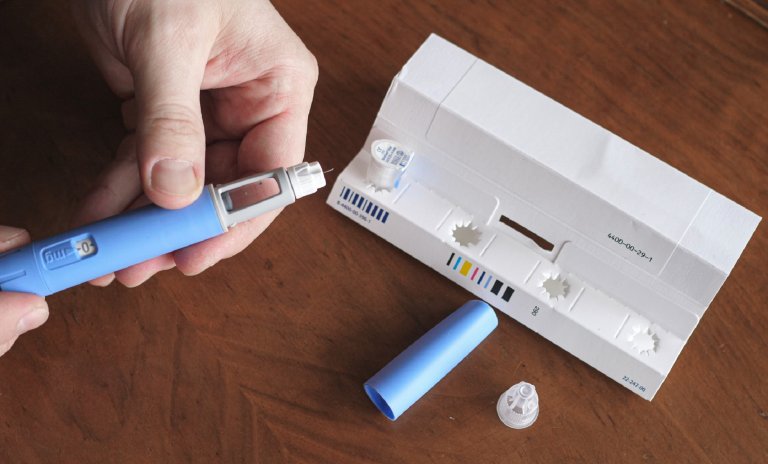
Medical device makers have been trying to come up with a better way for diabetics to measure their blood glucose levels for decades, but while a handful of promising methods have enjoyed measured success, the finger-pricking, blood-drawing glucose meter is still the most common tool for everyday use. But a new development in an old research pursuit at MIT may finally provide diabetics with a painless means of checking their sugar, by simply shining a light on their skin.
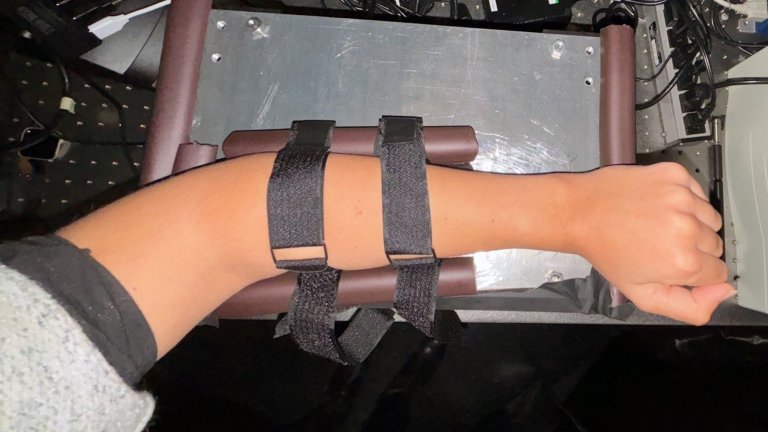
Researchers at MIT's Spectroscopy Lab have been working for more than a decade on a method of using Raman spectroscopy to measure glucose levels. That approach involves shining near-infrared light on the patient's arm or finger and using the ensuing vibrations put off by the chemical bonds in various molecules in the skin to measure the amount of glucose present.
The method works well, but the IR light can only penetrate about half a millimeter below the skin. That means glucose readings are actually measuring the amount of sugar in the interstitial fluid surrounding skin cells rather than the bloodstream. To overcome this problem, the team developed an algorithm that relates the two different glucose concentrations so the device can extrapolate the amount of glucose in the bloodstream from the amount of glucose in the skin.But another problem persisted: directly after eating, a patient's blood glucose soars. His or her interstitial fluid levels might take up to ten minutes to catch up, resulting in a faulty reading. To deal with this lag, the team developed another method of correcting for the difference between blood glucose and skin glucose levels called Dynamic Concentration Correction (DCC). By adding the rate at which glucose diffuses from blood to skin into the larger equation, they found they were able to improve the accuracy of their readings by up to 30 percent in the best cases and 15 percent on average.
Raman spectroscopy still isn't perfect, but the breakthrough is a pretty big step toward solving a problem that has persisted for years with only measured progress. The MIT team plans to get a clinical trial underway on healthy patients in the fall to see if DCC can stand up in a more real-world setting. If it does, those finger-pricking meters could become a thing of the past.
[MIT News]
Five amazing, clean technologies that will set us free, in this month's energy-focused issue. Also: how to build a better bomb detector, the robotic toys that are raising your children, a human catapult, the world's smallest arcade, and much more.


Online Content Director: Suzanne LaBarre | Email
Senior Editor: Paul Adams | Email
Associate Editor: Dan Nosowitz | Email
Assistant Editor: Colin Lecher | Email
Assistant Editor: Rose Pastore | Email
Contributing Writers:
Rebecca Boyle | Email
Kelsey D. Atherton | Email
Francie Diep | Email
Shaunacy Ferro | Email
Once again, another method for diabetics to check their glucose levels. Why don't they make at least one of these products for the masses already?
If we think very thin this concept is viable right now for men because the foreskin is ultrathin. It is so thin it is permeable to the AIDS virus. A tinny clip or piercing on the foreskin should make the results almost instant and any extrapolation much more accurate.
My son is diabetic and for years have failed to see what the technological problem is with non invasive blood glucose monitoring! I have often thought that the drug companies have withheld information so they can keep making profits from the equipment from existing invasive methods.
Create a device that goes across a good blood supply e.g. Ear lobe – The device would look similar an Earing aid. This then would be able to support a battery that drives the device. A sensor would be clipped to the ear lobe.
This would give you a known distance. If you put an infra red beam across that known distance then you would be able to measure the glucose levels in real time.
The device then sends a signal to an output on your wrist for example. Or activate an Insulin pump to deliver a correcting amount. Or if you are going Hypo, deliver glucose to the gut.