Crazy Moth Eyes Eye see you Rick Cowen

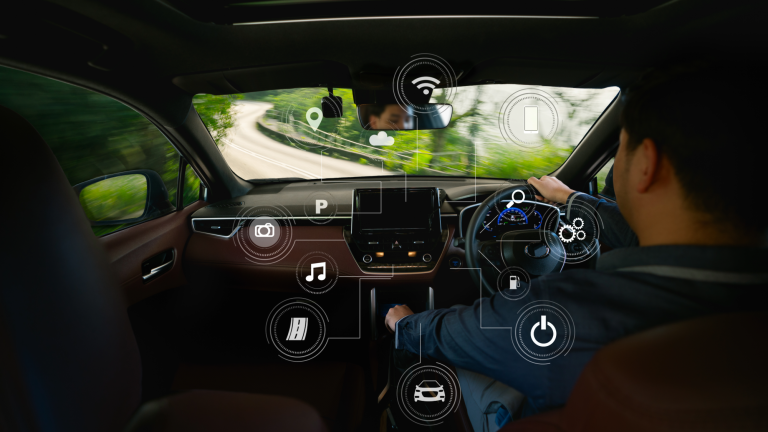
Toyota engineers wanted better night vision systems that can help drivers navigate dark roads safely. Now they have developed camera software which takes inspiration from nocturnal dung beetles, bees and moths that can see across a remarkable range of color, brightness and shadow, New Scientist reports.

The new digital image-processing algorithm can capture full-color images at night from a car moving at high speeds, and can even adapt to light levels automatically. That means there's no problem with the sudden blinding bright lights of an oncoming vehicle. Even better, the inexpensive system only requires a standard digital camera and typical PC graphics card.

Such innovation arose from the collaboration of Toyota engineers, mathematicians and Eric Warrant, a vision scientist at the University of Lund in Sweden. Warrant has spent most of his career studying the unique nocturnal vision of insects, and was first to create a mathematical model describing how "local adaptive spatiotemporal smoothing" works.


Just as the insect eyes can pool signals from photoreceptors to enhance specific details or characteristics within an overall nighttime image, the algorithm can pool signals from neighboring image pixels -- the mathematical equivalent of finding the best exposure time and pixel size for every single spot of every frame. The algorithm can also spot repeating patterns across frames to pinpoint movement, and tune the details to avoid motion blurring.

The camera package continues to receive refinements in Toyota's labs, but researchers hope that it could someday become part of a heads-up display for drivers. It might even serve an automatic crash-prevention system.

[via New Scientist]

4 Comments

That's great. When do we adapt it for our soldiers on the battlefield? That, or adapt them for greater visibility and detail for Predator/Reaper drones and other surveillance equipment that relies on the often grainy, sometimes blurry images from infrared cameras.

I think this is bad news. That means those old drivers that shouldn't be on the road during the day will have night time visibility fixed for them.

Snowbirds go home...

The peeping toms will probably like this technology too. LOL!

its good the night vision system can be added as a safety
precaution for the driver.


June 2013: American Energy Independence

Five amazing, clean technologies that will set us free, in this month's energy-focused issue. Also: how to build a better bomb detector, the robotic toys that are raising your children, a human catapult, the world's smallest arcade, and much more.


Online Content Director: Suzanne LaBarre | Email
Senior Editor: Paul Adams | Email
Associate Editor: Dan Nosowitz | Email
Assistant Editor: Colin Lecher | Email
Assistant Editor: Rose Pastore | Email

Contributing Writers:

Kelsey D. Atherton | Email
Francie Diep | Email
Shaunacy Ferro | Email

circ-top-header.gif
circ-cover.gif