New evidence settles a troubling discrepancy in the timeline of events that led to Earth's last great mass extinction.

Asteroid Impact
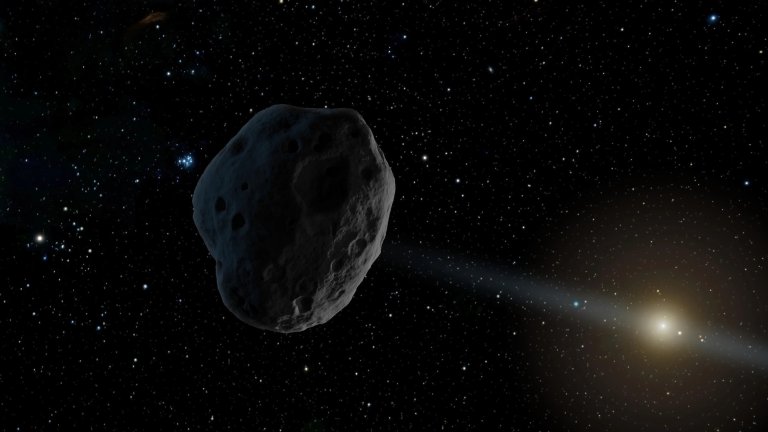
Asteroid Impact NASA

A couple of years ago, an international team of researchers got together to decide, once and for all, whether or not an asteroid crashed into Earth 66 million years ago and, if so, whether the impact would have been catastrophic enough to end the age of the dinosaurs and wipe out 75 percent of all life on the planet.

After reviewing the evidence, which included radioisotope dates from the fossil record and scattered impact debris, as well as measurements of a 100-mile-wide crater in the Gulf of Mexico--the researchers concluded that the answer was yes, to both questions.

But that didn't settle the matter entirely. Some scientists pointed to evidence of volcanism, climate change, or other potential causes for the dinosaurs' demise; others weren't convinced that the two events--impact and extinction--really occurred around the same time.

In fact, the evidence itself didn't support the idea that the events were contemporaneous: debris from the impact dated the catastrophe to 180,000 years before the end of the dinosaurs.

Last year, Paul Renne, a geologist at the Berkeley Geochronology Center (BGC), decided to get to the bottom of that discrepancy. The existing dates came from radio-isotope measurements that were 20 years old, so Renne teamed up with his colleagues at BGC and UC, Berkeley, as well as researchers in the UK and Netherlands, to re-sample the impact debris.

The researchers' measurements narrowed the asteroid strike to a range of 11 thousand years, between 66.03 and 66.04 million years ago, making it virtually simultaneous with the extinction.

There's still good evidence to suggest that the catastrophe was preceded by several sharp climatic swings, which probably put a hurt on much of the life on Earth, but the new evidence leaves little doubt that the asteroid impact was, indeed, the proverbial nail in the dinosaur's coffin.

15 Comments

S Monkey

This is why Iran playing hard to get is such a waste of time.

Over the past years, PopSci has really lessened their level of information per article, they seem to now focus more on things that are controversial, making one side look like fact, rather than just making articles on popular science topics, which is what they were named after.
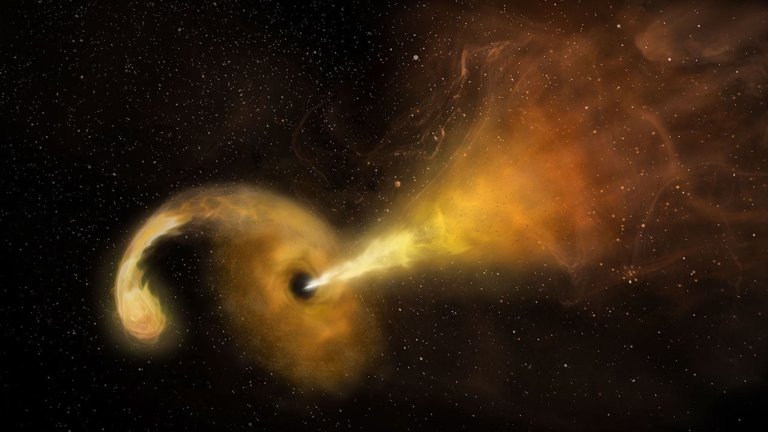
This is an example of a unscientific article. If an asteroid the size of one on that illustration hit the earth, it would completely disintegrate the crust, killing all life on earth!
I know you want to make cool articles PopSci, but come on, use more science and less fantasy!
And I would go into the non reality of Radio isotopes dating, but it would make to big of a post.

"God exists since mathematics is consistent, and the Devil exists since we cannot prove it is."

Paul Renne and his team--Nobel Prize for research?

But I also agree with Shockeray; I would love to see some data. I'm sure the Popular Science community can handle seeing some tangible numbers.

Shockeray is right. Radioisotopes don't date. They're not at all social.

The Chicxulub bolide (not to be confused with the Tonyxulub bolide, which struck a monastery in San Francisco, causing mass amounts of order) was only about 6 miles in diameter... it was big, but not as big as the image... Isn't that the movie poster for 2012?

Guys, its a widely available graphic that I've even used as wallpaper before. It's not the actual size of the rock that hit Earth. It's obvious Emily Elert needed a graphic but she didn't have one from the team so she just used this.

Shockeray, I think you're absolutely right, why are they writing about controversial things like dinosaurs when they could be talking about scientific facts like God?

Your deep scientific wisdom sounds somehow familiar to me, you wouldn't happen to be the Inquisitor from Monty Python's "Quest for the Holy Grail" would you?

So carbon-14 dating is inaccurate?

@nkfro
Carbon 14 is only suitable up to appr. 50 000 years. I like the holy grail comment.

They have pinpointed the the asteroid strike to 65.035 years +- 50,000 years. Congratulations on being impossibly accurate on when the asteroid strike occurred and exactly when the dinosaurs dyed out. The thing I can not figure out is that I have always heard that it took 100's of thousands of years for the dinosaurs to dye out, wouldn't a asteroid strike kill them almost over night.

The animals near the impact would have been wiped out pretty fast. However, the rest all over the world would have taken some time to go extinct. Environmental damage would have caused some to starve, but others would have been able to find some food by wandering over larger areas. As the food supply declined and migratory patterns became disrupted and the population thinned and became more spread out, they would have had increasing trouble finding mates. Quantifying how fast all this would have occurred would be an interesting project.

The scientists who did the study used Argon-argon dating, Not Carbon you "Lets take the Bible literally" ninnies. Broaden your mind--read something other than The Book you've probably never read and just had someone read excerpts from.

Anyway, The article itself is really interesting. Cough up the money for a subscription or go through a college if you are really interested.

No offense to the Popsci author, but the abstract does the article so much better justice:

"Mass extinctions manifest in Earth's geologic record were turning points in biotic evolution. We present 40Ar/39Ar data that establish synchrony between the Cretaceous-Paleogene boundary and associated mass extinctions with the Chicxulub bolide impact to within 32,000 years. Perturbation of the atmospheric carbon cycle at the boundary likely lasted less than 5000 years, exhibiting a recovery time scale two to three orders of magnitude shorter than that of the major ocean basins. Low-diversity mammalian fauna in the western Williston Basin persisted for as little as 20,000 years after the impact. The Chicxulub impact likely triggered a state shift of ecosystems already under near-critical stress. "

Oh, how I love the people who post on this site! OldTech, you tell people to open their mind, but are so closed minded to believe that the only people that would mistake radioisotope dating for radiocarbon dating are creationists AND are so ignorant to think that Christians can't also be educated and are ignorant of even own religion.

Seriously, you can't get any better than PopSci for a laugh!

ppardee--What am I supposed to open minded about? I made a "generalization." However, if you know any Hindu or Buddhists that believe in Christian Creationism then let me know.

Sumer (not verified)

It time for a do-over. Perhaps humanity will be better the next time...

Radiometric dating assumes the subject being measured to have started with a certain amount of the isope present when the subject formed. Also using this methed requires the isotope amount to change by no other reason then decay.


June 2013: American Energy Independence

Five amazing, clean technologies that will set us free, in this month's energy-focused issue. Also: how to build a better bomb detector, the robotic toys that are raising your children, a human catapult, the world's smallest arcade, and much more.


Online Content Director: Suzanne LaBarre | Email
Senior Editor: Paul Adams | Email
Associate Editor: Dan Nosowitz | Email
Assistant Editor: Colin Lecher | Email
Assistant Editor: Rose Pastore | Email

Contributing Writers:

Kelsey D. Atherton | Email
Francie Diep | Email
Shaunacy Ferro | Email

circ-top-header.gif
circ-cover.gif
bmxmag-ps