Brilliant 10
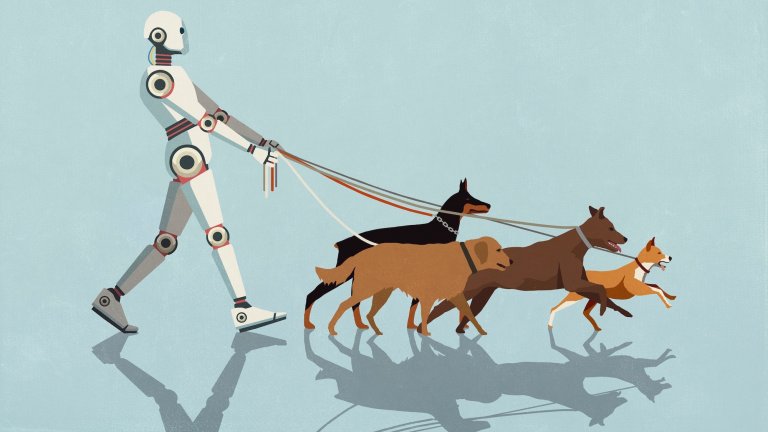
And even to understand what those people are doing.

Deva Ramanan Jeff Newton

Deva Ramanan clicks a button on his MacBook Air and a video begins to play: Michelle Kwan skating in the 1998 Nagano Olympics. Next to it, a computer program renders what it “sees” in the footage: Kwan’s head, legs, torso, upper arms, and forearms, all distinguished by different colors. Ramanan, a computer scientist at University of California at Irvine, trains computers to recognize three-dimensional humans in flat photography.

Face-recognition software, which pinpoints the classic eyes-nose-mouth configuration, has been in use for years. But detecting a human body—any human body—is much more Deva Ramanan
Age 33
University of California at Irvine
challenging for computers due to the endless variety of possible poses, angles, sizes, and outfits. Most researchers will feed a program millions of images to memorize, building a vast database of people. Ramanan, instead, trained his computer program to identify body parts and match them to a flexible human template. “You can think of it as a divide-and-conquer approach,” he says. The software runs through a checklist: Arms, torso, legs? Check. Thus, a human. Ramanan’s method is much faster and uses less processing power than the traditional one.

Ramanan envisions many potential applications for his people-finding algorithms, including fast and accurate pedestrian-detection systems in self-driving cars and videogame systems that track full-body movements. In the meantime, he’s focusing on teaching computers how to read and understand context—in other words, to think. “What if you really want to understand what a person is doing,” Ramanan asks. “Not just [understand] ‘Here’s the arm,’ but ‘This person is waiting for a bus.’ ” If his future projects succeed, computers’ reasoning ability will keep inching closer to that of the human brain itself.

Click here to see more from our 11th annual celebration of young researchers whose innovations will change the world

2 Comments

Interesting photo by Jeff Newton.

"Thought crimes" follow in short order.


140 years of Popular Science at your fingertips.


Popular Science+ For iPad

Each issue has been completely reimagined for your iPad. See our amazing new vision for magazines that goes far beyond the printed page


Download Our App

Stay up to date on the latest news of the future of science and technology from your iPhone or Android phone with full articles, images and offline viewing


Follow Us On Twitter

Featuring every article from the magazine and website, plus links from around the Web. Also see our PopSci DIY feed


April 2013: How It Works

For our annual How It Works issue, we break down everything from the massive Falcon Heavy rocket to a tiny DNA sequencer that connects to a USB port. We also take a look at an ambitious plan for faster-than-light travel and dive into the billion-dollar science of dog food.

Plus the latest Legos, Cadillac's plug-in hybrid, a tractor built for the apocalypse, and more.


Online Content Director: Suzanne LaBarre | Email
Senior Editor: Paul Adams | Email
Associate Editor: Dan Nosowitz | Email
Assistant Editor: Colin Lecher | Email
Assistant Editor:Rose Pastore | Email

Contributing Writers:
Rebecca Boyle | Email
Kelsey D. Atherton | Email
Francie Diep | Email
Shaunacy Ferro | Email

circ-top-header.gif
circ-cover.gif