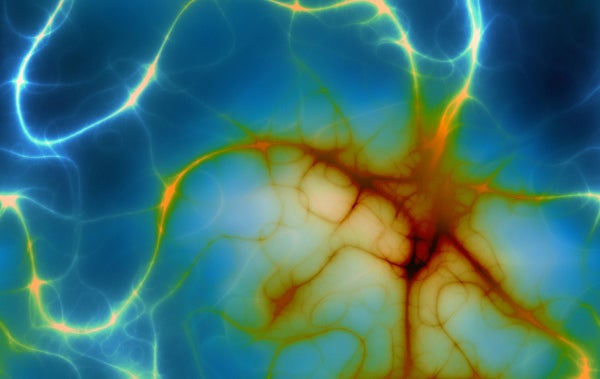
In a critical first step toward treating nervous system disorders and other degenerative conditions, researchers at Stanford have for the first time transformed human skin cells into functioning neurons. This isn’t stem cell technology--using tissue derived from aborted fetuses and the foreskins of newborns, the researchers were able to create working nerve cells that went on to form synapses with other nerve cells.
This doesn’t mark the first time skin cells have been transformed into other kinds of tissue--in fact, they’ve proven to be particularly good candidates for this kind of science in the past, having been turned into blood cells, liver cells, and heart cells previously. But the breakthrough is significant because skin cells are so plentiful, and the ability to turn them into neurons could create a deep well of tissue for regenerative therapies.
The method relies on a process called transdifferentiation, in which, with a little biological prodding, a cell transforms into a different kind of cell. The team had previously worked out the method by turning cells from a mouse’s tail into mouse neurons, but their attempts at transdifferentiation in human cells hit some initial obstacles. The conversion would take place, but the human nerve cells wouldn’t fire the electrical stimuli needed for cell communication.The answer was a single gene, delivered via a virus into the cells. The neurons then began firing the necessary electrical signals, and in time began to form synapses with other newly created neurons. While the science is preliminary and the technique still years away from any clinical application, it marks a big step forward for regenerative medicine. Via such a method researchers could eventually treat degenerative conditions like Parkinson’s disease and Alzheimer’s, as well as brain injuries and other ailments of the nervous system.
More via Nature.

140 years of Popular Science at your fingertips.
Each issue has been completely reimagined for your iPad. See our amazing new vision for magazines that goes far beyond the printed page
Stay up to date on the latest news of the future of science and technology from your iPhone or Android phone with full articles, images and offline viewing
Featuring every article from the magazine and website, plus links from around the Web. Also see our PopSci DIY feed
The 6th annual Invention Awards are here, from an inflatable tourniquet to a better lobster trap to spring-loaded hocket skates. This issue is all about the celebration of invention.
Plus: Making synthetic biology breakthroughs in a garage, building a constantly-moving ping-pong table, and a ridiculously overpowered barbecue.
very awesome! the number of treatments and cures this could provide is mind blowing. this could give sight to many blind people and help so many people walk again.
Thank you popular science for publishing this article. I'm really getting bored of reading about all of these super cool advances in medicine that never seem to make it into the real world...and if they do they are reserved for the super rich.
this could be extremely useful. for example, what other cells could you turn into other cells. it could very well make stem cell research independent on embryonic stem cells (not that it was in the first place >.>)
Simple things like nerve damage in extremities or surgery locations is it's most common area that this would be used for as I see it. Not repairing ocular nerves or Parkinson’s. Still way too many unknowns.
I can see this process being used to generate new internal organs though like a Kidney, Liver, or even a new Heart from the recipients own Skin cells so there would be no rejection issues. Which POPSCI has touched on in the previous articles.
Great article and an amazing advancement, but do we really need PopSci saying stem cells come form "aborted fetuses"? The majority of stem cells come from the excess embryos from in vitro fertilization. There's enough pressure coming from the ultra conservatives using the fetus argument, we really don't need science publications fueling that outrageous fire. Just saying, be careful with that.
Mr. Dillow, please learn your jargon before publishing an article. The process you're describing is, in fact, stem cell research. Induced pluripotent cells are stem cells. What you've described is inducing pluipotency in "adult" skin cells and then differentiating them into working nerve cells.
Yes, it's amazing, but it's also stem cell research, so I don't know why you specifically said it wasn't.
Also, the point of iPS cells is that we can convert adult cells into stem cells and "reprogram" them into other types of cells. So why bother talking about aborted fetuses and newborn foreskins? Not to mention that even non-induced PS cells are more often taken from cord blood banks than any kind of controversial source.
-IMP ;) :)
stem cell research is important for the survival of humanity. and might help us one day live for thousands of years. great read.
I really hope this could help something like strokes. My little brother had a stroke at birth and it caused him to not be able to use his left side and gave him a mental disability. It's very sad. It seems like something like this could regenerate his damaged neurons. I hope more than anything that something can be done in the future to help the mental and physical states of stroke victims. Much more research needs to be put into this field!!! They need the help!!!
Clay Dillow,
Please update this article.
"This isn’t stem cell technology--using tissue derived from aborted fetuses and the foreskins of newborns"
I hate to think of ANYONE reading that phrase and internalizing it as a definition of stem cell technology.
I have never criticized an article on this website (or any other website), but this article should never have been posted with such a misleading statement.