
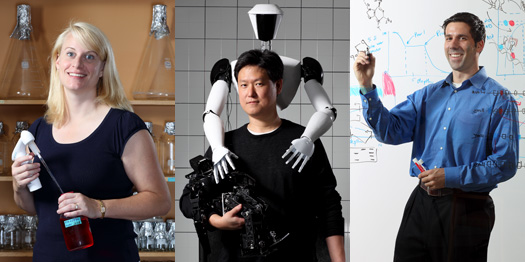
We have a credo around here: The future will be better. It may sound optimistic in light of our wheezing environment and limping economy, but then you haven’t met the Brilliant 10, PopSci’s annual selection of the nation’s most promising young researchers.
They’re 10 powerful reasons to look on the bright side. Take materials scientist Ting Xu. She’s using nanotechnology to craft solar cells that are more energy-efficient and eco-friendly than oil or coal. John Rinn is unlocking the secrets of RNA to keep us healthier, a vital step toward solving our health-care woes. Jerome Lynch is making smart sensors for bridges that spot structural flaws before disaster strikes. And not one of these geniuses is over 40. The world is facing some pretty big problems, we admit, but with these talented minds tackling them, can you blame us for feeling hopeful?
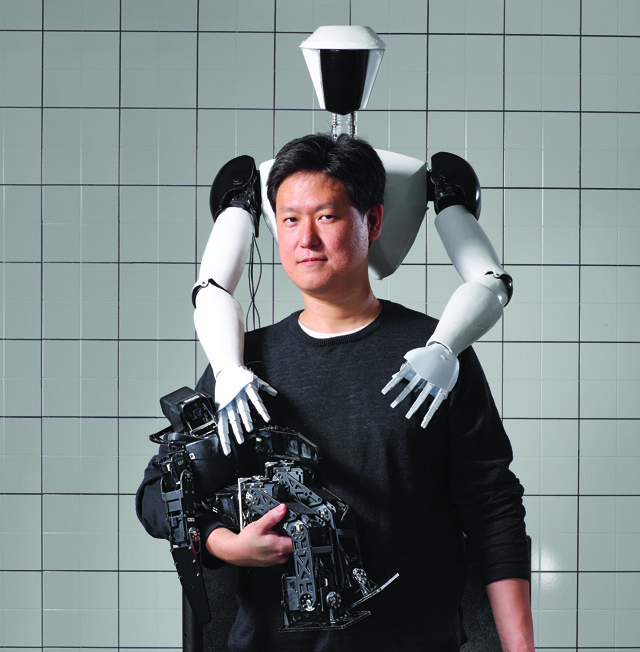
The Robot Maker
Brilliant because: He builds sophisticated robots that don’t just copy biology—they improve on its most elegant and efficient principles
Name: Dennis Hong
Age: 38
Affiliation: Virginia Tech
In 1977, a six-year-old boy visiting Los Angeles from South Korea saw Star Wars for the first time. He gaped at the curious locomotion of R2-D2 and the human-robot interactions of C-3PO, and as he flew back home, Dennis Hong remembers, “I knew I was going to build robots for the rest of my life.”
Hong was born in California, but when he was three, his father, an aerospace engineer, moved the family to Seoul for a job. Hong lived there until his sophomore year of college, when he transferred to the University of Wisconsin, and went on to grad school at Purdue University. “All of it was mechanical engineering, focused on robotics,” he says.
Today, Hong runs Virginia Tech’s Robotics and Mechanisms Laboratory, which has produced a robotic hand that’s dexterous enough to handle an egg, a pole-climbing snake ‘bot for construction inspections, and a momentum-propelled, three-legged robot, among other projects.
“When I joined VT, people thought robotics should be all about intelligence,” Hong says. Instead, he chose to focus on mechanical systems found in nature. “We’re not copying nature; we’re using its principles,” he explains. The design of the three-legged robot, for instance, looks unnatural, yet it mimics the momentum of the human gait. To move forward, its hub flips over, causing one leg to swing between the other two. The robotic hand is controlled by compressed air, varying the strength of its grip without the use of other motors, in the same way human grip relies on elastic ligaments to help the fingers curl.
His lab’s latest effort is a humanoid called CHARLI, for Cognitive Humanoid Autonomous Robot with Learning Intelligence. It serves as a research platform for the study of human locomotion and a contender in Robocup 2010, a tournament in which robots compete in soccer matches.
Ultimately, Hong hopes to engineer robots that move with the grace and adaptability of humans. The key, he believes, is uninhibited research. In Korea, Hong recalls, “I grew up in an environment of people being afraid or ashamed to speak up. In my lab there’s no criticism, only refinement. You want to put a nuclear reactor in your robot? Fine, let’s pursue that.”
Leading by example, Hong has an organized way of putting his own least-inhibited ideas to use. “Next to my bed, I have a notebook and a pen,” he says. “Every night, I see lines, colorful things in my head. I wake up at 4 a.m., jot down everything. In the morning, I type it into my database of ideas. When funders want this or that, I look for a match.” —Jacob Ward
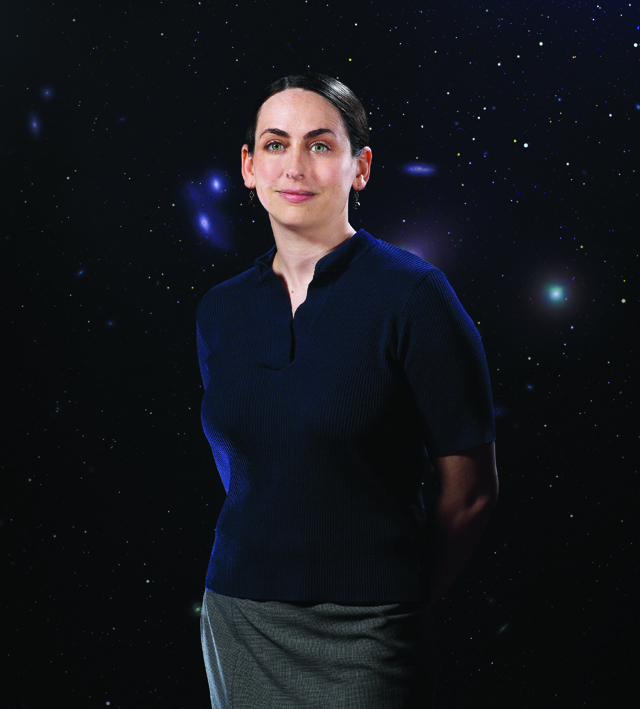
The Star Chaser
Brilliant because: She’s discovering nearly invisible galaxies circling our own, and the mysterious dark matter that dominates them
Name: Marla Geha
Age: 35
Affiliation: Yale University
Marla Geha has different job titles depending on who’s asking. “If I’m on a plane, I tend to be a physicist,” she says. “Then nobody wants to talk to me.” When she feels the need to impress someone, she’s an astrophysicist. And when she doesn’t mind a two-hour conversation, she tells them she’s an astronomer.
Geha is, in fact, all three. Now a professor at Yale, Geha spends her days (and, of course, nights) trying to identify faint galaxies that probably formed earlier than the Milky Way. Simulations of the Milky Way’s evolution predict that there are about 1,000 such formations. When Geha came on the scene five years ago, astronomers had found just 11 of them. She and others believed that more existed, hidden from view because the galaxies were made mostly of dark matter, the term for whatever it is out there that emits no light but somehow accounts for 90 to 95 percent of the universe’s entire mass.
In the quest to solve the so-called missing-satellite problem, Geha pored over digital maps of the sky, looking for areas with unexpected concentrations of stars. Then she painstakingly measured the velocity of each star. To her amazement, she found that the stars were moving too quickly for their size—tantalizing evidence that dark matter might be tugging on them.
So far, Geha and her team have discovered 14 galaxies. She hopes to find enough to verify the reigning theory of how the universe formed, and perhaps along the way help other fields fully define dark matter. “Astronomers and particle physicists don’t talk to each other much,” she says. In the future, she’ll be the one starting the conversation. —Doug Cantor
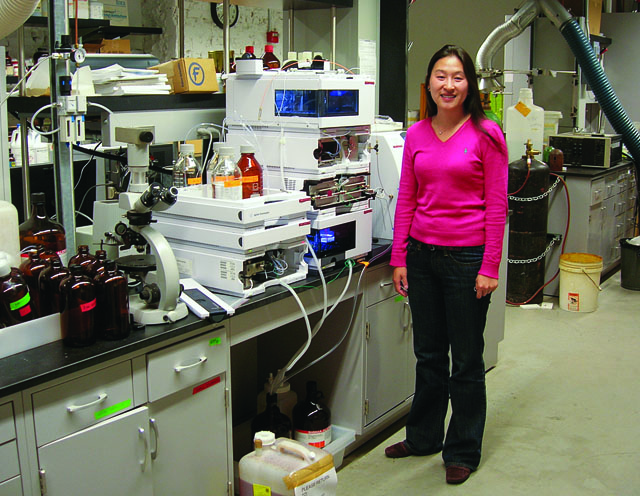
The Energizer
Brilliant because: She transforms molecules into mini hard drives with massive storage capacity
Name: Ting Xu
Age: 35
Affiliation: University of California, Berkeley
Last fall, Ting Xu, a professor of materials science at the University of California at Berkeley, was suffering from headaches so severe that doctors worried she might have a brain tumor. But one neurologist suggested a simpler cause. How about cutting back on the 16-hour days in the lab, sleeping, and maybe even eating at normal times?
Xu has since eased her work schedule, but she’s no less productive. Earlier this year she co-authored a paper describing a new technique for coaxing tiny polymer strands to self-assemble into 10 trillion cylinders with precise patterns. The method could lead to discs the size of a quarter that store 175 DVDs’—7 terabits—worth of data. Then she tweaked the technique so it could be used to build a range of nanoparticle-based devices—super-efficient photovoltaic cells and energy storage systems, and higher-resolution flexible displays. Xu is smart, diligent and knowledgeable, says polymer physicist Thomas Russell of the University of Massachusetts, but more important,”she has imagination.“
And a youthful one at that. She loves the Transformers. She’s a devotee of Tom and Jerry—watching the warring cat-and-mouse duo helps her think. Like her cartoon heroes, Xu, a native of China, has always been restless. She played volleyball and ran track growing up, but neither wore her out. Her father would offer to boost her allowance if she could sit for more than 15 minutes at a time. He never had to pay, and that energy continues to drive her today.
After reporting on the self-assembly method, which she created with Russell, Xu immediately saw greater potential. The strands, she realized, could serve as minuscule cranes to arrange even smaller building materials and manufacture things like ultrasmall electronic devices and paper-thin, printable solar cells. In her most recent work, Xu combined the self-assembling polymers with nanoscopic particles. By forcing these particles to assume the underlying order of the polymers, she managed to get trillions of them to line up exactly as she wanted.
Xu hopes the work will give solar cells a competitive advantage over fossil fuels, for one thing, but she won’t be resting in the meantime. She’s constantly hunting for new ideas and designing experiments with the hope of surprising herself, not just confirming existing theories. “It’s important to think about science in a perpendicular way, not a parallel way,” she says. “Otherwise you end up painting other people’s houses.” —Gregory Mone
The Mental Messenger
Brilliant because: His engineering achievements will let people with disabilities control machines
Name: Adam Wilson
Age: 28
Affiliation: Wadsworth Center, New York State Department of Health
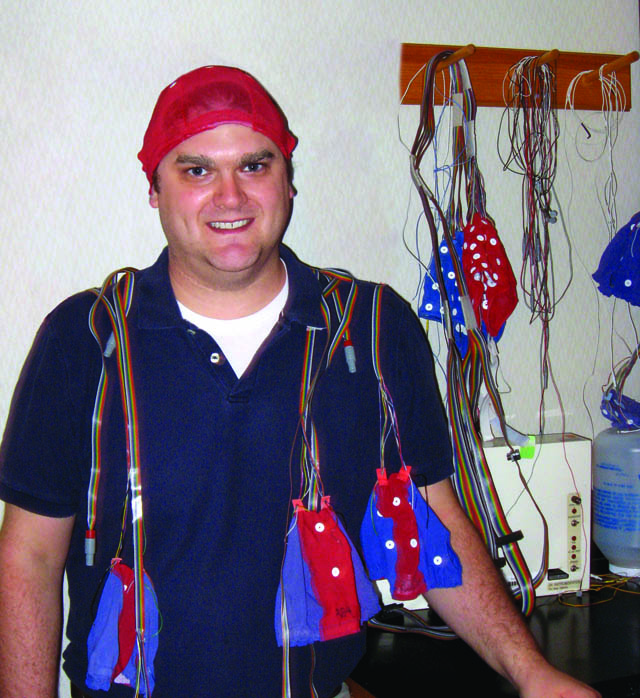
Last April, Adam Wilson became the first person to send a telepathic message—on the social-networking site Twitter. “using eeg to send tweet,” he wrote, referring to the electroencephalograph he used to record electrical signals in his brain. Wearing a red skullcap embedded with electrodes wired to a computer, he spelled out his missive by focusing on letters flashing before him on a screen.
Beyond extrasensory tweets, Wilson’s deeper ambition for the technology is to help people who have lost the ability to communicate, whether from a stroke or a spinal-cord injury. He’s now developing powerful brain-machine interfaces that attach electrodes to the cerebral cortex, the wrinkled tissue just beneath the skull, where they pick up stronger brain signals than the EEG technique he used in the Twitter experiment. Partly inspired by his fascination with music—Wilson has played the guitar since the seventh grade—his new system taps a brain region that controls response to auditory stimuli, allowing people with neurological disorders to control a computer cursor simply by thinking about the sound of a cellphone ringing.
His next challenge is to engineer seamless wireless systems that could one day decipher complex thoughts—perhaps well enough to help his idol, physicist Stephen Hawking, whose struggle with muscular dystrophy has left him almost fully paralyzed, open doors or steer his wheelchair with thoughts alone. Says Wilson, “I would love to work with him.”_ —Melinda Wenner_
The Rule Shredder
Brilliant because: A dropout skate rat turned ace biologist, he’s proving that “junk” RNA is a potential linchpin of human health
Name: John Rinn
Age: 33
Affiliation: Harvard University/Beth Israel Deaconess Medical Center
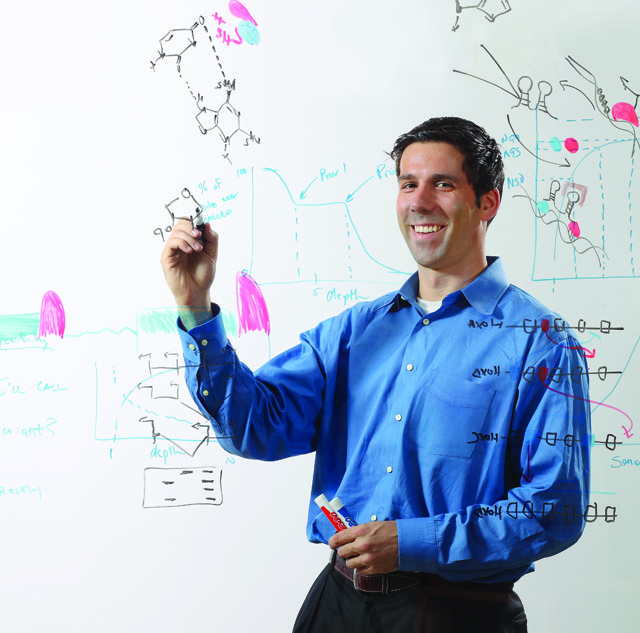
John Rinn has a long history of bucking convention. Growing up, skateboarding and snowboarding took precedence over school—he attended four high schools in four years, only graduating because his mother promised him a car. He went to college at the University of Minnesota because it seemed like an excuse to party and hit the slopes. But bedridden with a snowboarding injury after his sophomore year, Rinn had a revelation, inspired by the uncompromising architect Howard Roark in Ayn Rand’s The Fountainhead. “What could I do that I cared that much about?” he asked himself. He began immersing himself in biology classes and realized that he not only had an aptitude for science, but he actually enjoyed it. He pulled mostly A’s and soon discovered the thing that would inspire his future career: RNA.
Science hasn’t dimmed Rinn’s rebellious side. He’s already upending the way biologists think about the human genome. Though similar to DNA, RNA has always been considered DNA’s helper; its best-known job is turning genes into proteins. Some of it was even thought to have no function at all, the equivalent of cellular junk. But in 2003, as a graduate student at Yale, Rinn discovered thousands of new types of RNA, called large intervening non-coding RNAs, or LINCs, and later proved that they play more than just a supporting role in regulating genes—they appear to direct the entire show. At the time, the notion was considered contentious, even ridiculous. “It was the same thing again—’what you’re passionate about is stupid,’ ” Rinn says. “Classic science was not ready for this. Almost nobody was ready for this.”
He silenced his critics in 2007 when he showed that one of the LINCs serves a vital function in human cells. He dubbed it HOTAIR, a wry nod to the fact that so many scientists thought his field of research was full of it. The molecule delivers proteins to a crucial cluster of genes and helps regulate immune response, cancer growth, and fat and stem-cell production, among other things. “If we can unravel their code, we can engineer these molecules to bend the genome to our will,” Rinn says. “That would be a totally new facet for therapeutics and human health.”
High-functioning RNA isn’t his only discovery. In 2006, he answered a long-standing biological question: How do cells know where to go and how to behave? By comparing the genes expressed in cells around the body, he uncovered a kind of genetic ZIP code that orients and redirects cells.
He’s still hunting for LINCs, hopeful that they will reveal cellular secrets. Ultimately, Rinn loves genetics for the same reason he loves snowboarding: “I want to take something old, twist it, and get something new out of it.” —Melinda Wenner

Crash Test Anti-Dummy
Brilliant because: His software makes travel on planes, trains and automobiles safer
Name: André Platzer
Age: 30
Affiliation: Carnegie Mellon University
Every now and then, an innovation so vital comes along that it’s hard to imagine how we got along without it. Think seatbelts, antibiotics, fire hoses. Now add André Platzer’s KeYmaera, software that helps computer-controlled safety systems avoid catastrophic errors.
Now a computer scientist at Carnegie Mellon, Platzer grew up in Germany, where he became, of all things, an accomplished ballroom dancer. “I won a few tournaments,” he says. “But I was fascinated with computers, and that began to take up my time.” In 2006, as a professor at the University of Oldenburg in Germany, he began investigating how autopilot systems could fail. When he discovered that there were no models that could test more than a handful of conditions, he built KeYmaera. Prior to it, a collision-avoidance proposal for the Federal Aviation Administration would have told two close planes with intersecting flight paths to each hang a right turn, fly a half circle, and make another right turn to avoid a collision. When KeYmaera tested what would happen to the planes at varying airspeeds, altitudes and trajectories, it found that, in rare cases, the protocol could actually put planes on a collision course. Platzer fed alternative scenarios into KeYmaera until it verified a safer fly-around maneuver. His software has also made potentially lifesaving corrections to models of Europe’s high-speed train systems and adaptive cruise control in cars. “Before you spend $1 billion on a system,” he notes, “it’s good to make sure that it works.” —Bjorn Carey
The Flying Virus Hunter
Brilliant because: She uncovers the genetic secrets of deadly viruses, and now she’s taking her science smarts to space as an astronaut
Name: Kate Rubins
Age: 31
Affiliation: Whitehead Institute, Massachusetts Institute of Technology
As a kid, Kate Rubins dreamed of being an astronaut and figured flying fighter jets would be the best way to get to NASA. She even went to space camp at age 12 to get a head start on her training. Then she learned the disappointing news that, at the time, the pilot job was off-limits to women.
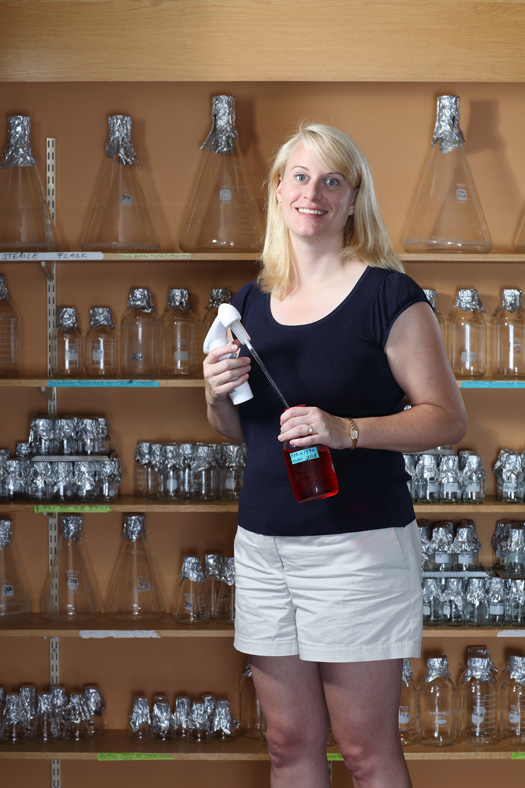
Secretly, her parents hoped their daughter would choose a safer career, but by high school Rubins had already set her sights on another perilous profession: hunting killer viruses. And this time, there was no glass ceiling to hold her back. Rubins published her first paper on HIV in 1999 as an undergraduate at the University of California at San Diego. In 2001, while a Ph.D. candidate at Stanford University, she helped the U.S. Army Medical Research Institute of Infectious Diseases create the first animal model for testing smallpox, a scourge that killed millions before its eradication in 1980. Rubins’s work has made it possible to study how the virus evades the immune system in living tissue, a major step toward new medicine and vaccines should terrorists somehow get their hands on one of the two known smallpox samples. It’s this ability to make positive changes in the world that motivates Rubins. “We have a responsibility as researchers to help people,” she says.
After smallpox, Rubins quickly shifted her attention to another scourge, monkeypox, which is now reaching epidemic proportions in Africa. A cousin to smallpox, the virus is endemic to monkeys and rodents, but it can jump to humans during the slaughter or consumption of bush meat, causing facial boils, blindness and even death. During her tenure as a Whitehead fellow at MIT, Rubins spent months in the remote jungles of the Democratic Republic of Congo, eating the occasional meal of grubs (her motto: “If people serve it, I eat it”), trying to figure out why the disease appears to be spreading so quickly. The region’s underdeveloped health infrastructure makes infection rates hard to pin down, but an uptick in the number of cases suggests the virus is gaining strength.
To track the genetic evolution of monkeypox, Rubins and her team collect and analyze DNA samples from volunteer patients. Because traditional genetic-sequencing techniques can take weeks and often churn out incomplete results, she helped develop a faster, more accurate method. Typically, scientists extract monkeypox from patient samples and grow the virus on human or monkey cells. The problem is that the virus can evolve in response to its growth medium, so the final population of viruses may bear little resemblance to the ones that are infecting people in Africa. Rubins’s idea was to skip the tissue-culture step and instead rely on a new high-powered DNA sequencer to amplify all the genetic material. She then devised laboratory protocols and algorithms to sort the monkeypox from the human cells. The entire process takes less than five days and generates what Rubins calls an “obscene” amount of genetic data on the virus.
Today, the Air Force no longer bars female fighter pilots. The policy changed in 1993, but by then Rubins had already moved on. She’s never been the type to sit around waiting for the tide to turn. This fall, while her team continues its work in Africa, Rubins will finally get the chance to live out that childhood dream when she joins NASA’s 20th astronaut class, training to becoming one of the first people to fly the shuttle’s successor, the Orion [see page 42]. Selected from thousands of candidates, she says her full-throttle hobbies of skydiving and scuba diving, not to mention her ability to thrive in dangerous places, set her apart. When asked if she’s nervous about the prospect of flying a new spaceship to the moon, Rubins smiles calmly. “Not at all. I want to be the first person to fly it, right? I’m just thrilled.” —Nicole Dyer
The Tooth Sleuth
Brilliant because: His exploration of ancient eating habits is helping to crack the mystery of human evolution
Name: Nathaniel Dominy
Age: 33
Affiliation: University of California, Santa Cruz
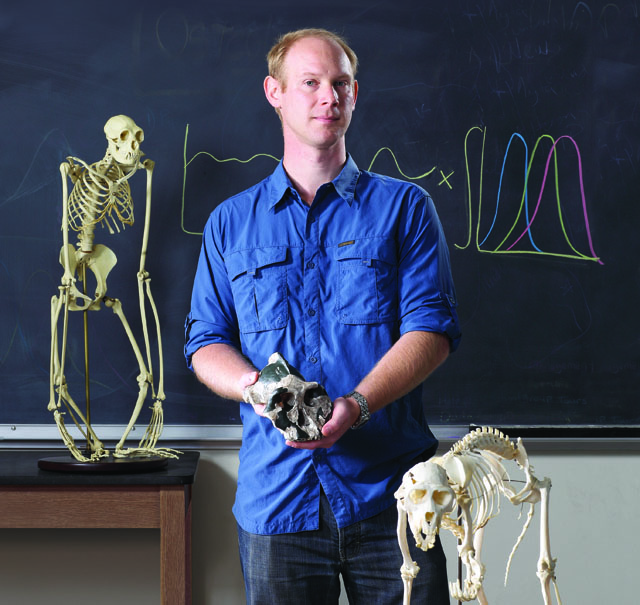
Nate Dominy found his calling on a college research trip to Costa Rica with his anatomy professors. A football player for Johns Hopkins University, Dominy was assigned the physically demanding task of catching small, drugged monkeys as they fell out of trees. “You have this moving target, completely unconscious, and you have a net in your hand,” he explains. When he went back again the next summer, he found himself thinking about more than just how the monkeys fell, and began helping to decipher the monkeys’ eating habits by studying their teeth. “I got this quick introduction to the importance of food and diet in thinking about the adaptation and behaviors of primates and humans,” he says. “I just loved every minute.”
Ten years after his transformative experience studying food and teeth, Dominy is now a trailblazer. As an associate professor of anthropology at the University of California at Santa Cruz, he works to answer one of anthropology’s biggest questions: How did modern humans evolve from our ape-like ancestors?
Dominy argues that food played a crucial role, and he recently helped solve a decade-long mystery about its role in evolution. In 1999, scientists analyzed the tooth fossils of our three-million-year-old primate ancestors, Australopithecus africanus, for chemical patterns that reveal dietary habits. Their findings suggested that grass, and the animals that ate grass, were a staple meal. But the size and shape of the fossils indicated something quite different—that our ancestors spent more time munching hard, brittle foods, such as highly starchy grass bulbs.
Dominy believes that these caloric veggies may have been the fuel of evolution, delivering enough energy to let us outwit carnivores, invent smarter ways to endure the elements and, eventually, populate the planet. In 2007 he uncovered additional evidence in support of this theory, showing that the teeth of ancient and modern African mole rats that survive entirely on bulbs have identical chemical profiles to our ancestors.
This year, Dominy hopes to crack another mystery: Why are some human populations taller than others? In October he traveled to Uganda to collect DNA from two pygmy tribes, the Twa and the Sua, who are on average less than five feet tall. He believes that short stature could help people navigate dense jungle and stay cooler. No one has ever tested this idea, and when he talks of it, Dominy sounds both excited and slightly incredulous that no one’s jumped on it before. “Body size is central to survival. It affects the kinds of things we eat, how we reproduce, our metabolism,” he says. “Here we are in 2009, and we still don’t know why it varies so much.”_ —Melinda Wenner_
Master of the Small
Brilliant because: He’s tapping the strange powers of nanotechnology to detect cancer
Name: Michael Strano
Age: 33
Affiliation: Massachusetts Institute of Technology
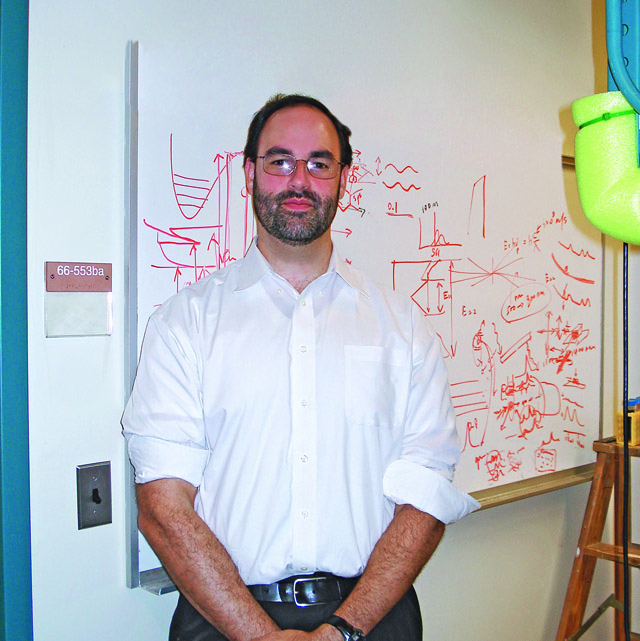
When Michael Strano was a postdoctoral fellow at Rice University, his mentor gave him some simple advice. “He told me, ‘Look at areas where disciplines intersect,’ ” Strano says. Eight years later, he is a tenured professor at MIT and one of the world’s leading researchers of quantum-confined materials, a field of nanotechnology that has the potential to transform cancer medicine, solar power, electronics and more.
Quantum-confined materials derive their power from their small size. For example, a single layer of carbon atoms, known as graphene, behaves nothing like normal carbon. In a conductor such as a copper wire, electrons simply inch along. In graphene, however, electrons move at nearly the speed of light. “It’s like a little particle accelerator,” Strano says. Graphene could make the ultimate solar-panel conductor; it’s highly conductive, highly affordable, and so thin that it’s transparent to light. “It’s the thinnest conductor we can ever imagine,” he says.
He is particularly fascinated by the medical potential of carbon nanotubes. The tiny structures emit near-infrared light that passes harmlessly through human tissue. Injected into cells, they could be used as biological sensors so sensitive they could detect a single molecule of a potentially harmful chemical.
Considering Strano’s big to-do list, it’s a little shocking to learn that he also has three kids under the age of five. Doesn’t he need downtime? “Science pretty much is my hobby,” he says.—Seth Fletcher
The Bridge Whisperer
Brilliant because: His bridge sensors can catch structural flaws invisible to human eyes
Name: Jerome Lynch
Age: 34
Affiliation: University of Michigan
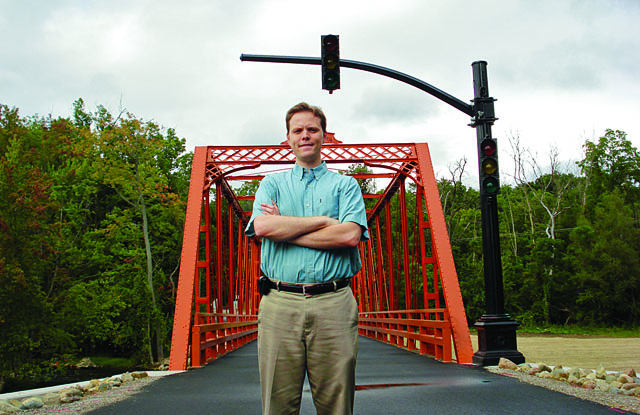
Jerry Lynch is proud of his profession. He likes to point out, for instance, that the U.S. has more than 600,000 bridges, and that failures are extremely rare. “We have a very, very good track record,” he says. “We’re a diligent bunch, civil engineers.” But when something does fail, seriously bad things happen—like when the I-35W bridge collapsed in Minneapolis in 2007 and killed 13 people due to faulty gusset plates used to join load-bearing beams. It’s these catastrophic failures that motivate Lynch, an engineering professor at the University of Michigan, to think incessantly about how things come together and how to keep them from coming apart.
His solution to structural failures like the one that befell I-35W bridge is a “sensor skin” that continuously monitors weak spots and alerts inspectors to problems before they become dangerous. “Wouldn’t it be great if we could see big structural failures coming ahead of time?” he says.
Today, the few bridges in the U.S. that have any kind of sensors usually only track seismic activity, largely because it’s so expensive to wire a bridge with enough equipment to monitor multiple threats. “The Golden Gate Bridge is over a mile long,” Lynch says. “The special conduit needed can be $10 a foot, and one sensor can cost thousands.” So instead, engineers typically rely on visual inspections at two-year intervals.
Lynch’s sensors attach to wireless nodes that communicate with other nodes on the bridge, process the data on their own, and relay potential problems back to the local inspector’s office using a cellular data connection. Each sensor consists of polymer sheets up to a foot square and just a few microns thick that cover key structural elements, like the gusset plates that gave way in Minneapolis. At programmed intervals or on command from an inspector, a small microprocessor can send an electric current through the conductive carbon nanotubes embedded in the sheets, while electrodes gauge electrical resistance to detect strain, corrosion, load and dozens of other indications of stress. Hotspots are displayed on a computerized map of the bridge. Lynch doesn’t know yet how much each sensor will cost, but just the fact that they’re wireless will make them cheaper to deploy than today’s sensors and will eliminate the costs associated with unnecessary inspections.
Lynch knows about using time wisely. The Queens, New York, native earned a master’s degree and a Ph.D. in civil engineering from Stanford University and then went back and got another master’s, in electrical engineering. After 9/11, he launched a company to build wireless infrastructure sensors and left it to teach at Michigan, where he was named Professor of the Year his second year on the job. “Dr. Lynch is probably the most regarded scholar among his peers in such an early stage of a career,” says Kincho Law, a professor of structural engineering at Stanford.
Lynch’s sensing skin will leave the lab next year for testing on three highway bridges in Michigan and three bridges in Korea. And he is already working on a paint-based version that could be applied to anything that needs monitoring, from airplanes to pipelines, as well as a version that would make its own power from the vibrations of whatever it’s painted on. “There’s an inherent uncertainty in visual inspections,” Lynch says. “We need better tools to keep an eye on things.” —Mike Haney
