SciTech

Britain's Alien Files

The National Archives releases old UFO-related case reports

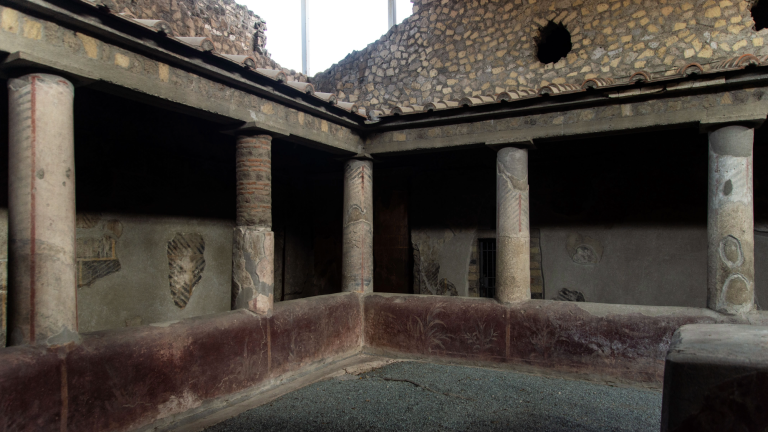
At 4 PM on April 19, 1984, a team of air traffic controllers at an airport in the east of England reportedly watched a strange, bright, circular vehicle touch down, then blast off again at a tremendous speed and with a near vertical trajectory. Although they didn't want their names to be included in the report covering the event, they believed it was a UFO. And they were sober.

[ Read Full Story ]

Death Toll of China's Quake Climbs

The devastating earthquake originated close to the surface, thus producing intense shaking

The death tolls from the massive earthquake that shook China on Monday have reportedly climbed as high as 13,000 people. More than 18,000 people are still unaccounted for in Mianyang in Sichuan province. And soldiers and medics have just broken through to reach the city of Wenchuan - home to a population of 100,000 - which sits right at the epicenter of the quake.

[ Read Full Story ]
Science Confirms the Obvious

Young Adults Drink to Boost Their Chances of Hooking Up

“Liquid courage” gets scientific backing

In testament to a tried-and-true move in the human mating game, European scientists have noticed that young people in bars and nightclubs across the land are using alcohol and drugs to grease the wheels of foreplay.

[ Read Full Story ]

PopSci Presents: The 2008 Invention Awards

Our annual salute to ingenious inventions and their creators

The world needs help. Power demands are rising, bridges are collapsing, cancer is still cancer. These are sweeping, global challenges, but the solutions may well end up coming from the garages and basements next door. As the winners of PopSci’s second annual Invention Awards demonstrate, invention—even world-changing invention—can happen anywhere there’s an idea and an endless drive to see that idea made real. Launch the articles and videos below for 10 examples of homespun creativity tackling real problems.

[ Read Full Story ]

The Natural Artificial Foot

Jerome Rifkin's K3 Promoter mimics the jointed motion of a real foot for easier walking. Watch it in action

K3 Promoter
Cost to Develop: $100,000
Time: 8 years
Prototype | | | | | Product
Gordon Link, a diabetic and foot amputee, is not looking to climb Mount Everest, run a marathon, or snowboard off a cliff. “I just want to walk without stumbling like I’m a drunk,” he says. It may not sound like a tall order, but until he was fitted with a prototype prosthetic foot that simulates the body’s natural movements, walking on uneven ground was like navigating an obstacle course. “Hitting a low spot of even one inch with my old foot was like a non-amputee stepping into a four-inch hole,” he adds. “Not good.”

[ Read Full Story ]

A Homebuilt Tumor-Killer

John Kanzius's treatment uses radio waves and nanoparticles to zap cancerous tumors. See it in action

The Kanzius RF Field Generator
Cost to Develop: $1 million+
Time: 5 years
Prototype | | | | | Product

When a man with no medical degree and a diagnosis of fatal leukemia builds a cancer-curing machine in his garage, you might think it merely the desperate attempt of a dying man to escape his fate. And you’d be right. The weird thing is, it just might work.

[ Read Full Story ]

The Zero-Emissions One-Wheeled Motorcycle

The Uno accelerates with a simple lean and turns like a street bike on side-by-side wheels

RED HOT ROLLER: Gulak had a custom fiberglass body built for the Uno. Photo by John B. Carnett
Uno
Cost to Develop: $45,000
Time: 2 years
Prototype | | | | | Product
Just before his plane dipped into the clouds above Beijing International Airport two years ago, Ben Gulak caught the last clear view of the sun that he would see for two weeks. On the ground, the 17-year-old, who was on a family trip to China, quickly spotted a source for much of the thick haze hanging over the city: smog-spewing motorbikes. Thousands of them, everywhere. “Right then,” he says, “I decided that I wanted to create an alternative mode of transportation, something clean and compact.”

[ Read Full Story ]

A Rocket Engine for the Masses

Tim Bendel's off-the-shelf powerplant for the burgeoning private space industry. Watch him discuss it

Viper
Cost to Develop: $250,000
Time: 2 years
Prototype | | | | | Product
If we’re ever going to see a true era of commercial space travel—a day when Virgin Galactic is just another spaceline—Tim Bendel believes we need a better rocket engine. Specifically, something that is to the space industry what the internal combustion engine was to the nascent car industry a century ago: a standard, off-the-shelf option that can power any manner of vehicle, from tourist ship to lunar lander. And it has to be affordable to companies not owned by billionaire Richard Branson.

[ Read Full Story ]

A Lifesaving Beacon for Miners

Russell Breeding finds lost miners with the same tech found in guided missiles and the Nintendo Wii

InSeT System
Cost to Develop: $475,000
Time: 2 years
Prototype | | | | | Product
In January 2006, an explosion rocked West Virginia’s Sago coal mine, trapping 13 miners. Rescuers searched an area 500 feet wide by two miles long and didn’t reach the miners until 41 hours after the blast, eventually pulling out 12 bodies and one survivor. Jim Ponceroff, who led a rescue team, says that the biggest challenge in recovering miners is locating them quickly so that engineers can drill a borehole for fresh air and, ultimately, rescue. Sago, like most of the country’s nearly 900 active mines, relied on radios that transmit signals over a thin wire that’s easily damaged in a cave-in.

[ Read Full Story ]

A Living Air Filter

These filters use plants and fans to clear the air of toxic chemicals

Bel-Air
Cost to Develop: $236,000
Time: 1 year
Prototype | | | | | Product
Your home could be emitting toxic gases. Just ask the victims of Hurricane Katrina, whose emergency trailers, made with glue-laden particleboard, let off so much formaldehyde that the Centers for Disease Control and Prevention warned that residents should “spend time outdoors” and “make relocating to permanent housing a priority.” Even in more expensive new homes, the concentration of emissions from things like furniture, carpet and paint can be two to five times as high as it is outdoors. But most air filters only catch particulates such as dust and pollen rather than organic compounds like formaldehyde and benzene, and the filters that do trap those gases need frequent replacement. So Mathieu LeHanneur and David Edwards built an ultra-efficient filtration system that eliminates toxins using nature’s own hazmat squad: plants.

[ Read Full Story ]
Page 1 of 179 12345678910next ›last »

PPX: The PopSci Predictions Exchange

RSS Link

SciTech

Ready to bet on the future? Start here!

Subscribe for 2 free issues!

may2008_cover.jpg