
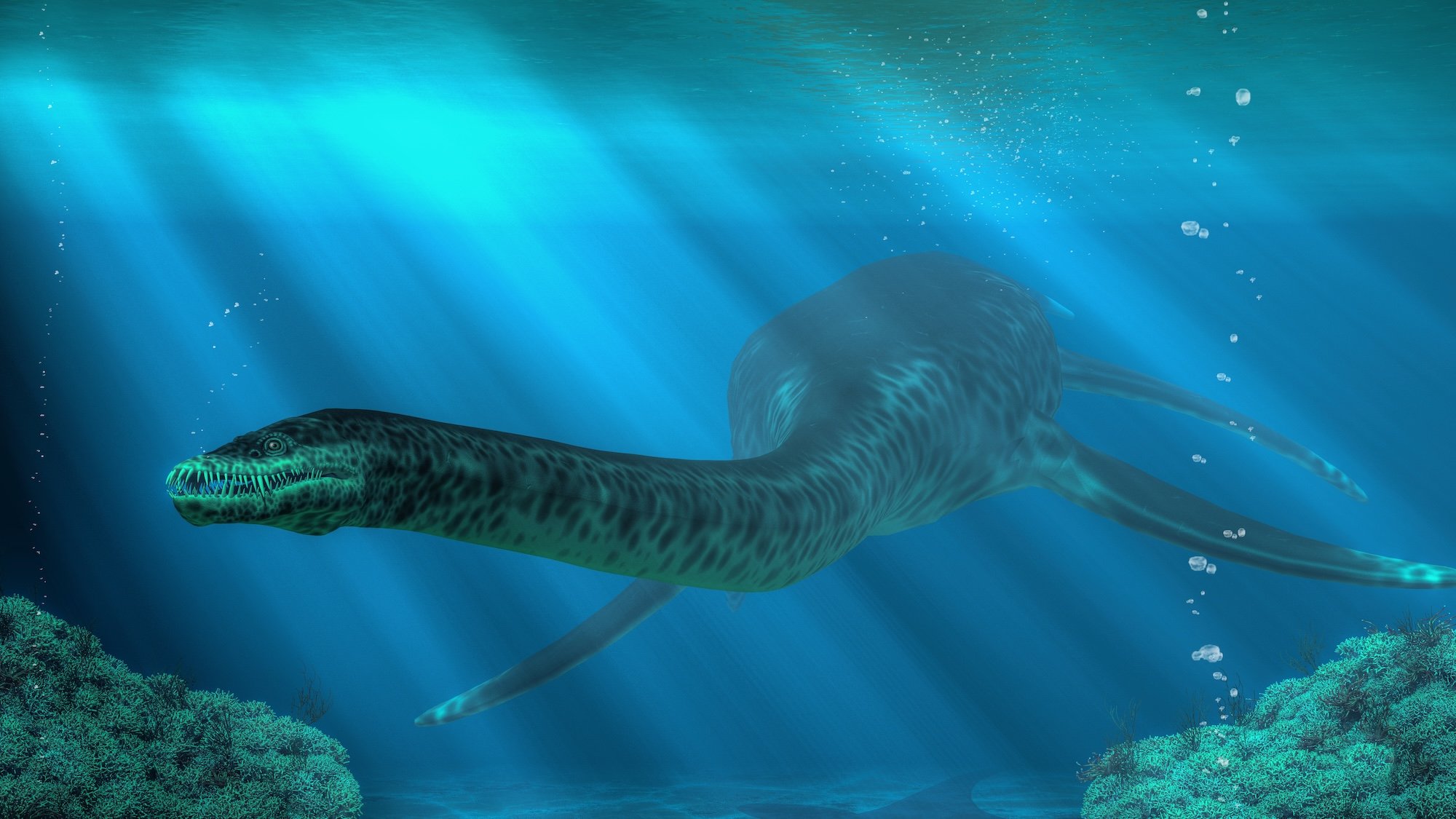
The long-necked plesiosaurs that swam in oceans during the Jurassic Period frequently made detours into shallower river deltas to regurgitate indigestible portions of their meals. The evidence detailed in a study published today in the journal Geological Magazine isn’t for the squeamish. Paleontologists base their new theory on fossilized vomit similar to owl pellets.
While owls famously regurgitate the indigestible bones and fur of their prey, other animals also routinely spit out unwanted leftovers. Many fur seals and marine crocodiles behave similarly; although their regular post-meal efforts require a bit more work. While an owl simply deposits pellets wherever they feel like it, these aquatic species first travel onto land before regurgitating.
It now appears some of the planet’s most successful ocean predators engaged in the same digestive workarounds. Plesiosaurs belong to a family of marine reptiles that existed for over 140 million years between the Middle Jurassic and Early Cretaceous periods. Generally ranging between 6.5 and 43 feet in length, the species featured lengthy necks and sleek, flippered bodies. This anatomy allowed them to excel at gobbling up ancient fish and cephalopods, but paleontologists believe the reptiles also often craned their heads down to devour shellfish resting on the ocean floor.
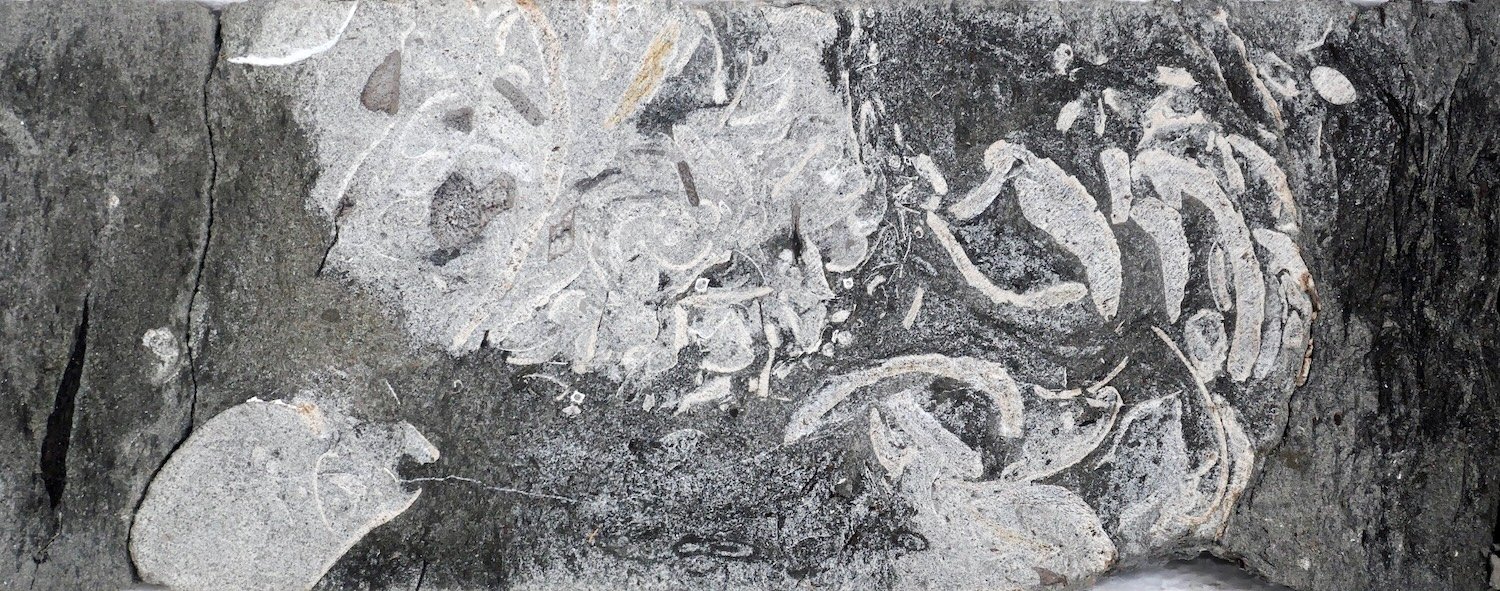
Plesiosaurs went extinct about 100 million years ago, but skeletal fossils aren’t all that remains from the era. Under specific conditions, animal feces and even vomit were also preserved in the forms of coprolites and regurgitalites. For decades, paleontologist Dirk Knaust has primarily examined invertebrate fossils recovered near deep sea drill sites. However, recent samples collected in the North Sea told a different story.
“There has been a lot of research into fossilised vomit over the last decade but most of it has focused on vertebrates eating other vertebrates,” Knaust said in a statement.
Knaust amassed more than 20 regurgitalites—some as large as a mango—that didn’t contain bones. Instead, they mainly included shellfish fragments that he then compared against similar examples from Europe and North America. The North Sea regurgitalites had bivalves, cephalopods, and tubular worms, but there was a problem: none of the species lived in the region they were found. Knaust gathered the fossils in an area that once held a Jurassic river delta, but the animals found lived in far saltier, open oceans. Luckily, a fossilized bone and some coprolites discovered near one of the regurgitalites pointed Knaust in another direction—dolphin-like marine reptiles known as ichthyosaurs.
“But it wasn’t that simple,” he recalled. “There were many other marine animals to consider, and the composition of their vomit differs.”
Based on details like composition, density, and size, Knaust now believes the coprolites and nearby ichthyosaur bone came from an ancient crocodile. Because those predators didn’t hunt shellfish, the process of elimination led the paleontologist to the most likely explanation.
“The plesiosaur most closely matches the size and feeding profile of the vomit producer,” he concluded.
Knaust now believes that after a hunt, plesiosaurs may have swam closer to shorelines to rest or sleep. Once there, they also vomited shells and other invertebrate parts they couldn’t digest. Today’s fur seals and marine crocodiles engage in similar activities, although they go onto land. Based on their overall weight and anatomy, plesiosaurs likely remained underwater.
“This is still just the beginning,” said Knaust. “There’s so much more we can learn from picking through what extinct animals threw up after dinner.”
