


We may earn revenue from the products available on this page and participate in affiliate programs. Learn more ›

Vacuum cleaners have come a long way in the past few decades, from when large, oversized canisters weighing over 50 pounds were the only option for removing dirt and debris from floors, upholstery, draperies, and other surfaces around the home. Now, the market is flooded with different types. There are also a lot more features to take into consideration. For example, modern vacuums allow you to choose between filtration bags or bagless, attached electrical cords or rechargeable cordless, as well as a multitude of various accessories and attachments geared towards removing dirt and dust from every corner and crevice of your home or vehicle. We’ve found the best vacuum cleaners for every job, big or small, to help break it down.
- Best overall: Dyson Gen5outsize
- Best for pet hair: Bissell ICONpet Cordless
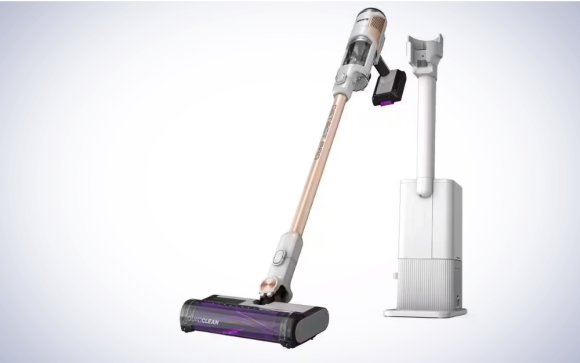
- Best stick vacuum: Shark Cordless Detect Pro
- Best robot vacuum: iRobot Roomba i7
- Best budget: Eureka NEC185
How we chose the best vacuum cleaners
With so many types, features, and designs on the market, narrowing down this list was a challenge. We conducted both hands-on testing and research to present a selection of vacuums geared toward a variety of cleaning objectives and a wide range of homes, square footage, and lifestyles.
We focused on ease of use, suction power, battery life for cordless models or alternately user-friendly power cord options, debris removal and disposal, and smart features when applicable. We also strove to represent a wide range of price points, so there’s an appropriate option for everybody.
The best vacuum cleaners: Reviews & Recommendations
There are so many types of vacuums, from traditional upright models to stick vacuums, canister vacuums, handheld, even robot vacuums. Ultimately, a vacuum is the type of home tool you’re going to want to buy once and not think about replacing for several years. Spending extra will allow you to get one with extra features that will make your life easier—who wants to spend more time wedging a tube or nozzle into the corners of your room than necessary—but basic models have gotten a lot better lately. Cordless and robot vacuums, in particular, have gotten both less expensive and more technically impressive, which is great if you hate cleaning but don’t want messy floors.
Best overall: Dyson Gen5outsize
Best overall
Premium suction

Pros
- 135,000rpm (rotations per minute)motor provides ample suction
- LCD screen displays battery life and performance in real time
- Surprisingly quiet
Cons
- Price
Specs
- Form factor: Stick
- Surface recommendation: Bare floors, carpet, area rugs, sealed hard floors, upholstery
- Weight: 8.6 pounds
Why it made the cut: Dyson’s most premium vacuum sucked up messes and changed the way we cleaned.
If you’ve ever wondered what a $1,050 vacuum could do for you, look no further than Dyson’s new Gen5outsize. The stick vacuum is totally tricked out, with a high-powered motor, multiple attachments, large LCD screen, and a comparatively light package. We’ve used vacuums for years—and during the testing for this guide—but nothing quite prepared us for using the Gen5outsize. Its unassuming face, with a red power button and pill-shaped mode select button, undersell how much is happening below the hood.
That starts with the vacuum’s “dust illumination” light, which shows you just how dirty your floors really are. The effect is both impressive and nauseating, as dust, hair, and other debris invisible to the naked eye are laid bare. If this is a tactic by Dyson to cajole you into cleaning up more often, it worked. We found ourselves reaching for this vacuums multiple times per week because we knew just how much gunk could accumulate in just a couple of days.
These frequent cleanings weren’t burdensome though, because the Gen5outsize is the platonic ideal of cordless stick vacuums. It’s light enough to carry around—even up stairs—and cleans messes in one pass that would require multiple passes from lesser vacuums. That’s due in large part to its ultra-powerful motor, which can spin at well over 100,000rpm at its peak. If you leave the vacuum on auto mode, which is what we recommend, the vacuum will automatically adjust itself based on how dirty your floors are. Boost mode will keep the vacuum power level elevated, while eco will sacrifice power for the sake of battery life. It’s worth noting that everyday spills or touch up cleaning can be handled in eco mode with no problem.
In our experience, there was no mess too big or small for the Gen5outsize. Hair, dust, cereal, and anything else that fell to the ground on both hardwood or carpet would get sucked up with no issues. Similarly, we had no problem with the vacuum getting tangled when cleaning a particularly dense area where debris had accumulated—think under the couch. When our cleanup was done, it was easy to disconnect the top of the vacuum from the motor to empty the dust chamber. While the sheer level of performance from the Gen5outsize blew us away, its tech features were the most surprising part of our experience with it.
This vacuum has a large LED screen on top of it, which displays its current cleaning setting, how much time is left on its battery, and the volume of particles it’s picking up separated by size. The Gen5outsize can suck up particles down to .1 microns—basically invisible—so you can see how much the vacuum is working in real-time. Whether you’re worried about pet hair or pollen, germs or fallen gummy bears, we’re convinced Dyson’s Gen5outsize is the best vacuum at any price.
Best for pet hair: Bissell ICONpet Cordless
Best vacuum cleaner for pet hair
Designed for pets
Pros
- High-performance digital motor
- Tangle-free brush roll
- Converts to handheld to clean up pet messes
Cons
- Dirt cup and hoses can clog easily
- Sides of the brush roll may gather clumps
Specs
- Form factor: Stick, upright
- Surface recommendation: Bare floors, carpet, area rugs, sealed hard floors, upholstery
- Weight: 7 pounds
Why it made the cut: Pet hair and messes are no match for this vacuum with a powerful digital motor and premium features designed with man’s best friends in mind.
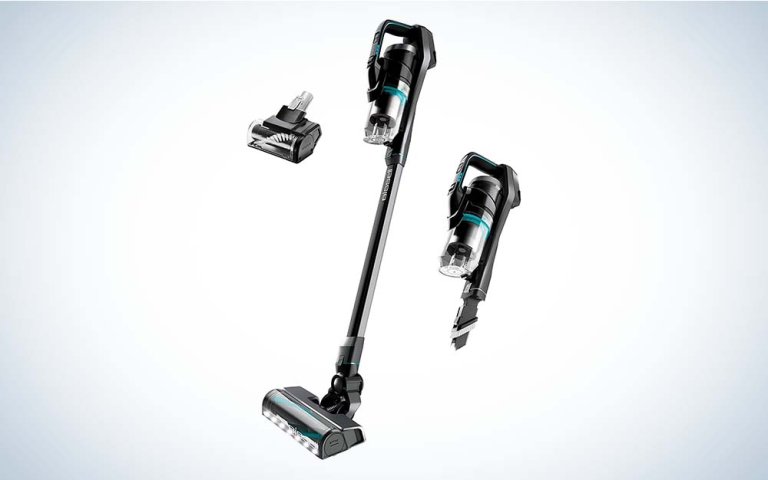
The Bissell ICONpet Cordless is a game-changer for anyone with pets. The high-performance digital motor spins at up to 420 miles per hour for powerful cordless cleaning performance, with a patented tangle-free brush roll that leaves no hair wrap behind. Some customers note that pet hair may clump to the sides of the brush roll, though it’s still easy enough to remove and resume cleaning quickly.
For spot cleaning or pet messes, the ICONpet also converts to a hand vacuum, with additional accessories such as a motorized turbo brush tool and an LED crevice tool, plus a dusting brush so you can clean anywhere your pet goes. And all of the dirt, hair, and dander stays contained thanks to the mess-free dirt tank with clean slide technology that eliminates the need for cleaning up after you’ve already cleaned.
In addition to potential brush roll clumps, a small number of users have also had issues with hair clogging in the dust cup or internal hoses. But for all intents and purposes, regularly cleaning your floors should prevent pet hair buildup that may cause these issues.
Best stick vacuum: Shark Cordless Detect Pro
Best stick vacuum cleaner
Smarter cleaning
Pros
- Docking station sucks debris from the vacuum into a separate chamber
- Odor neutralization
- Base charges your vacuum while it’s not in use
Cons
- Price
Specs:
- Form factor: Stick
- Surface recommendation: Hard floor, carpet
- Weight: 14.8 pounds
Why it made the cut: Shark takes some of the best features from the robot vacuum world and brings them to a stick model.
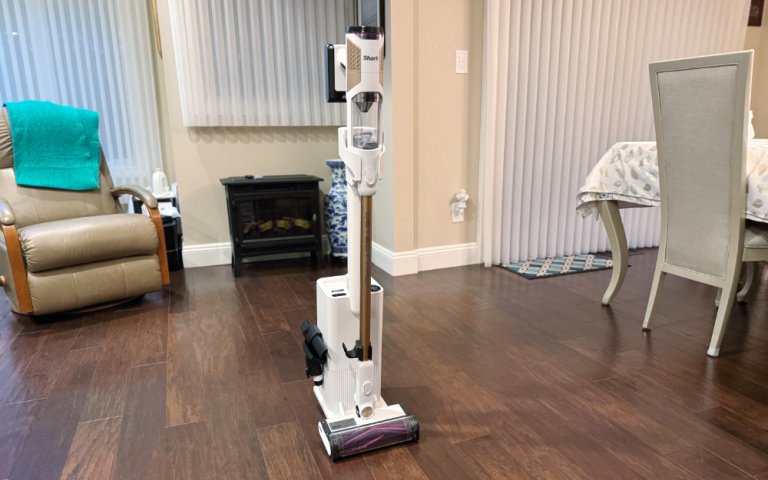
Robot vacuums have become increasingly popular over the past few years because they take part of the dirty work out of cleaning your floors, and you never have to worry about plugging them in to charge. Shark’s Cordless Detect Pro has both of those features because the vacuum comes with its own docking station. When the vacuum is docked, its battery will begin charging, and the collected dirt will be transferred into a separate chamber. Shark says that studies conducted with this vacuum have resulted in 1000x less dust exposure when compared to dumping the contents of a vacuum chamber directly into the trash.
Bringing robot vacuum innovations to a stick vacuum is impressive, but the Cordless Detect Pro stands on its own compared directly with other stick vacuums. Its brushrolls were destined to pick up everything from pet hair to broken chips, and they won’t get tangled by pet hair. Shark says the vacuum can last up to one hour per charge, and you won’t have to hunt around for a cable thanks to the Cordless Detect Pro’s base. The amount of usage you get out of this vacuum will depend on the mode you choose to use. You can switch between eco, auto, and boost modes by pressing a button with a fan glyph on top of the vacuum.
The Shark Cordless Detect Pro is more expensive than most of the vacuums we’re recommending, but it’s well worth the price considering the performance of the vacuum and the features offered by the base. If you put off cleaning because you hate coming into contact with dirt (who does, really?), this vacuum’s system may encourage you to clean more often. If anything, Shark is leading the way in offering a vacuum that takes the best parts of traditional and robot vacuums into one machine without cutting corners.
Best robot vacuum: iRobot Roomba i7
Best robot vacuum cleaner
Intelligent power
Pros
- Premium three-stage cleaning system
- vSLAM navigation learns the layout of your home
- Compatible with voice assistant
Cons
- Emits loud whirring noise when operating
- Cannot run at night in the dark
Specs:
- Form factor: Robot
- Surface recommendation: Hard floor, carpet, dual-action
- Weight: 7.44 pounds
Why it made the cut: For clean floors without having to lift a finger, this intelligent robot vacuum is always learning the layout of your home and building smart maps.
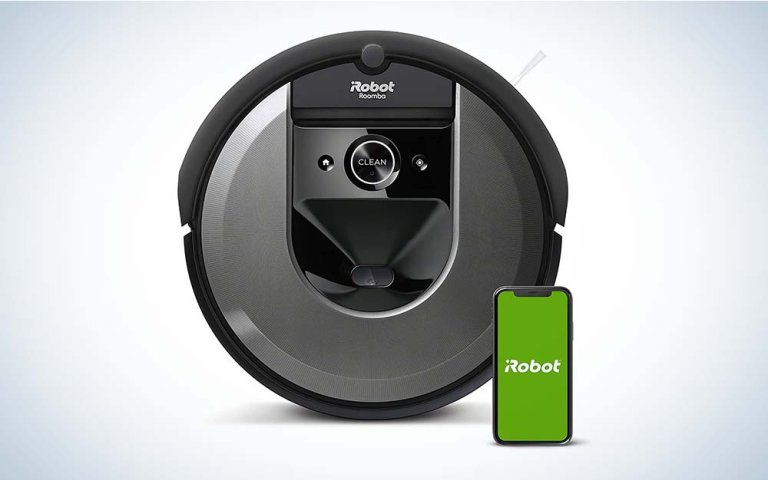
In the nearly two decades since the first Roomba was first introduced, robot vacuums keep getting smarter and smarter. Case in point, the iRobot Roomba i7 features vSLAM navigation that actually learns the layout of your home and builds personal Smart Maps, which enables it to clean and navigate in neat, efficient rows. With the help of Google Assistant or Alexa voice assistant, you can also command your Roomba to clean as messes occur. For example, you can simply say: “Tell Roomba to clean under the kitchen table,” and the bot will get right on it.
The robot can also be programmed with “keep out zones,” so it knows to avoid potentially sensitive areas such as pet bowls or sleeping babies, so you can focus your attention elsewhere while your house gets clean. And it will get clean. Aside from the intelligent features, the vacuum pulls in dirt and messes with a premium three-stage cleaning system and ten times the power-lifting suction when compared to previous models.
One of the few downsides is that the i7 is still somewhat noisy and emits a loud whirring noise with random whining and bumping noises. Unfortunately, it also cannot operate in the dark, though with the considerable noise it makes, you probably wouldn’t want to have it running while you’re trying to sleep regardless.
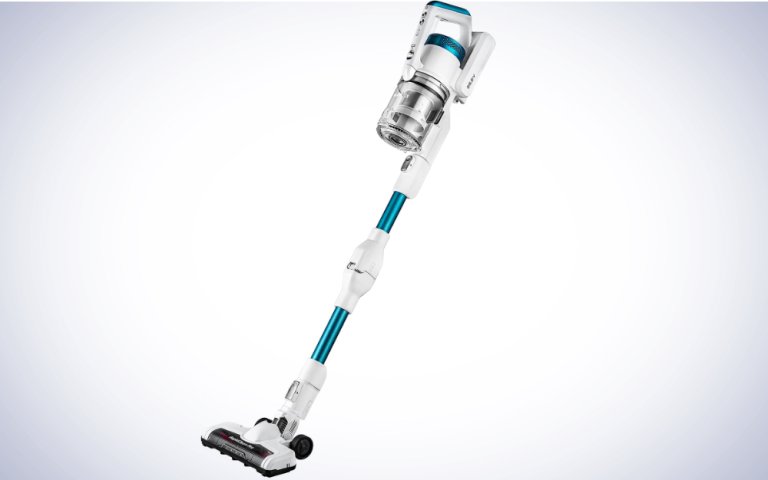
Best budget: Eureka NEC185
Eureka NEC185
Pros
- Lightweight
- Lays flat for easy cleaning
- Price
Cons
- So-so battery life
Specs
- Form factor: Stick
- Surface recommendation: Hard floor, upholstery, carpet
- Weight: 5.5 pounds
Why it made the cut: If you’d like an inexpensive, easy way to clean your home, Eureka’s NEC185 is a worthwhile investment or upgrade.
Surprisingly, Eureka’s NEC185 vacuum cleaner lives up to the company’s name. Found for about $150 (currently $133 thanks to an Amazon coupon) we found little fault with this vacuum when cleaning up messes containing larger particles like hair and crumbs. Its flexible base allows you to bend the stick vacuum at its midsection, while its head can be laid perfectly flat, which makes it easier to get under couches. This flexibility was impressive, and came in handy when trying to reach hard-to-get places.
Similarly, the vacuum’s design is modular in that you can take out the stick and attach its motor directly to the vacuum head to turn it into a handheld vac. This is a feature we found in our other stick vacuum recommendations, but it’s nice to see in a less expensive model. Many of the creature comforts we got used to from those premium recommendations—an LCD screen or separate dock for instance—were missed but ultimately unessential. In terms of core functionality, the NEC185 held up well.
We were especially happy with how light the vacuum was, which made holding it for longer cleaning sessions pretty easy. Once our cleaning was done, the vacuum’s container could be easily emptied into a trash bag in a couple of button presses. You even have the option to fully remove the container from the vacuum while emptying it out. It may not be able to clean on a near-subatomic level, and its 40-minute battery life may not be able to last long enough to clean a multi-story home, but Eureka’s NEC185 is an excellent choice if you’d like cleaner floors on a budget.
What to consider before buying a vacuum cleaner
There are many factors to take into account when deciding which vacuum cleaner is correct for your needs. These are the ones we considered most when deciding which ones to recommend.
Flooring
Vacuum cleaners are a critical home investment—but they become moot if they don’t fit your particular necessities. So, when choosing the best vacuum cleaner for your home, it helps to start by assessing your basic cleaning needs. For instance, does your home have primarily hard floors or carpeting? Are there a lot of stairs, or is everything on one level? If you’ve got hardwood floors and multiple levels, a canister-style vacuum might be your best bet. But on the other hand, people who have carpeted floors may be better off with a standard upright vacuum that deep cleans even high-pile carpeting.
Pets
While our furry friends add plenty of joy to our lives, their hair often doesn’t. It can make choosing a vacuum particularly challenging. Few things will clog a brush roll as much as pet hair does, so if you’ve got dogs and cats, it’s crucial to purchase a model specifically designed for pet hair. In other words, people with multiple pets, in particular, may want to steer clean of robot-style vacuums that clog easily, or worse, track pet messes throughout the house. In that case, head for the best vacuum for pet hair that you can get.
Home layout
Depending on the size and layout of your home, you may even want to invest in a multiple-vacuum strategy to tackle a number of different surfaces and messes. Having more than one vacuum for different purposes can also extend the overall life, as you won’t be taxing a canister vacuum on carpeted floors or lugging a heavy upright vacuum up and down multiple flights of stairs. As such, this is why some folks prefer to have a designated vacuum for everyday cleaning, with a handheld or stick model for spot-cleaning messes.
FAQs
Most experts agree that you should spend a minimum of $150 on a new vacuum cleaner. Yes, there are cheaper options on the market, but as the saying goes, you get what you pay for. Of course, if you have the money to splurge, there are high-end options that cost upwards of a thousand dollars or more, but overall, $400 to $500 is a reasonable price range for a top-of-the-line model that should last for many years to come with little to no maintenance.
How a vacuum cleaner will last depends on a range of factors, such as quality, brand, and vacuum style. However, in general, you can expect most decent vacuum cleaners to last a median of approximately eight years before needing to be replaced.
If your vacuum is fairly new, it’s probably worth getting repaired, particularly if the product is still under manufacturer warranty, and replacement parts may even be free. However, experts don’t advise fixing older vacuums after five years for upright vacuum cleaners and seven years for canister vacuums. A good rule of thumb is that you shouldn’t fix your vacuum if you’ll be spending more than half the cost of a comparable new model.
Final thoughts on the best vacuum cleaners
- Best overall: Dyson Gen5outsize
- Best for pet hair: Bissell ICONpet Cordless
- Best stick vacuum: Shark Cordless Detect Pro
- Best robot vacuum: iRobot Roomba i7
- Best budget: Eureka NEC185
Though it’s the most pricey model on this list, it should come as little surprise that our overall pick for the best vacuum is the Dyson V11 Torque Drive. We love the suction power it provides in a lightweight, cordless package that can easily be carried around the house from floor to floor and that it works impressively on a variety of surfaces.
However, those looking for powerful suction but something a bit more affordable can’t go wrong with the Shark NV360 Navigator Lift. It scores high points for having the versatility of an upright vacuum combined with a canister vacuum, and that it can also be used for various flooring types, upholstery, curtains, and more. Whether you go with the best stick vacuum or the best vacuum for pet hair, these models will serve you well for many years to come.
