EarthTalk
Seeding the seas or the skies to dial down the planet's temperature

Decommissioned Coal Washing Facility in Clay County, Kentucky Wikipedia

Dear EarthTalk: What are some of the leading proposed technological fixes for staving off global warming, and how feasible are they? -- James Harris, Columbus, Ohio

While most of the world fixates on how to reduce the amount of carbon dioxide (CO2) and other greenhouse gases we emit into the atmosphere, scientists and engineers around the world are busy working on various "geo-engineering" technologies -- many of which are highly theoretical -- to mitigate global warming and its effects. Many scientists oppose using new technology to fix problems created by old technology, but others view it as a quick and relatively inexpensive way to solve humankind's most vexing environmental problem.

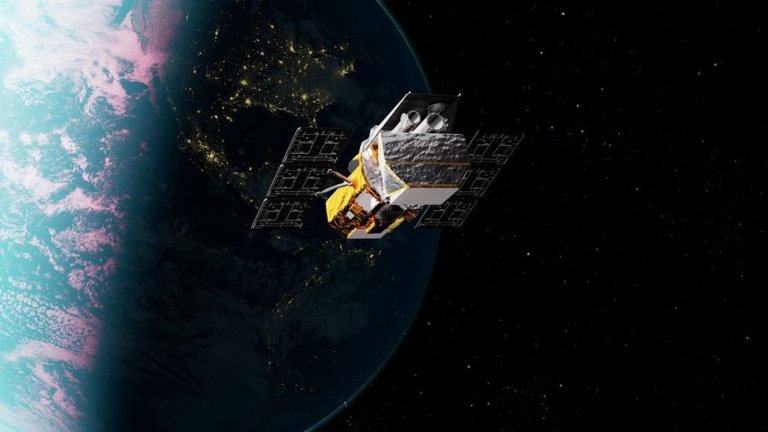
One of the theories proposed for reducing global warming involves deflecting heat away from the Earth's surface with solar shields or satellites with movable reflectors. Computer models suggest that blocking eight percent of the sun's Earth-bound radiation would effectively counteract the warming effect of our CO2 pollution. The idea was inspired by the cooling effects of large volcanic eruptions -- such as Mt. Pinatubo in 1991 -- that blast sulfate particles into the stratosphere. These particles reflect part of the sun's radiation back into space, reducing the amount of heat that reaches the atmosphere.

Another technological fix involves "sequestration," the storage of CO2 either deep underground or deep in the ocean. Some of the nation's largest utilities, which are also "washing" coal to filter out impurities, are working on ways to capture the CO2 they emit and store it miles below the Earth's surface. Costs of such technologies have been prohibitive, but new regulations could force the issue in the near term.

Another leading theory, "ocean fertilization," entails scattering iron powder throughout the world's seas, providing nutrients to boost the amount of phytoplankton that thrive in the water's upper layers. Through photosynthesis, these plants absorb CO2, which in theory stays with them when they die and fall to the ocean floor. Initial experiments have not lived up to the hype, however, but more research is underway.

Yet another take on altering the seas for the sake of the climate, "engineered weathering," entails replacing some of the oceans' carbonic acid with hydrochloric acid. This, the theory goes, accelerates the underwater storage of CO2 otherwise destined for the atmosphere. According to Harvard Earth and Planetary Science Ph.D. Kurt Zenz House, engineered weathering "dramatically accelerates a cleaning process that nature herself uses for greenhouse gas accumulation."

While the cost of many of these so-called "geo-engineering" fixes would not necessarily be prohibitive in light of the cost of transforming our global energy economy, the risks of unintended consequences weigh heavily on even the researchers proposing them. "Personally, as a citizen not a scientist, I don't like geo-engineering because of the high environmental risk," Ken Caldeira, a researcher at California's Carnegie Institution of Washington, told New Scientist. "It's toying with poorly understood complex systems." But he also wonders: "Is it better to let the Greenland ice sheet collapse and let the polar bears drown their way to extinction, or to spray some sulfur particles in the stratosphere?"

GOT AN ENVIRONMENTAL QUESTION? Send it to: EarthTalk, c/o E - The Environmental Magazine, P.O. Box 5098, Westport, CT 06881 USA; submit it at: www.emagazine.com/earthtalk/thisweek ; or e-mail: earthtalk@emagazine.com. Read past columns at: www.emagazine.com/earthtalk/archives.php.

Want to learn more about the environment, solar energy, sustainability, and more? Subscribe to Popular Science and enter to win $5,000!

9 Comments

Eggman002 (not verified)

So we are pumping too much pollution into the environment and the leading solutions are:

1) Block out the sun (wasn't their a Simpsons episode about this).
2) Hide our pollution under ground or under water.
3) Dump more pollution into the Ocean (in the form of iron filings).
4) Alter the chemical makeup of the Ocean.

[sarcasm]
I am sure none of these solutions will have any negative side effects.
[/sarcasm]

I hope Global Warming turns out to be a myth because otherwise we are all doomed.

Where is the scientific proof (Not political agenda of Al Gore) that identifies CO2 as the major cause of "Global Warming"?

Hint 1:
www.youtube.com/watch?v=-zeGY8zbzc8

Hint 2:
www.youtube.com/watch?v=7cMVE3UCkM8

Think for yourselves and apply scientific methodology.

I think we might want to consider a strategy to avoid getting to the point where we would need to consider these more extreme geo-engineering measures to offset global warming. Or we could just attack Al Gore (ahem ^ )and hope to hell he was wrong, since otherwise, we're going to have to make some really tough choices before long.

It is quite clear that the editors of PopSci have spun this report so as to produce a knee jerk reaction against the topic the call iron fertilization. In FACT the use of iron in this way is properly referred to as mineral micro-nutrient iron REPLENISHMENT which leads to ocean ECO-RESTORATION. I believe any fair minded person reads the latter description as more acceptable than the iron fertilization title.

Since high CO2 has depleted natural sources of mineral micro-nutrients reaching the oceans the ocean pastures and the plankton blooms that sustain those pastures have gone into catastrophic decline. The loss of ocean pasture, green plant life, in terms of CO2, has resulted in 4-5 billion tonnes of CO2 NOT being fixed into ocean plant life each year. If we replenish that denied micro-nutrient iron we will restore vast amounts of ocean life from tiny krill to the great whales, fish, sea birds, seals and sea lions, salmon, cod, everything. In the bargain billions of tonnes of CO2 will be sequestered in the abysmal deeps of the ocean instead of, as it does today, becoming deadly acidification killing marine life and dooming the ocean to becoming a sea of bacteria and slime.

As for Caldeira feeling nervous about putting stuff in the ocean, see his patent: US#6890497 Issue date: May 10, 2005 Inventors: Gregory H. Rau, Kenneth G. Caldeira - which specifies using the ocean as a vast dump for the ground up rock dust and bound CO2 of his invention. Can anyone spell conflict of interest.

The condition of the ocean due to the hundreds of gigatonnes of noxious CO2 is dire with leading Acadamies of Science ( US, UK, Aust) reporting the oceans will irrecoverably topple over the tipping point of CO2 poisoning by 2030, that's a mere 21 years.

Only ocean nutrient replenishment and eco-restoration of ocean pastures and plankton blooms has any prospect of healing the oceans.

Read more at www.planktos-science.com

Mike Cook

from Kent, WA

Actually, nature already seeds some of the ocean with iron in the form of wind-born dust. This process particularly reveals itself in the Bering Sea off the coast of Alaska where metal-rich dust from Central Asia, principally the Gobi Desert and China's industry, is wafted by prevailing winds. Volcanos on the Pacific Rim also are good for spewing out iron from time to time.

The dust falling into the near-Arctic and Arctic waters fertilizes plankton growth, which feeds krill, which along with plankton feeds the rest of the food chain and makes the Bering Sea one of the richest fisheries in the world.

One really stupid argument against man deliberately fertilizing with iron the vast stretches of the Pacific Ocean which are nearly devoid of marine life (the mid-ocean desert) is that it would create a biosphere that is unnatural and not sustainable. This is the same kind of thinking which holds that if the Yucca Mountain nuclear storage vaults leak in 10,000 years it will be a horrible tragedy because there will be no people around to fix the leaks.

But how do you know that? Optimists like me believe that not only will there be humans around in 10,000 years, they will be able to fix any leak problems as if doing so were mere child's play. They also will probably still be fertilizing oceans deserts with iron because it makes so damn much sense to do so.

The main problem we have in most intellectual controversies today is that a lot of people have come to believe for whatever reason that the real "carrying capacity" of the Earth is only about 250 million or so humans so they need to think of ways to cut world population down about 20X to this ideal number. Worse yet, they confidently expect this small population to forsake all technological progress and backslide into some "Garden of Eden" type of extremely stable and benign balance with an environment that never changes.

Unfortunately, this planet is not stable in climate or anything else and there will never, ever, be another Garden of Eden, if ever there was a first one. . .

Ok, let's hold it right here before we go overboard. As much as the most diehard greenies out there, I do believe we need to cut our emissions drastically and as soon as possible. BUT, messing with nature trying to reverse things is just as irresponsible. We don't know this will really work, and will it harm the earth even more? Let's just cut emissions and let earth heal and balance itself.

http://suzyjenkins.hi5.com/friend/p453469002--Suzy_Jenkins--html

going overboard on solving the problem may produce side-effects worse than the perceived problem.

http://beecherbowers.com

1. I dont quite believe in global warming

2. If it is real, its not as severe as everyone implies

3. In all of my environmental post I will PRETEND as though I believe in it

now the issue of the planets "carrying capacity" predictions in that field are worthless...it has ranged from 250 mill - 20 billion from "expert" to "expert"

it is a proven fact that increased temperatures increases evaporation>>more clouds >> less heat penatrating >>cooling

more carbon >> more resourses for plants >> plants grow abnormally fast >> more plants >> consume carbon abnormaly fast >> more carbon drawdown >> heat escapes Earth

by all calculations there is a garauntee of stabilization :)

What ever happened to just planting a boatload of trees and ohter plants to take in the carbon dioxide in the atmosphere by photosynthesis? Plus,the plants would make the world look nicer.


Download Our iPhone App

Stay up to date on the latest news of the future of science and technology from your iPhone with full articles, images and offline viewing


Follow Us On Twitter

Featuring every article from the magazine and website, plus links from around the Web. Also see our PopSci DIY feed


Become a Fan On Facebook

Share links with friends, comment on stories and more


December 2009: Best of What's New

In our December issue, Popular Science names the 100 best innovations of the year: bombproof wallpaper, self-parking cars, the fastest helicopter, and 97 more. Plus inventor profiles and videos.

Check out the best of what's new here.

Popular Science Photo Pool


Share your photos in the Pop Sci pool at www.flickr.com!
tags_sprite.png
POP_embeddedForm_cover_May09.jpg