Holly Otterbein

Flying Car Takes Off

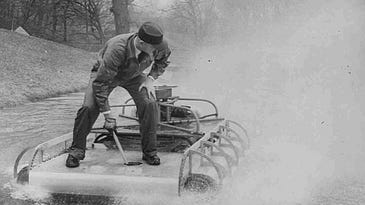
British inventor to journey from London to Timbuktu in flying car

Popular Science has been daydreaming about the flying car for decades. (Seriously, I’ve been to the office. You think an editor is working diligently, and then you glance over his shoulder – and there’s the proof. Dozens of doodles of flying cars.)

[ Read Full Story ]

Why Don't Snowstorms Produce Thunder and Lightning?

Chilly weather brings burning questions

Nearly every summer rainstorm comes with thunder and lightning. Yet during even the blusteriest blizzard, there's nary a spark in the air. It can occur (although snow lightning strikes just six times a year on average in the U.S.), but winter air doesn't make for prime lightning-forming conditions, says meteorologist Robin Tanamachi of the University of Oklahoma.

[ Read Full Story ]
READ MORE ABOUT > , , , ,

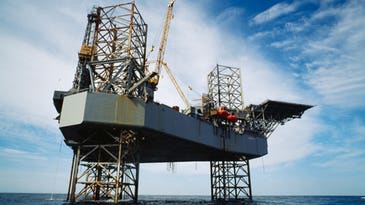
What Fills the Space Left in Wells When Oil is Extracted From the Ground?

PopSci has the answers you crave

You might guess that magma or tumbling rocks fill the void, but the truth is much more prosaic: water. Petroleum deposits, which are naturally mixed with water and gas, lie thousands of feet below the earth’s surface in layers of porous rock, typically sandstone or limestone. (Contrary to what you might imagine, drilling for oil is more like sucking oil from a sponge with a straw than from a giant pool of liquid.)

[ Read Full Story ]
READ MORE ABOUT > , , ,

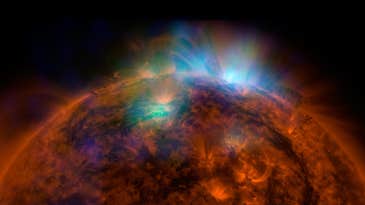
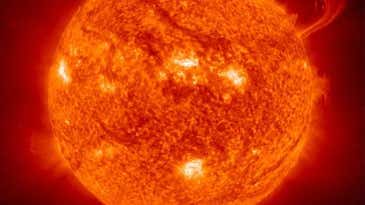
If The Sun Went Out, How Long Would Life On Earth Survive?

PopSci provides chilling answers to your burning questions

If you put a steamy cup of coffee in the refrigerator, it wouldn’t immediately turn cold. Likewise, if the sun simply “turned off” (which is actually physically impossible), the Earth would stay warm—at least compared with the space surrounding it—for a few million years. But we surface dwellers would feel the chill much sooner than that.

[ Read Full Story ]
READ MORE ABOUT > , , , ,

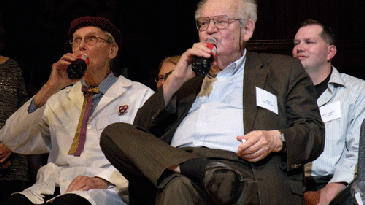
And the Ig Nobel Goes to . . .

Coke as spermicide, placebo prices and the ovulation cycles of strippers were just some of the winners at the 18th First Annual Ig Nobel Prize ceremony

Laugh first, think later. That’s the theory behind the annual Ig Nobel Awards, which celebrate academia’s most bizarre, irrelevant studies. Past winners have included Dan Quayle, doctors who found that Viagra helps jet-lagged hamsters, and two researchers who proved that sword-swallowing is dangerous. This year’s feature ovulating strippers, intelligent slime and soft drinks that double as spermicide.

[ Read Full Story ]
READ MORE ABOUT > , ,

A Million Plastic Balls to Halt Carcinogens

Plastic spheres block sunlight—and cancer

A Dark Thought: (Blow it Up!)  Irfan Khan

If you make a mess, just cover it up. That’s the theory behind the Department of Water and Power’s latest project in Los Angeles, which aims to prevent the formation of a carcinogen in two drinking-water sources, the Ivanhoe [pictured] and Elysian reservoirs.

[ Read Full Story ]

Close, But No Cigar

Mental health bill receives widespread support, but details still blurry

Finally, mental health is getting the respect it deserves.

Yesterday, Congress approved legislation that will compel employers and health insurers to provide the same benefits for mental illnesses as they do for physical ones. It hasn’t been an easy bill to pass. For 15 years, the mental health bill has been stuck on the House and Senate floors, where it’s been rewritten several times. Now, almost everyone is behind the legislation, including both parties, the President, businesses, insurance companies and the medical community. And the bill’s advocates are thanking science for transforming the public’s view of mental illness, which led to its passage. Representative Patrick Kennedy praised science for destroying “the myth that this stuff is a choice,” according to a Washington Post article.

The myth may be busted, but that doesn’t mean the legislation is a shoo-in.

[ Read Full Story ]

Migrating Birds' Strange Sixth Sense

The key to a bird's navigational prowess

Scientists have known for years that map sense stems from the magnetite in birds’ beaks, which measures the strength of the Earth’s magnetic field so they recognize home when they get there. But how do they know which direction home is?

[ Read Full Story ]

Ms. Scientist

Self-confidence and teacher support helps girls succeed at math and science

In 2005, the then-president of Harvard University said that men are better at math and science than women. (President Lawrence Summers' exact words were a bit more roundabout. While theorizing why women are underrepresented in those fields, he said "there is a different availability of aptitude at the high end.")

Turns out Summers's attitude may be to blame, according to a new study from vocational psychologists at the University of Wisconsin-Madison.

[ Read Full Story ]

Lean on Me (Or at Least a Monkey)

Researchers find that capuchin monkeys love to give

Primate intelligence gives me cognitive dissonance. It’s fascinating that monkeys can recognize numbers, construct tools and even follow to-do lists. But it also bruises my ego, just slightly, knowing that monkeys aren’t that different from my parents, friends or heroes. (Michael Phelps excluded. He’s the übermensch.)

[ Read Full Story ]
Page 1 of 2 12next ›last »


Download Our iPhone App

Stay up to date on the latest news of the future of science and technology from your iPhone with full articles, images and offline viewing


Follow Us On Twitter

Featuring every article from the magazine and website, plus links from around the Web. Also see our PopSci DIY feed


Become a Fan On Facebook

Share links with friends, comment on stories and more


December 2009: Best of What's New

In our December issue, Popular Science names the 100 best innovations of the year: bombproof wallpaper, self-parking cars, the fastest helicopter, and 97 more. Plus inventor profiles and videos.

Check out the best of what's new here.

Popular Science Photo Pool


Share your photos in the Pop Sci pool at www.flickr.com!
tags_sprite.png
POP_embeddedForm_cover_May09.jpg