
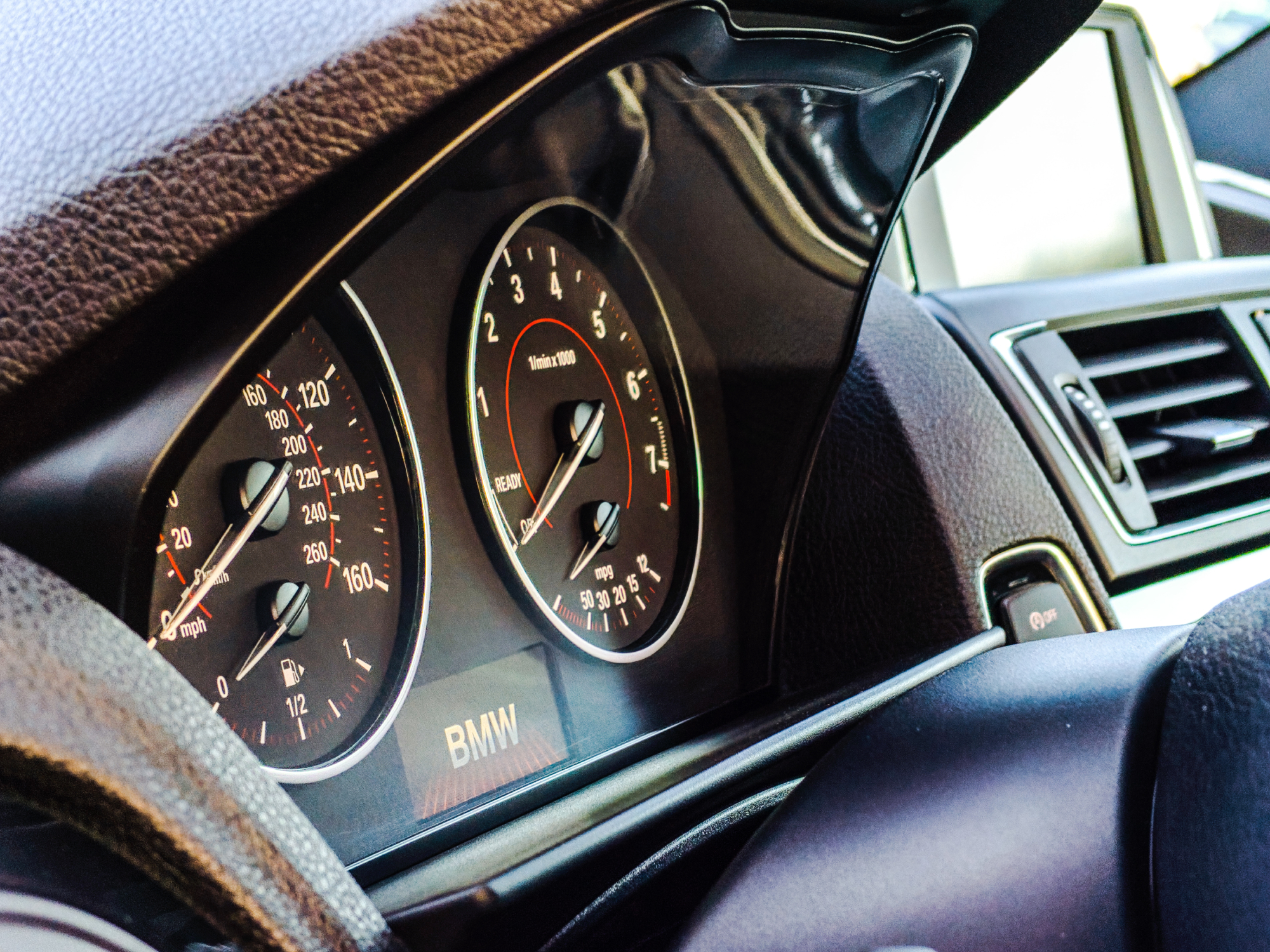
One reason is that the National Highway Traffic Safety Administration underestimates the price of gas

Pricey Gas iStockphoto

In April, the U.S. Secretary of Transportation proposed new CAFE (corporate average fuel economy) standards that would increase the average efficiency of passenger cars and light trucks by 4.5 percent per year from 2011 to 2015. A lot of people wondered why the federal government wasn't aiming higher.

One reason became clear when the National Highway Traffic Safety Administration (NHTSA) released its Draft Environmental Impact Statement for the new standards last week. Buried in the 414-page report is a "sensitivity analysis" of the economic costs and benefits that would result from raising fuel economy standards. For this analysis, NHTSA relied on a "high-case" gasoline price of $3.37 per gallon for the years 2011-2015, and a "low-case" scenario of $2.04 per gallon. These prices came from the U.S. Energy Information Administration's "Annual Energy Outlook 2008 Early Release."

By underestimating gas prices, NHTSA also underestimated consumer demand for fuel-efficient vehicles. And that is one of the factors that led the agency to conclude that it would not be feasible to raise CAFE standards to more than 35.7 mpg for passenger cars by 2015, and 28.6 mpg for light trucks.

NHTSA says it will reconsider its analysis if the Energy Information Administration raises its estimates. For now, though, the price at the pump doesn't seem to matter.

Want to keep track of the latest concept cars, automotive innovations, and more? Subscribe to Popular Science and enter to win $5,000!

27 Comments

DiGMEH

from Montreal, Quebec

Well, tell you the truth, big oil corporations are ready to pay big money to be in bisness. What I mean is that if all the cars in the world consumed a maximum of 5L / 100KM of fuel, oil companies will loose money. Most of them care not about the environmental impact; they just see numbers and dollar signs. I am glad that we live in a age where electric-powered cars are getting a head start faster! After all, electricity can be produced in very clean ways, even nuclear!

- DiGGY

Electric cars might be the future but they still have a long battle ahead of them. For example Zenn Motors builds electric cars in Quebec but they are all shipped to the U.S. because none of the provinces accept B.C. will pass legislation allowing them on our city streets.

Wow. $2.50 for diesel in 2008? Nice try. That's why they work for the EIA and not commodity trading.

to DiGMEH

I'm glad you already said that, it's true. Big oil companies are the ones paying off companies to keep fuel efficient cars off the streets so that they make their own pockets bigger.

Why dont we see this in production cars yet? I don't like burning fuel at all i would rather go clean but this can run on fuel or compressed air or even hydrogen 3 times more efficient than normal engines yet no one offers it what is wrong?

http://www.youtube.com/watch?v=kGlUZg2pC0Q

You see there are key fundamental problems to alternative sources of energy for vehicles..

A) The infrastructure is lacking in terms of filling stations for Hydrogen and other kinds of bio fuels that are available.

B) The cost of manufacturing the technology when there is a clear lack of infrastructure and thus a smaller audience to whom auto makers can appeal to make this a very hard transition.

C)Everybody likes the idea of electric hybrid or plug-in electric vehicles, ,but the fact is 50% of our electricity in the U.S in produced from Coal and only 20% is produced by Nuclear. Even if nuclear were to take charge down the road, its Achilles heel continues to remain on how to dispose of the radioactive byproducts. Obviously there is a plan to put in Yucca mountain, but that is just short term and the environmental impact down the road(leaks etc) could be devastating.....

Whoever invents a way to dispose of Nuclear waste will be the richest man in the world.....

P.S: Nuclear power does have certan security risks attached, though most of them have been take care of ( partial melt down, terrorist attack etc...)

Federal CAFE requirements are the same sort of approach as the centrally planned economy that worked so well for the Soviet Union.

Energy is getting more expensive, and so market forces are causing person mpgs to get better. People are starting to car pool, ride bikes, and buy small cars. This increased fuel economy takes place now -- not years from now, and it impacts ALL of the cars -- not the 10% of the fleet that gets replaced every year.

Rationing is another approach that has some benefits. It's another way to cause the energy using folks ( which includes me) to make choices.

The proposed standards will increase the cost and complexity of vehicles. Manufacturers will be able to say 'well, what can we do' , and there will be across the board price increases. Meanwhile, people will hang on to their existing vehicles longer because of the price of the new ones.

Get the feds out of the design business.

The real work here is to get these technologies all in the same vehicle. AFS just turned the Saturn SUV into a 50mpg hybrid by using LIPO batteries and ultra capacitors and regenerative braking. The use of both LIPO batteries and ultra capacitors were responsible for about 17 mpg in efficiency. AFS (the folks who build the XH150) claim that this would add $8,300 to the cost of a stock Saturn SUV if built in the factory this way.
There is a high compression engine that will be on Detroit vehicles by 2013 that at least doubles the gas mileage, and could possibly quadruple gas mileage. This would add $1,300.00 to the cost of a vehicle.
If I understand the description, putting the compressor on an engine would add another 40% minimum to a gas engines efficiency.
If all these technologies were put on the same car, you would get at least 140 mpg. Assuming our current fleet averages 20mpg, that would reduce our oil imports by about 58% over the next 10 years. This would reduce our need to fight in the Middle East or elsewhere in the world.
As a side note, you can build vehicles as large as a city transit bus as a hybrid. This would reduce our need for oil considerable, but I have not been able to find figures that would let me estimate the savings.
As for federal mandates, it's not just about social engineering anymore. It is a matter of foreign policy. To the degree we compete in the foriegn oil market, we have to be ready to fight overseas. If we can reduce our oil useage to something our domestic production can handle, then we reduce our liabilities overseas.

Hi,

This is very interesting, and hydrogen power is definitely around the corner. But how far away is the corner.

I recently found these articles, which explain how to supplement the regular gasoline in your car or truck with HHO gas extracted from water!

Apparently it can be done now!

How Does a Water Powered Car Work?

Run Your Car On Water

Gary.

I read Gary Perkin's post above - While I agree that hydrogen power may be around the corner, I do not believe that vehicles today have the ability run on water.

Like many people, I keep stumbling across all these websites about running cars on water. Everywhere you look you will find one or more ads about the topic - seems to me like the company is competing with itself to make $47.97.

Out of curiosity, I spoke to my mechanic at BMW and I asked him if he had seen these ads and if so what he thought about them. He told me that even if it were possible to extract hydrogen from water to fuel a vehicle today, the existing mechanics of a vehicle were not designed to work with water. Point blank - it would severely damage the vehicle and would cost thousands of dollars worth of damage.

I drive a 2007 BMW X5 and there is no way I would ever put water in my gas tank, nor would I ever make a change to my vehicle to let me put it any place else.

If anyone is interested, my mechanic did say that there is a product called Envirochip that they have been putting on some of their other customers’ vehicles. According to them, the chip has allows them to use 85 octane gas without having to add fuel additives. As we all know, that is about a $0.20 savings per gallon. So, I did my homework and found where to buy one, and now I am using regular gas in my car (without problems) and am I saving money each time I fuel up, plus I’m getting better mileage.

Once again, your article does not discuss the actual reasons why cars don't get better mileage, however, clearly demonstrates the bait and switch tactics used to great effect by governments and corporations.

Hence, page 414's subterfuge into spin...

why buy a hybrid Current 50-70 MPG Production Cars are available - GM Europe

Vauxhall 50.4mpg US
Opel - General Motors Company
Fiat 34.4 city 51.40 hwy combined 43.5 mpg US
Renault 37.2 city 57.60 hwy combined 47.90 mpg US
Citroen city 51.40 68.90 hwy combined 61.40 mpg

Ford Focus ECOnetic 1.6 TDCi Urban Fuel 50.4 mpg Extra Urban 78.3 mpg Combined 65.6 mpg - Range 765 miles - Available in UK

Models Miles per gallon (MPG)
1 - 83.10 mph CITROEN C1 MPG
2 - 83.10 mph TOYOTA Aygo MPG
3 - 80.70 mph FIAT Grande-Punto MPG
4 - 78.40 mph VAUXHALL Corsa-MY
5 - 76.30 mph FIAT New-Panda MPG
6 - 76.30 mph PEUGEOT MPG
7 - 76.30 mph CITROEN C2 MPG
8 - 76.30 mph CITROEN C3 MPG
9 - 76.30 mph VAUXHALL Corsa-MY2006 MPG

http://www.vauxhall.co.uk/
Vauxhall Corsa The 1.0 is suitably miserly, giving 50.4 mpg and emitting a low-tax 134g/km of carbon dioxide; the 1.2 and 1.4, thanks to Vauxhall/Opel's new Twinport fuel intake technology, deliver 48.7mpg/139 g/km and 47.9mpg/142g/km respectively. The diesels? 61.4mpg/124 g/km from both the 75bhp and 90bhp 1.3 CDT, and 58.8mpg/130 g/km from the 1.7 CDTi.

From Advertisement GM > All you need to do now is tell us if you have a part exchange vehicle, any GM Card Rebate points or if you want finance from GMAC (UK) plc..
All we need to confirm your order is a fully refundable £20 administration fee. £7595.00 = $15.133.00 US --

why buy a hybrid Current 50-70 MPG Production Cars are available - GM Europe

Vauxhall 50.4mpg US
Opel - General Motors Company
Fiat 34.4 city 51.40 hwy combined 43.5 mpg US
Renault 37.2 city 57.60 hwy combined 47.90 mpg US
Citroen city 51.40 68.90 hwy combined 61.40 mpg

Ford Focus ECOnetic 1.6 TDCi Urban Fuel 50.4 mpg Extra Urban 78.3 mpg Combined 65.6 mpg - Range 765 miles - Available in UK

Models Miles per gallon (MPG)
1 - 83.10 mph CITROEN C1 MPG
2 - 83.10 mph TOYOTA Aygo MPG
3 - 80.70 mph FIAT Grande-Punto MPG
4 - 78.40 mph VAUXHALL Corsa-MY
5 - 76.30 mph FIAT New-Panda MPG
6 - 76.30 mph PEUGEOT MPG
7 - 76.30 mph CITROEN C2 MPG
8 - 76.30 mph CITROEN C3 MPG
9 - 76.30 mph VAUXHALL Corsa-MY2006 MPG

http://www.vauxhall.co.uk/
Vauxhall Corsa The 1.0 is suitably miserly, giving 50.4 mpg and emitting a low-tax 134g/km of carbon dioxide; the 1.2 and 1.4, thanks to Vauxhall/Opel's new Twinport fuel intake technology, deliver 48.7mpg/139 g/km and 47.9mpg/142g/km respectively. The diesels? 61.4mpg/124 g/km from both the 75bhp and 90bhp 1.3 CDT, and 58.8mpg/130 g/km from the 1.7 CDTi.

From Advertisement GM > All you need to do now is tell us if you have a part exchange vehicle, any GM Card Rebate points or if you want finance from GMAC (UK) plc..
All we need to confirm your order is a fully refundable £20 administration fee. £7595.00 = $15.133.00 US --

Models Miles per gallon (MPG)
1 - 83.10 mph CITROEN C1 MPG
2 - 83.10 mph TOYOTA Aygo MPG
3 - 80.70 mph FIAT Grande-Punto MPG
4 - 78.40 mph VAUXHALL Corsa-MY
5 - 76.30 mph FIAT New-Panda MPG
6 - 76.30 mph PEUGEOT MPG
7 - 76.30 mph CITROEN C2 MPG
8 - 76.30 mph CITROEN C3 MPG
9 - 76.30 mph VAUXHALL Corsa-MY2006 MPG

All of this oil company conspiracy theory stuff is getting pretty old. The primary reason that our vehicles are not getting better fuel consuption is due to the consumer. What good is it to own a 50 mpg hybrid when it is overly complicated, difficult to maintain, and expensive to repair. The fact is that every person in the U.S could go out today and buy a motorcycle that gets 50 to 60 mpg. So why don't we? I mean if your only concern is saving the world from the evil oil company why dont you have a bike in your garage? The answer to that question is that consumers dont want to have to relearn the automobile. We have been driving a certain type of vehicle for many years. It isnt easy change. Electric vehicles have horrible ranges. Hybrids are overly complex, and cannot be maintained by the average backyard mechanic. So unless this new tech becomes allot more user friendly, it looks like I'll stick to owning classic cars. 13 mpg or not.

Christopher001

from Hunter River, PEI

One thing you may not know is that both the canadian and american govenments actually subsidize oil to the tune of Billions of dollars a year. That means that our tax dollars are subidizing high prices. If that grant money was transfered to say those spray on solar panels shown a few months ago wouldn't that be a good step in the right direction? Only one problem though the oil companies have bought and are trying to suppress that tech. Wonder where they got the money....

I wish that hydrogen was around the corner. With Honda and Chevy pulling out the Clarity and Equinox. Both being hydrogen powered.
Unfortunately, they will not sell these vehicles to civilians. Only lease these cars out for 3 years to celebrities.
With a scary but true future of them never reaching mainstream. As some may recall in 2000 the Electric Vehicle 1 (EV1) was taken off of the streets after the lease was up and crushed them all. Even though the majority of the leasers wanted to buy the cars and some even offered to pay double or even triple what the car was worth.
Hydrogen cars cost $1,000,000 to manufacture (and thats just for ONE). These cars will not make it out of the plant, sad and harsh but true. IF hydrogen IS going to make an impact it will be at LEAST 30 YEARS FROM NOW!
Our best hope is to convert the cars we have now into hybrids. There are many sites that offer DIY hybrid kits for $300 and allow your car to run off of water and gas, or biofuel, or even vegetable oil from the local fast food place.

-Rach

Cyback of Prexus

I have also looked into a water assist for my vehical, and unlike the mechanic in GettingReals reply (I have been an aircraft mechanic for 30 years) it is not as simple as putting water in your tank which would just serve to contaminate your system. What it is is a generator that works off of your alternator to break water into it's two parts, namely hydrogen and oxygen. The hydrogen gas is then ported to the air intake of you engine to mix with fuel vapor which causes a more complete combustion of the fuel, this in turn gives you more power and burns the fuel more efficently giving you more miles per gallon. A local news channel here in Florida took a new dodge suv, ran it on a dynomometer and found that with new plugs tires etc, the vehicle got 9.6 miles per gallon, with the unit in place it got 34 mpg, not bad for putting water in your tank, oh, and the water must be distilled or pure for it to work. As for extracting hydrogen from water I know the mechanics of it are very workable, as for gettingreals mechanic I think I would look for a new one.

I am taking action now to improve the gas mileage of how I drive in the car I ownn now. Here's some tips which help extend my range between fill-ups. I shut off my motor at known long stoplights (you know the ones) and when I stop for a train crossing the road. With today's computer controlled and fuel injected engines, 30 seconds of off time is all that it takes to offset the amount of fuel used to restart.
If I have the time to spare, I drive under the speed limit of 65 mph. For speeds over 60 mph, there is more areodymanic "drag" on the car. I've read in a couple of dirrerent articles that for every 5 mph increase in speed, there is a 5-7% decrease in gas mileage. translated, for a car with gets 25 mph at 60, it gets 22.5 mpg at 65, and 19.75 mpg at 70. With this decreased efficiency, costs and increased carbon emissions add up.
Cruse control is great gas saver when maintaining speed on a straightaway, but it becomes an energy hog when it "floors" the engine to climb a hill. To counter this, when approaching an uphill climb on a highway, I prepare to disengage the cruise control. To do this, I place my foot on the accelerator to "hold" the position of the pedal before disengaging the cruise control. Just before the climb, I disengage the cruise. The speed will decay, I typically will let the car slow to 60-63 mph assuming an initial speed of beetween 65 to 70 (it doesn't set me back time-wise that much) . There almost always a downhill on the otherside of that uphill climb. To regain speed, I let the car coast down the other side of the hill to make up the speed. When my desired speed is reached, I re-engage the cruise. If no downhill exists in a reasonable distance, I moderately accelerate to regain my speed; slow accelerations generally save more gas than quick accelerations. I've turned this into a game, which makes driving less mindless activity and takes the edge of my impatience in getting from here to there quickly. My onboard mpg gage shows an improvement of 5-7 mpg's over a 20 mile highway commute. Hope it helps. If there are other tips, please share!

It’s a conspiracy Man !!!

Those Evil Oil guys, they keep buying up all the patents for high mileage, Water run, super duper Electric cars. Just to keep us buying Gas Guzzling vehicles.

It’s a conspiracy Man !!!

In fact, they are SO good at it, that they’ve managed to hide the patents from patent searches too……

It’s a conspiracy Man !!!

Is there honestly anyone who (without lying) can say they’ve personally witnessed some “Secret High Mileage Vehicle” that suddenly disappeared? ………..I thought so!

I know a guy, who knew a guy, whose mechanic new a guy who said he saw a full sized car get 120 mpg once, and then suddenly was gone.…………….doesn’t count

Geeesh, this is the same Crapola that was being spread around in the 70’s

You want to be mad at somebody, look at yourself.

Did you Really need the PU/SUV with the 6.0 when the one with a 5.4 would have been enuf. Or the 300 hp Convertible when a civic would have been enuf.

Or did you really need to Fly all over the world 5 times last year?

Or, did you Reallly have to get suckered into sending a check to the Seirra club, cuz they had pretty pictures of birds on there literature and they sounded like they wanted to do good. (only to find out that they’ve been busy little lobbyist helping make it virtually impossible to Drill, add Refining capabilities or Mine (Oil Shale) etc.).

Just keep repeating:

It’s a conspiracy Man !!!

You’ll feel better in the morning

I was getting 30 mpg back in the 70's!!!
Don't tell me they can't make an 80mpg car now!
Go electric...don't buy any gas, PERIOD.

Gina Maseratti
write in candidate for President

Gina, they can't make an 80mpg car now!

There I told you..........

Well actually they can, but once they put on all the pollution control and other required items that your 70's lead burning pollution mobile did not have, then its down to 50 mpg and no performance.

Thus they did not sell all that well when gas was 2 bux.
At least not well enuf to make a profit.

Now that gas is $4+, they will sell well and we will soon see a lot of them.

Capitalism at its best.

The Markets will always prevail as greed and self preservation/promotion are basic facts of human nature.
(Need proof of greed, think Al Gore)

Do you really think that someone/somewhere is "Sitting" on a magical High mileage solution (black box) that would be worth Billions (or more), then have I got a deal for you.....

The solutions are coming, as long as the "Mandates" (think ethanol) don't continue to skew the markets in the Wrong direction....

Technology will prevail, but only if there is funding
Funding in the form of Profit....
Not mandated Subsidies that are Politically motivated by those who "Know what's Best" especially if they control other people's money. (again think ethanol)

One more thing, people

Tax Breaks are Not Subsidies
They both are used to promote, but one just cuts down on the Gov't cut of the Profits and the other Gives (Your and My) Dollars to the recipient

Similar but different.

Big Oil gets Tax Breaks, but the Gov't still makes 3-4 times the profit dollar amount per gallon.

Big Ag gets Subsidies. (and Tax Breaks too)
And no one seems to really have a handle on how much the Gov't gets (if any substanial amount if you don't include cigarette taxes).

It's no wonder why so many politicians talk out of both sides of their mouth.

DiGMEH

from Montreal, Quebec

The problem right now is that Oil compagnies still have a lot of influence over communities. But there is one thing we are forgetting here...
Lets say that cars get all electric or hydrogen or whatver else there is on the market that does not involve fuel. The comsuption of OIL will certainly go down but so insignificantly, that we will barely notice it. Why may you ask ? Simple: Transportation of Goods.
Boats; Planes; Trucks; and especially Military Units.
To be able to pull a 100 Ton load, a truck would need a heck more than a hydro battery.
We are looking at cars but we have to see the bigger picture. Soon, a need for a "recyclable" fuel will be so big, that many interenationals will turn away from OIL and into something more profitable. Just like what happened with water (and I am refering here to the multi G$ biz that Coca Cola and Pepsico turned to : Bottled water)

- DiGGY

Well, gasoline is just not cuuting it! We have to start thinking of alternatives such as etanol and hydrogen. People have to start using a different form of transportation. The reason why they're not getting they're moneys worth is because the pump is cheaping them out.

Did you know that if we covered an area the size of the sahara desert with solar panels then we could power the united states year round?

Okay, I'm not a mechanic so I might miss a couple of things but 37miles/gallon as a standard by 2015? I just bought myself a new car here in Belgium. A 1.9l Diesel Engine, 105 horsepower etc. Not the most fuel efficient car/setup that's around here but it has an efficiency of 47miles/gallon in mixed traffix (5l/100km). I've been looking around a lot and if you look at the normal prices cars they're all at about that level. Every (European) brand also has it's eco versions which go even higher in miles/gallon.

It seems to me that the ambition of the CAFE lays more in making oil companies earn more money then to do what it is supposed to do...

Anyways, just my 2cents

Did you know that if we covered an area the size of the sahara desert with solar panels then we could power the united states year round?
http://www.hedefnakliyat.com

Popular Tags

Regular Features


Download Our iPhone App

Stay up to date on the latest news of the future of science and technology from your iPhone with full articles, images and offline viewing


Follow Us On Twitter

Featuring every article from the magazine and website, plus links from around the Web. Also see our PopSci DIY feed


Become a Fan On Facebook

Share links with friends, comment on stories and more


November 2009: Astronaut 3.0

Inside NASA's astronaut bootcamp and the grueling new training regimen for deep space. Plus, ten young geniuses shaking up science today, one writer's quest to analyze every man-made chemical in her body and more.

Check out the issue's full contents online here

Popular Science Photo Pool


Share your photos in the Pop Sci pool at www.flickr.com!
tags_sprite.png
POP_embeddedForm_cover_May09.jpg
