
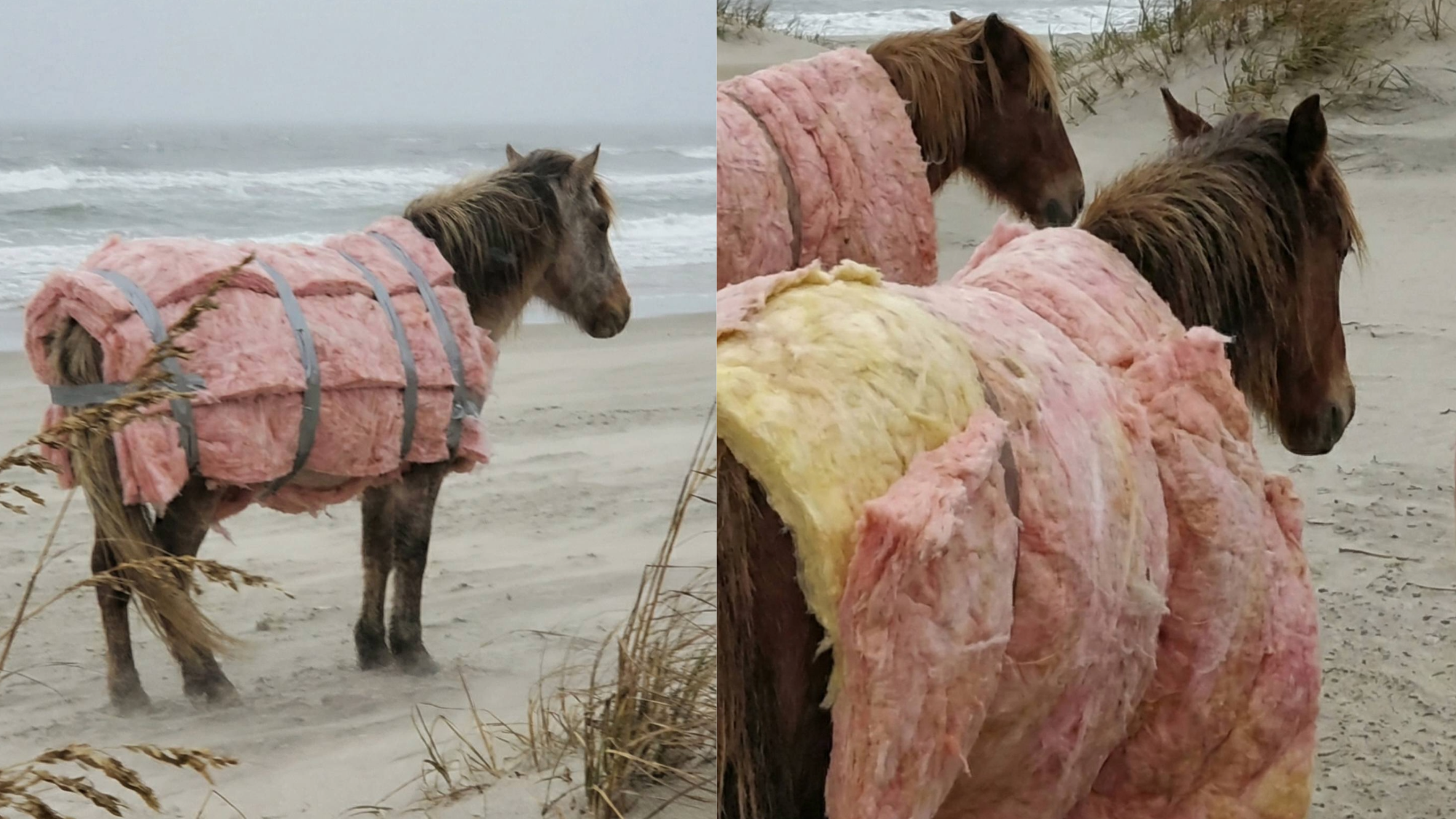
We recently saw a Facebook post featuring a series of images of people on a cold beach bundling up horses with what looked like duct tape and insulation material. The post, tagged at Corolla Wild Horse Beach in Corolla, North Carolina, has about 10,000 reactions and 5,800 comments, and has been shared 2,000 times on social media.
Corolla is in the Outer Banks, an island chain in North Carolina that in addition to an angsty teen adventure drama of the same name, hosts wild horses—the Colonial Spanish Mustangs. The area was also bracing for record-breaking snow and freezing temperatures.
“Today, the nonprofit organization Outer Banks People helped prepare the wild horses for low temperatures and possible snow. To keep them warm during extreme cold, we carefully wrapped them in recycled insulation materials,” reads the Facebook post. “At this time, we are accepting donations of insulation and duct tape to continue supporting our efforts. Every contribution helps keep our local wildlife warm and safe during the winter conditions.”
We thought it was hilarious. Using insulation material to keep horses warm surprised our resident equestrian—but perhaps desperate times had truly called for desperate measures. Plus, the photographs look incredibly realistic. They aren’t particularly good quality, nor are the framings perfect.
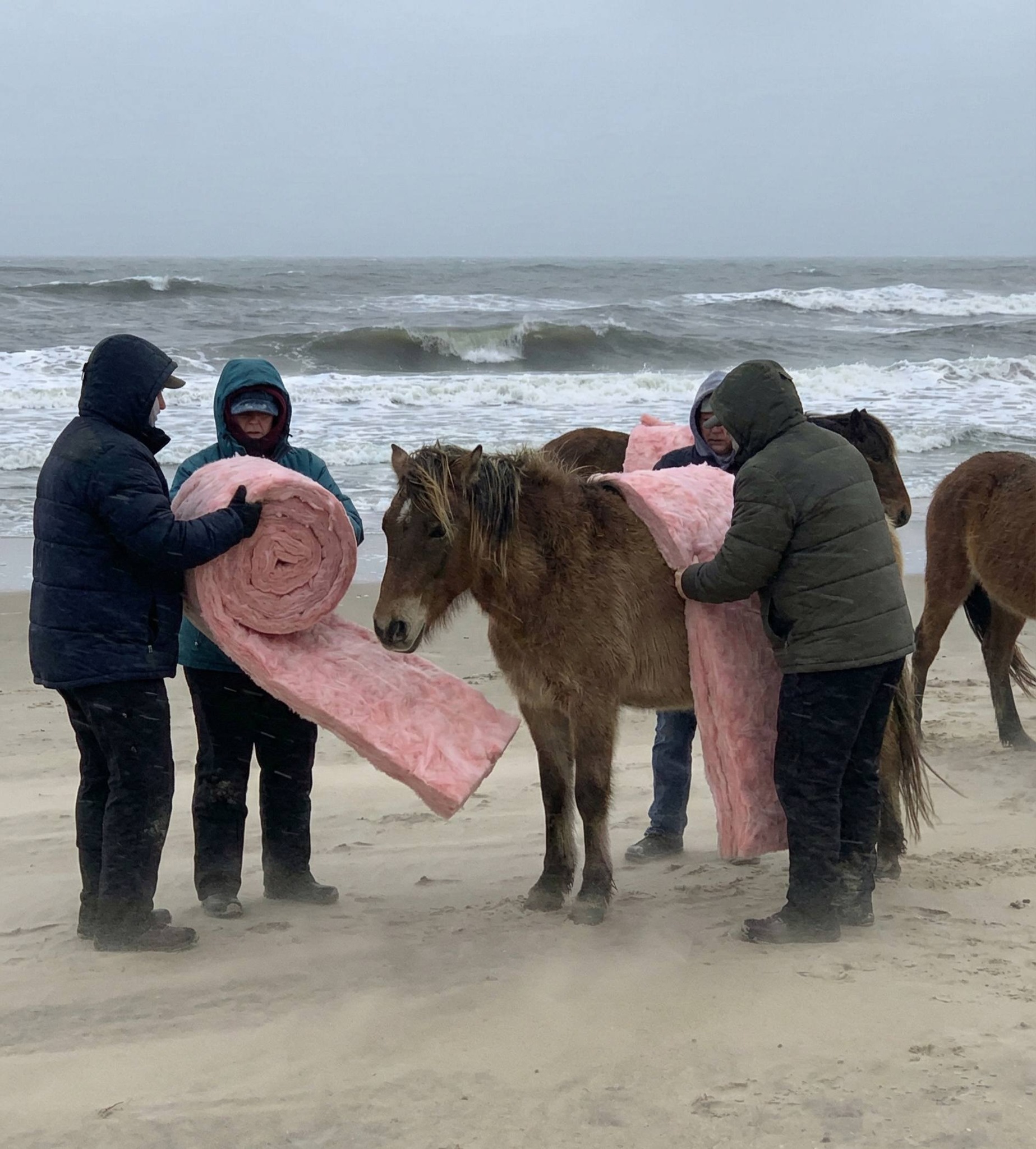
Things started looking suspicious when we couldn’t find any entity called “Outer Banks People.” It turned out to be yet another example of the AI bait-and-switch. The profile was full of their other interesting content—a rodent in a prison jumpsuit, what looks like a cross between a horse and a sphynx cat with a wig on its head, and authorities wielding flame throwers in front of a gas station, to name a few.
Chris Winter, Chief Executive Officer of the Corolla Wild Horse Fund, drove the final nail into the coffin by confirming that “it is entirely fake; the pictures are AI generated,” he tells Popular Science. “It is unfortunate that these posts continue to be made, as it creates considerable and widespread concern for the well being of the horses,” he adds.
This incident comes rather appropriately in the wake of a Conservation Biology study we reported on last year, in which researchers highlighted the problems associated with social media videos and photos of wildlife made with AI, including presenting a false impression of the animal world.
Moral of the story, take a closer look at that funky animal content before sharing it.
