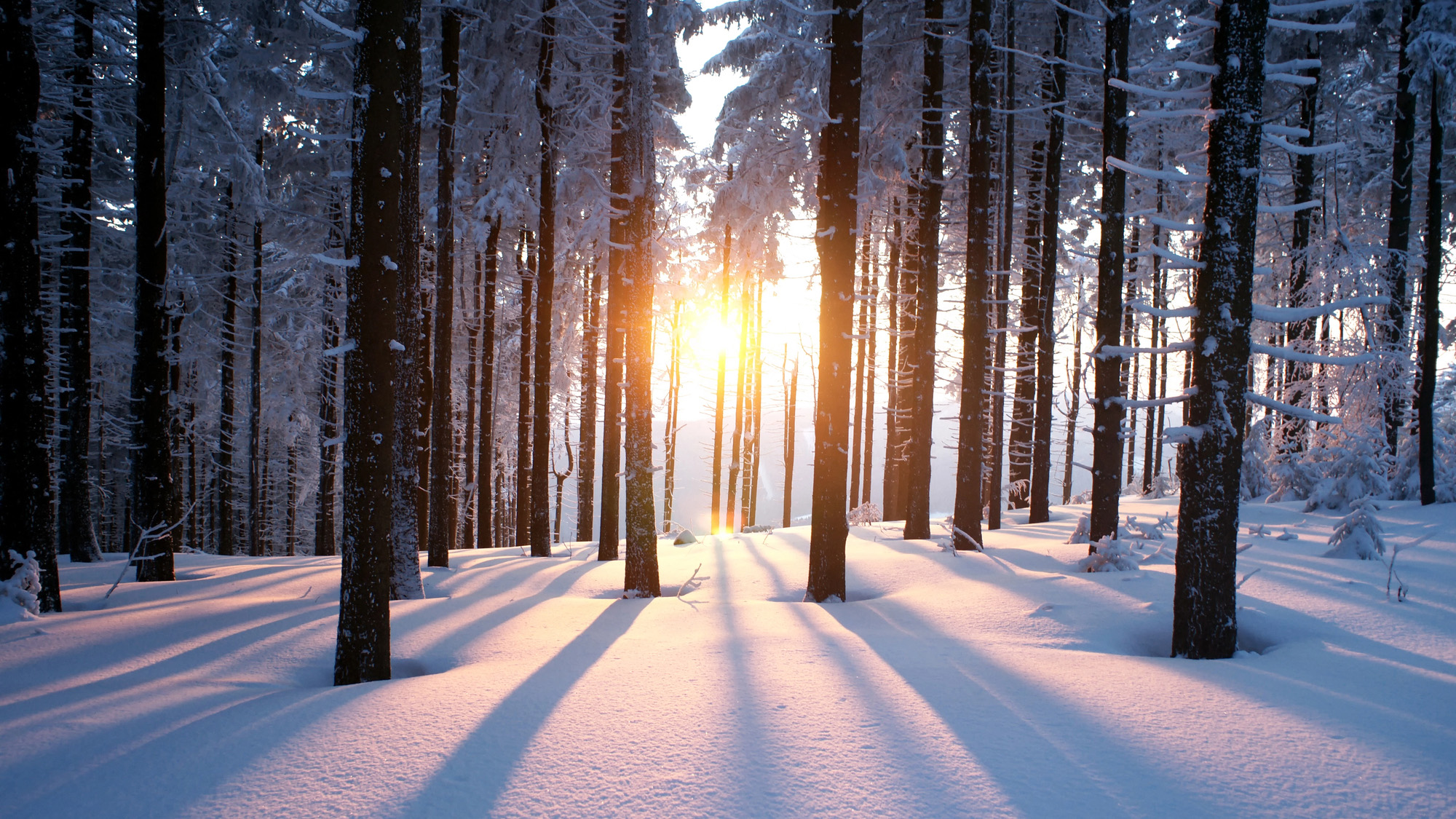
When someone says “as white as snow,” it’s easy to envision what they’re talking about. We often think of snow as a dazzling white, the same way we immediately conjure up a color when someone says “blood red” or “ocean blue.”
But here’s the thing: snow isn’t actually white. It’s just tiny ice crystals, afterall, and ice, like water, looks clear to the naked eye. So why, then, does snow appear white? We talked to a couple of experts to find out: Their answers might surprise you.
What is snow?
Before determining why a fresh blanket of snow looks white, it helps to know what snow is.
“Snow is just simply ice,” Jonathan Belles, a senior digital meteorologist for The Weather Channel app and Weather.com, tells Popular Science. All rain starts off as snow, he says, but often melts as it descends through warmer pockets of air before hitting the Earth. Even those warm summer showers in July begin as snow.
In order for snow to actually fall to Earth, it must remain frozen as it falls through different temperature layers above the ground. In other words, it needs to be cold all the way from the clouds to the ground.
How do snowflakes form?
The reason snow appears white has to do with those beautiful natural artworks we call snowflakes. When it snows, “there’s a lot of traffic on the way down,” says Belles. The air, he explains, is riddled with tiny particles like dust, soot, and pollen. For a snowflake to form, a freezing water droplet attaches itself to one of those floating dust, soot, or pollen particles.
As that ice particle falls, more and more minuscule bits of water vapor freezes to it. Due to the way water molecules bond together when they freeze, a tiny hexagonal form begins to appear. And eventually, you end up with a beautiful six-sided shape we call a snowflake.
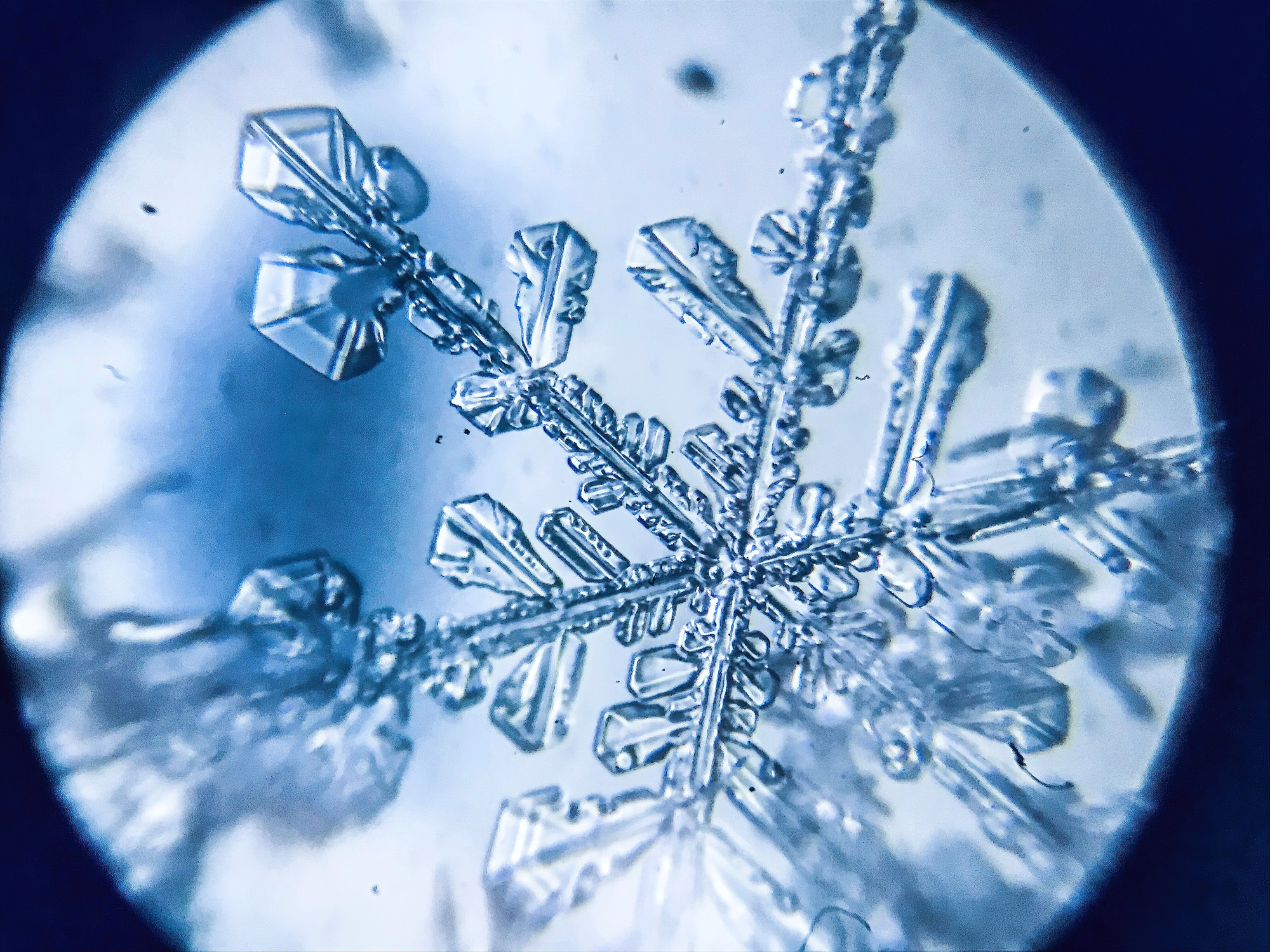
Due to their intricate crystal form, snowflakes reflect light almost like a mirror, and this causes snow to look white. But how exactly does that work?
Why does snow appear white?
Mark Serreze, the Director of the National Snow and Ice Data Center in Boulder, Colorado, tells Popular Science that to understand why snow looks white, we have to look to the sun.
Sunlight “emits all colors of the visible spectrum: red, orange, yellow, blue, green, indigo, and violet.” When these colors hit snow, each multi-sided ice crystal, or snowflake, scatters the colors like a tiny prism. All those colors shine equally in all directions, and our eyes, in turn, perceive all those colors colliding as white.
But why then does ice and snow look distinct, one clear and one white? “The difference between ice cubes and snowflakes is how light reacts with them,” says Belles.
“Sometimes with an ice cube, the light will be able to go straight through it. But with snow we’ve got this kind of broken mirror effect, with light bouncing off of all of those jagged edges.”
Snow can be other colors, too
Despite its immaculate reputation, snow isn’t always white.
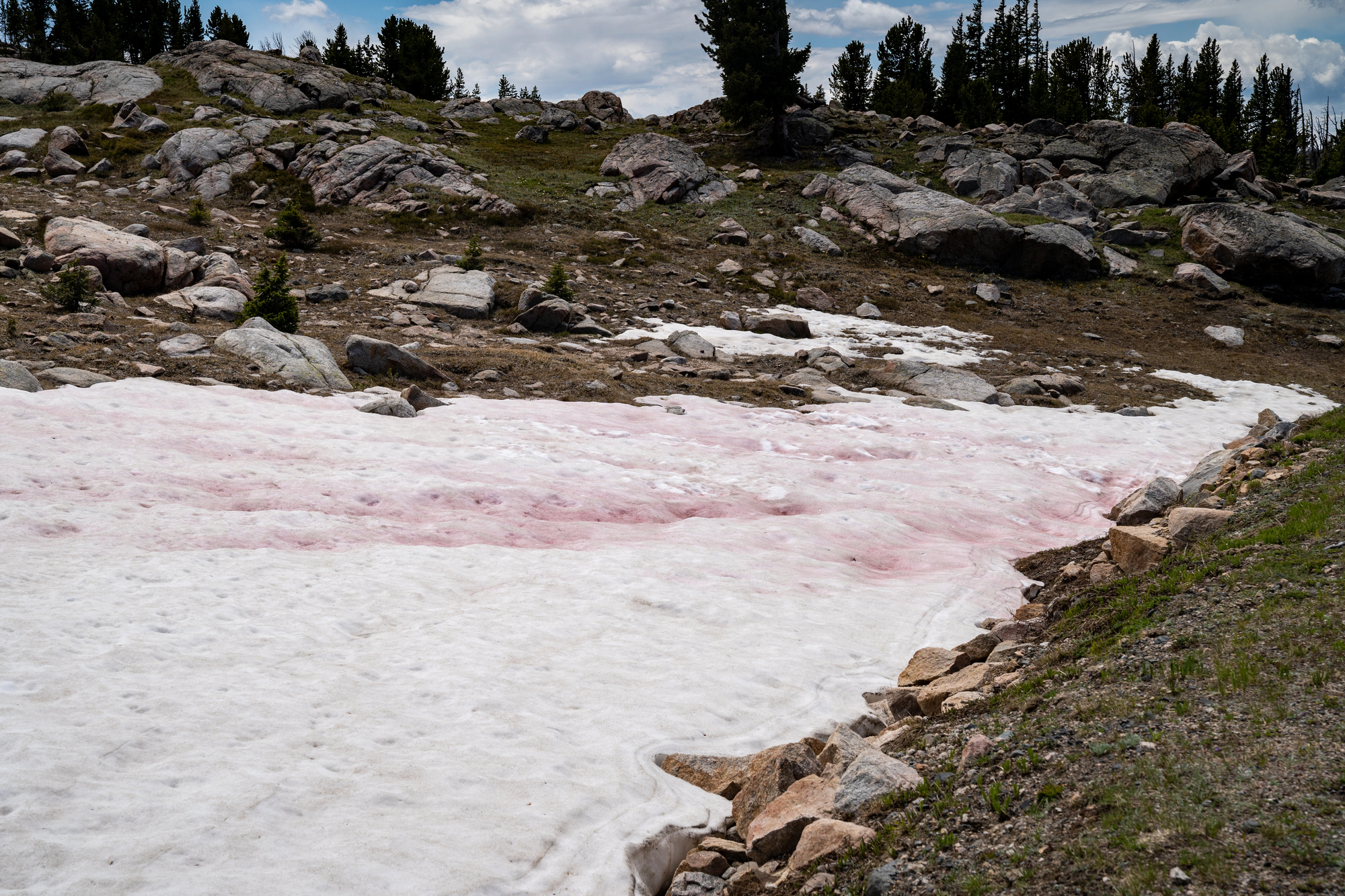
“Most of the time, snow does look white,” says Belles. “But things like sand grains might turn snow a little more golden brown, or snow might gain a red hue when there’s rust, or even bacteria or algae” in the air or on the ground.
Take what’s known as “watermelon snow” (a.k.a. pink snow, blood snow, or red snow). These patches of red-hued snow are the result of Chlamydomonas nivalis, a type of cold-loving green algae that thrives in freezing water. The red color comes from a bright red carotenoid pigment that acts like a sunscreen, protecting the algae’s green chlorophyll from harmful UV rays and making snow appear pinkish to reddish. It’s a phenomenon that’s common in high-altitude, snowy areas, such as California’s Sierra Nevada mountains, the French and Italian Alps, and Asia’s Himalayas.
In Antarctica, penguin droppings (guano) often stain snow pink due to pigments from the foods they eat, most notably krill.
Then there’s the bluish tint of glaciers, often seen in places like Iceland and Alaska. This coloring occurs because deep, compact ice absorbs light’s longer wavelengths—like reds and yellows—and scatters shorter blue wavelengths back toward our eyes.
What is albedo?
Albedo is the measure of how much sunlight a surface reflects. While zero albedo means a surface has no reflection at all (freshly paved asphalt has almost zero albedo), one albedo (100 percent reflection) stands for a perfectly white surface.
“A grass lawn might have an albedo of 0.20,” says Serreze, with tiny molecules called chlorophyll absorbing the red and blue lights that grass needs for photosynthesis, but reflecting green light since grass doesn’t use it in photosynthesis.
“Very fresh snow can be 0.85 [albedo], or even a little higher, meaning it’s very reflective. However, if you start putting particulates on the snow, like soot or smoke, its reflectivity drops.”
When snow is full of added particulates, it also absorbs more energy. This causes the snow to melt faster, because darker colors absorb the sun’s rays rather than reflect them as white does. Quickly melting snow has a negative impact on the world’s water sources, causing water scarcity, which contributes to negative global warming trends.
Related 'Ask Us Anything' Stories
What are some other factors that affect the ways we see snow?
Clouds can also often play a role in the way snow looks. “For instance,” says Serreze, “they can contribute to what we call a whiteout,” a severe and dangerous winter weather condition in which it’s nearly impossible to distinguish between snow and sky.
Low-lying stratus clouds, the kind that cover the sky like a sheet, and a snow-covered surface will reflect light equally, completely messing with your depth perception. It’s often referred to as “flat light,” meaning it’s a diffused light that eliminates shadows, making everything appear uniform.
There’s also what’s known as photokeratitis, or snow blindness. “Think of snowflakes as the tiny parts of a broken mirror stuck together. Shine a flashlight into those parts and you’re going to blind yourself. When the sun’s light hits all those individual snowflakes, it scatters that light straight back at you,” says Belles.
Snow’s ability to reflect the sun’s UV light is why you can also get major sunburn when skiing or outside in the snow. Consider wearing sunglasses or wrap-around goggles when it snows to protect your eyes, and use plenty of sunscreen to guard against UV rays.
And next time you look at a blanket of freshly fallen white snow, remember that what you’re really seeing is all of the colors of the rainbow. Those colors just appear to be pristine white.
In Ask Us Anything, Popular Science answers your most outlandish, mind-burning questions, from the everyday things you’ve always wondered to the bizarre things you never thought to ask. Have something you’ve always wanted to know? Ask us.