
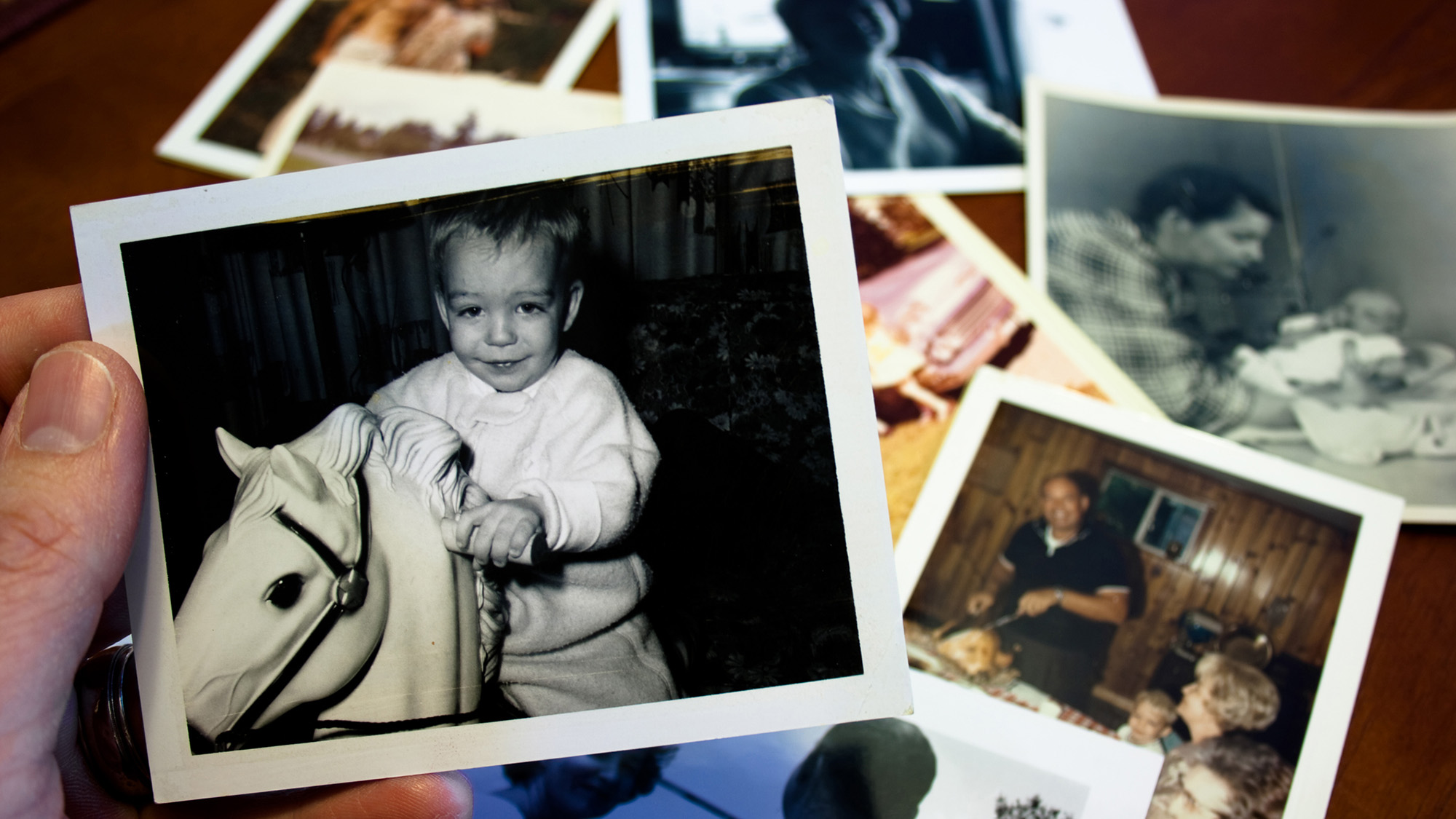
Quick: What’s your first memory?
Was it a birthday party? A family camping trip? Or choking on a hard candy (more on that later)?
Even though little kids remember plenty, most of us lose access to key memories as we get older. It’s something scientists call childhood amnesia.
But what gives? Why can’t we remember anything before age three and only hazy things before age six?
We explore just that in a recent episode of the Ask Us Anything podcast, delving into the science behind why our brains forget our earliest memories.
Popular Science’s Ask Us Anything podcast (as well as our written series of the same name) answers your most outlandish, mind-burning questions—from the everyday things you’ve always wondered to the bizarre things you never thought to ask. So, yes, there’s a reason dogs tilt their heads and you’re right, candy does taste different now. If you have a question for us, send us a note. Nothing is too silly or simple.
This episode is based on the Popular Science article “Why we forget our childhoods” by R.J. Mackenzie.
Subscribe to Ask Us Anything
Listen and follow Ask Us Anything on your favorite podcast platform:
Spotify | Apple Podcasts | YouTube | Or wherever you get your podcasts.
Full Episode Transcript
Sarah Durn: What’s your first real memory?
Edith: My earliest memory is waking up to see Big Elmo. The stuffed animal!
Dan: My earliest memory is sitting on my mom’s lap while she played Super Mario Brothers.
Katherine: Being in my grandma’s kitchen and I’m sitting on the counter and she’s combing my hair. And it’s just a very warm, happy memory of me and my grandma.
Dale: My earliest memory is of a grapevine in my parents’ backyard when I was probably three or four years old.
Alex: My earliest memory was petting my dog. She was a big fluffy akita and I was a tiny baby.
SD: Welcome to Ask Us Anything from the editors of Popular Science where we answer your questions about our weird world from “why do we need braces” to “were there any venomous dinosaurs?” No question is too bizarre or too basic. I’m Sarah Durn, an editor at Popular Science.
Annie Colbert: And I’m editor-in-chief Annie Colbert. I have a little bit of a head cold today.
SD: Here at PopSci, we can’t resist a quirky question,
AC: And this week’s question feels a little existential: Why can’t we remember being babies?
SD: You learned how to walk, talk, recognize faces—arguably some of the most important things your brain will ever do.
AC: Yes. So the big question is: If we’re forming all of these memories, where do they go? Are they just gone forever or are they hiding somewhere?
SD: That’s exactly what scientists are trying to figure out, and the answer might be less about losing memories and more about not being able to access them.
AC: Okay. So it’s not that baby-you had a bad memory. It’s just that adult-you can’t get the files open.
SD: Yeah. Some scientists even think that losing access to those early memories could help us reset and adapt as we grow up.
AC: Wow. So your brain is basically Marie Kondo-ing your memories.
SD: Yeah. That’s what early research is telling us.
AC: Fascinating. I love this question
SD: Right? Now before we dig into all the reasons you don’t remember learning to use a toilet, we want to know what questions are keeping you up at night. If there’s something you’ve always wanted to know, submit your question by clicking the “Ask Us” link at popsci.com/ask.
Again, that’s popsci.com/ask, and click the “Ask Us” link.
AC: We want the weird ones. The strangest questions you have brewing.
SD: Yes, especially the weird ones.
AC: All right. When we come back, we answer the question: Where did your childhood go?
SD: And is it possible it never really left?
Welcome back! Okay. Before we get into the science, Annie, I feel like we have to start at the beginning. What’s your earliest memory?
AC: Yes. Happy to share. I will give a pre-warning that it’s a little scary. My earliest memory was something traumatic, which probably explains why I remember it. I was, I think, three or four.
And I was sitting in a tent in Michigan on a family trip, and I choked on a piece of hard candy and one of my parents’ friends jumped into action. They dislodged it, I assume, with some kind of Heimlich maneuver, but how it was resolved, I don’t remember. I don’t remember that part. But what I do remember very vividly is the color of the tent. It was blue and that moment of fear.
When I think of it, it’s almost like a live photo memory. You know, like when you take a live photo on your iPhone and it’s a short video instead of a photo. That’s what I see when I think about that moment.
SD: Man, that’s intense. I’m glad you’re okay.
AC: Yes, yes, I am okay now.
It was definitely maybe not the best childhood memory, but certainly I heard a lot about it as I was growing up and my mom was very paranoid about me eating hard candies for the rest of my childhood. Um, how about you?
SD: Yeah, I mean, mine isn’t as traumatic, which is good, I guess.
AC: Good.
SD: But it is a little weird.
So the first thing I can really clearly remember isn’t like a birthday or learning to ride a bike or something. It was watching The Neverending Story when I was about six. And for years I thought I had made it up.
AC: Wait, what?
SD: Yeah, like I fully convinced my brain had just invented this whole fantasy world, which, you know, wasn’t totally out of the ordinary for me, but I remembered these super vivid images: a kid flying on this giant white dragon, this glowing, childlike empress, this terrifying force called the Nothing that’s basically swallowing the world.
Yeah. It all felt so real, but also kind of, you know, slippery like a dream you can almost hold onto, but not quite.
AC: Yeah, that’s kind of amazing. But also probably was scary as a kid.
SD: A little bit. I even remember where I was. Like I was sitting on my grandmother’s leopard print carpet in her bedroom.
AC: Nice.
SD: In front of this big, clunky old school TV. Just locked in. I think it was like lunchtime and my grandma was calling me, but I remember I was like, I can’t leave.
Yeah, and it just kind of feels fuzzy around the edges. Like it exists somewhere between something that happens, something I imagine and something I maybe dreamed.
AC: Which feels very on theme for this episode.
SD: Exactly, because that weird dreamlike quality. That’s actually really typical of early memories.
Most of us don’t have crisp, detailed memories from when we were really young. Instead, we get these flashes, you know, like little fragments, a blue tent, a leopard print carpet, the live photo, you know, and anything before about age three is basically gone.
AC: Which brings us to the big idea here, which is it’s not just you. This is a universal human thing.
SD: Yeah. Scientists actually have a name for this phenomenon: childhood amnesia. It describes how most of us can’t recall much, if anything, from before age three and why even our early childhood memories feel really blurry and despite how strange it feels. It’s something almost everyone experiences.
AC: Okay, so let’s break that down. What exactly is childhood amnesia?
SD: So scientists actually make a small distinction here. There’s infantile amnesia, which is the total blackout from before age three, and then there’s childhood amnesia, which is that kind of blurry, incomplete period from about three to six.
AC: So like before three, nothing. Three to six vibes only
SD: Exactly. Six year olds are just vibing.
AC: Yes. From experience, yes. But here’s what I don’t get: Babies are learning so much. They’re learning faces, language, walking, how the world works. So how are they not forming memories?
SD: That’s the thing. They are. And this is where things get really interesting.
Studies show that babies and even very young children can absolutely form memories. Their brains are recording experiences. The problem isn’t that nothing is being saved. It’s that later on we can’t access those memories.
AC: So it’s not that the hard drive is empty. It’s that the password is just gone.
SD: Exactly. Or the file format changed and adult-you just can’t open it anymore.
AC: Okay. That’s both comforting, that it’s still there, but deeply frustrating that we can’t access it.
SD: Yeah. Yeah. Like your first birthday party might still be in there somewhere. You just, you can’t get to it.
AC: So. How are scientists even studying this? Like babies can’t sit down and describe their memories?
SD: Oh, my babies can. No, I’m kidding. Yeah, so that’s one of the biggest challenges here. So researchers have to get creative.
AC: Mm-hmm.
SD: Sarah Power, a scientist at the Max Planck Institute for Human Development, built a whole playroom lab and that room could be turned into either an underwater kingdom or a dense jungle through projections on the wall, which sounds so cool.
Power then hid a really cool toy in the room. Then she’d bring in toddlers between one and a half and two years old to find the toy. Later she’d bring the child back and see if they remembered where the toy was.
AC: That sounds like the world’s cutest memory test.
SD: I know all these toddlers trying to find a cool toy in a jungle playroom.
What researchers are trying to figure out is how long do those memories last? At what age do they start to stick?
AC: Okay, but there’s another wrinkle here, right? Because human memory is not exactly reliable.
SD: Oh, yes. Yeah. Enter false memories.
AC: Hmm.
SD: So sometimes people are convinced they remember something from when they were like two years old, but in reality that memory might come from photos or stories their parents told them or things they’ve just heard over and over again.
AC: So basically you’re remixing secondhand information into a memory.
SD: Exactly. And every time you think you remember this memory, it gets reinforced in your brain, whether it’s real or not. So your earliest memory might not actually be your memory.
AC: Cool. Love that nothing is real.
SD: Or at least you know, some things aren’t real.
But even when memories are real, they’re fragile in early childhood. There’s this fascinating study where researchers had kids talk about specific events with their parents at age three. Then the researchers check back years later.
AC: And?
SD: yeah, kids around five to seven remembered about 60 percent of those events.
AC: Okay.
SD: But by eight or nine, that dropped closer to 40 percent.
AC: Oh, so it gets worse with age.
SD: Yeah. Which suggests those early memories don’t just fade. They kind of fall apart over time. And interestingly, kids remembered more when their parents helped them build the story: asking questions, adding details, making it more of a narrative.
AC: So the storytelling actually helps lock in the memory.
SD: Exactly. Which as someone who thought she invented The Neverending Story feels very relevant.
AC: Okay. So we’ve got fragile memories, missing memories, possibly fake memories, but why is this happening? Why would our brains be designed to forget something that’s so important?
SD: Yeah. I mean, that is the million dollar question, and this is where the new research comes in.
AC: All right, hit me with the science.
SD: So a recent study that Sarah Power also worked on actually looked at something called microglia. These are basically tiny cells in your brain that act like a cleanup crew,
AC: A cleanup crew?
SD: Yeah. They help shape the brain as it develops. They trim connections between neurons, get rid of what’s not needed, and basically help organize all your neural circuits.
AC: So microglia are kind of like your brain’s pruning shears.
SD: Yeah, and what this study found is that microglia might actually play a role in why we forget early memories.
In experiments with mice, scientists actually turned down microglia activity, and those mice actually kept their early memories longer than they normally would.
AC: Wait. So the forgetting didn’t happen.
SD: Exactly. Which suggests that microglia aren’t just passive cleaners. They might actively be involved in making those early memories inaccessible.
AC: So your brain is basically editing itself and it’s moving memories into longterm storage. So basically the plot of Inside Out was right.
Joy: That’s what I’m talking about. Woo! Another perfect day. Nice job, everybody! Let’s get those memories down long term.
SD: Yeah. Yeah, go Pixar! So during early development, your brain is changing really, really fast, forming tons of connections, then pruning them back. And in the process, some of those early memory pathways might get disrupted or reorganized.
AC: So it’s not that your memories are being deleted.
SD: Yeah. It’s more like the wiring that lets you find them is getting rearranged.
AC: Okay. That is wild. But also, it kind of makes sense because babies are learning so much that maybe their brain just can’t keep everything?
SD: Right. Another idea is that this forgetting actually helps us. It might act like a kind of reset, you know, clearing out early messy information so we can build more stable memories later on.
AC: So your brain is like we’re starting fresh here.
SD: Right.
AC: So to bring it all together, we don’t remember being babies, not because nothing happened…
SD: But because our brains were too busy developing to preserve those memories in a way we can access later.
AC: Got it. And tiny brain cleanup crews might be part of the reason those memories fade out of reach?
SD: Basically. Yeah.
AC: Which means somewhere, deep in your brain, there might still be a memory of you learning to walk or saying your first word?
SD: Or watching a fantasy movie and thinking you invented it or choking on hard candy.
AC: Fascinating.
SD: Right? And with that, it’s time for a quick break.
AC: But when we come back, let’s talk about the flip side of forgetting.
SD: Yeah. Because while your brain is busy losing access to your early memories, there are some things that it basically refuses to let go of.
AC: Like riding a bike.
SD: Exactly. More on that when we come back.
Welcome back. So we now know that many of us don’t remember our third birthday, but if you learned how to ride a bike as a kid, odds are you could hop on one today and figure it out pretty fast.
AC: Which is very cool. But why is it though that we can remember how to do things like ride a bike or speak a language? Things that we learned when we were little, but can’t remember the actual memories. We can’t even remember related memories like the learning to ride a bike or starting to speak, but we’re still maintaining those skills.
SD: Yeah, it’s a very valid question and something a recent Ask us Anything story by Adam Kovac actually got into. It turns out memories of events and learning how to do something, they’re actually totally different.
AC: Okay. But why?
SD: So earlier we were talking about episodic memory, those personal lived experiences, like your earliest memory or that camping trip or choking on a hard candy.
AC: Yes. The ones that disappear.
SD: Exactly, but skills like riding a bike, playing guitar, or, you know, even typing those live in something called procedural memory.
AC: Procedural meaning your brain knows how to do something even if you can’t remember learning how.
SD: Yeah, it’s like your brain switches to autopilot and those memories are stored in totally different parts of the brain areas that are way easier to access.
AC: So that’s why you can forget what you had for dinner yesterday, but still know how to balance on two wheels.
SD: Exactly. Your brain treats those skills as essential. Things worth holding onto.
AC: I mean, I guess it’s comforting that we don’t forget everything.
SD: Right? And also explains why, you know, practice matters. The more you repeat a skill, the stronger those pathways get until it’s basically second nature.
AC: So even if your childhood memories are fuzzy at best…
SD: Or completely gone…
AC: Yes. The things you learned during that time might still be with you.
SD: Yeah. Your brain might not remember the moment you learned how to ride a bike,
AC: But it remembers how.
SD: And honestly, that’s way more useful.
AC: I like that your past self is looking out for you just in a different way.
SD: Exactly.
AC: And that’s it for this episode. But don’t worry, we’ve got plenty of episodes of Ask Us Anything live in our feed right now. Follow or subscribe to Ask Us Anything by Popular Science wherever you enjoy your podcasts. And if you like our show, please leave a rating and review.
SD: Our producer is Alan Haburchak, and this week’s episode was based on an article written for Popular Science by R.J. Mackenzie.
AC: Thank you team for all of the memories, and thanks everyone for listening.
SD: And one more time. If you want something you’ve always wondered about, explained on a future episode, go to popsci.com/ask, and click the “Ask Us” link. Until next time, keep the questions coming.
AC: Another thing: Why can’t I remember the plot to any movie? But I can remember every celebrity baby name?
