
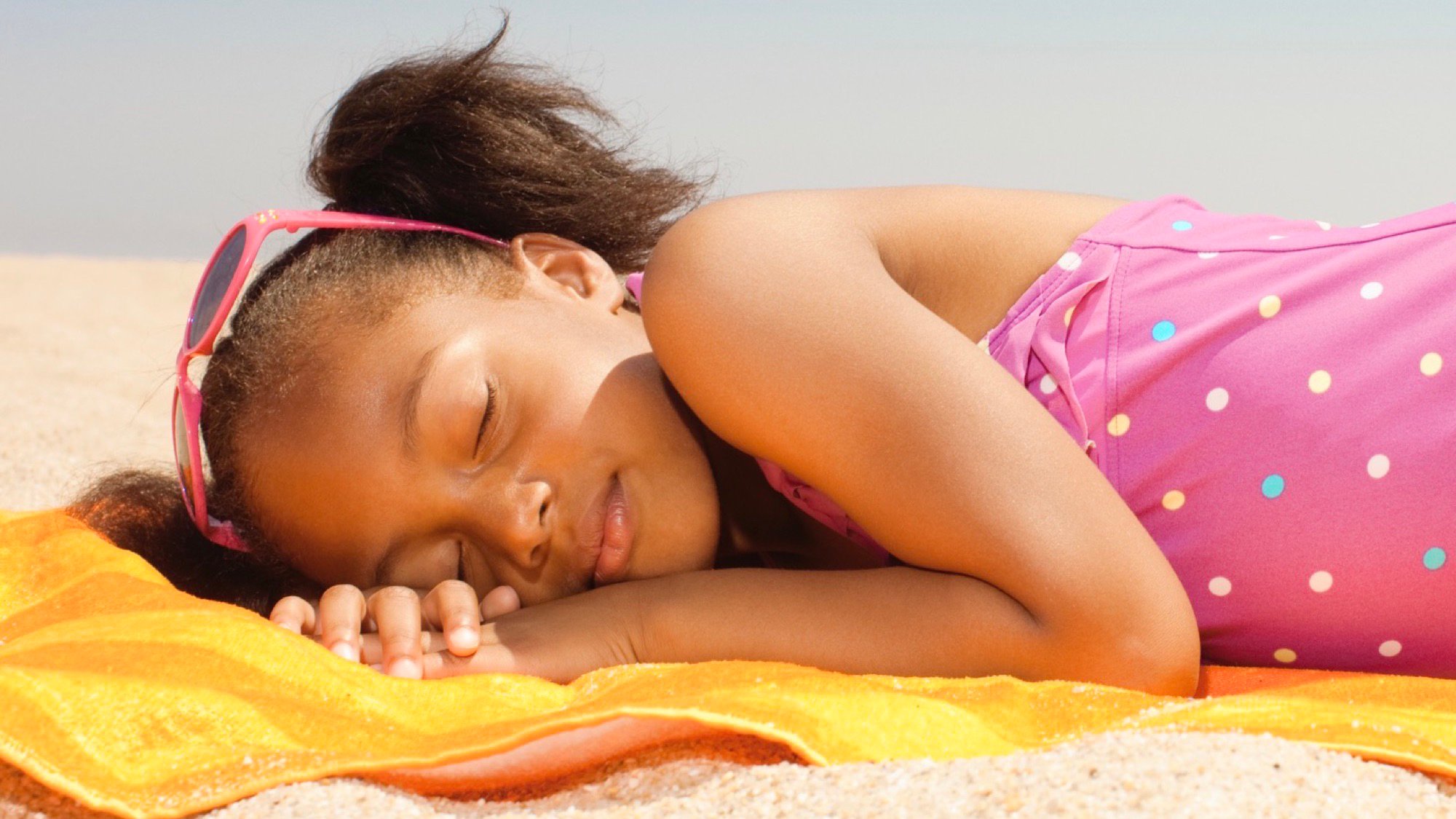
Sun, sand, waves, and relaxation. No responsibilities and little to do but enjoy yourself. Yet somehow, after a whole day of blissful nothing, you find yourself completely zonked. What gives? If taking in the sea air is supposed to be restorative, why can a restful day at the beach end up feeling so tiring? There’s no one certain answer, but science offers a few possibilities.
[ Related: 6 of the weirdest things to ever wash up on the beach ]
Heat is hard on the body
It’s usually the height of summer when we opt to spend our days oceanside, and that means hours in the heat. “Humans need to be able to regulate our body temperature,” Craig Crandall, a physiologist and professor of internal medicine at the University of Texas Southwestern Medical Center, tells Popular Science. “If we didn’t, we’d be lizards.” And unlike our scaly tetrapod counterparts, the fundamentals of our physiology require our internal temperature to stay close to 98.6 degrees Fahrenheit. If the thermometer ticks too far up, the systems that keep us alive begin to break down.
Maintaining a consistent body temperature takes work. We know that keeping cool in a hot environment requires extra energy, because people exposed to heat consume slightly more oxygen, says Crandall. Higher oxygen consumption indicates more cellular effort. Added up over hours, that can equal to a significant amount of exertion. Then, there’s the effect on your heart.
One of the main methods we have for cooling down is increasing the amount of blood flow near the skin. Assuming the air temperature is lower than your core temp, blood moving near the surface will lose heat to the air. But that means the heart has to work harder to move more blood farther into the periphery of the circulatory system. “If somebody has a resting heart rate of 60 [at room temperature], it’s very possible their heart rate could rise to 100 or 110 beats per minute in a heated scenario,” Crandall says.
This is a major part of why extreme temperatures can be so dangerous for those with heart conditions, he explains. On the less consequential side, beach fatigue could also, in part, be a byproduct of all this extra, unconscious effort.
Don’t discount dehydration
The other major way our bodies offload heat is sweating. And when you’re playing or laying in the sun for a long time, you’re almost certainly losing a lot of water as your body sweats. Likely, you’re not drinking enough fluids to keep up.
“Hydration is extremely important,” says Crandall. “As we get dehydrated, we will get symptoms not too different from heat exhaustion. You’ll start to feel fatigued.” Research, including at least two randomized control trials, have shown that even mild dehydration can lead to changes in mood, alertness, and cognitive performance in otherwise healthy people.
Couple that dehydration with the fact that many people at the beach opt to drink alcohol over water, and the problem is amplified. Alcohol is a diuretic, so—depending on the potency of your drinks—imbibing can lead you to lose more liquid than you gain from each beverage. The accompanying intoxication can also make it more difficult to recognize early symptoms of dehydration and heat stress, Crandall notes, exacerbating the ultimate crash.
[ Related: How much water should you drink in a day? ]
More movement than you bargained for
The beach may be a welcome break from your usual grind. But in many cases, taking it easy involves a deceptive amount of activity. You have to find a nice spot to post up, which probably means walking a fair distance, lugging a cooler and umbrella behind you. Plus you’re on the sand, which makes every movement is harder. Maybe every hour, you spend 10 minutes treading water, or wading through the surf. Perhaps someone brought a frisbee, soccer ball, or volleyball net. If you have children, you’re undoubtedly chasing them around.
On a normal day, “I come sit in an office in front of a computer,” says Crandall. “If I go to the beach, it’s orders of magnitude more activity over hours than what I do day-to-day,” he says, adding that he enjoys water and sand sports. “I expect to be more exhausted after that.”
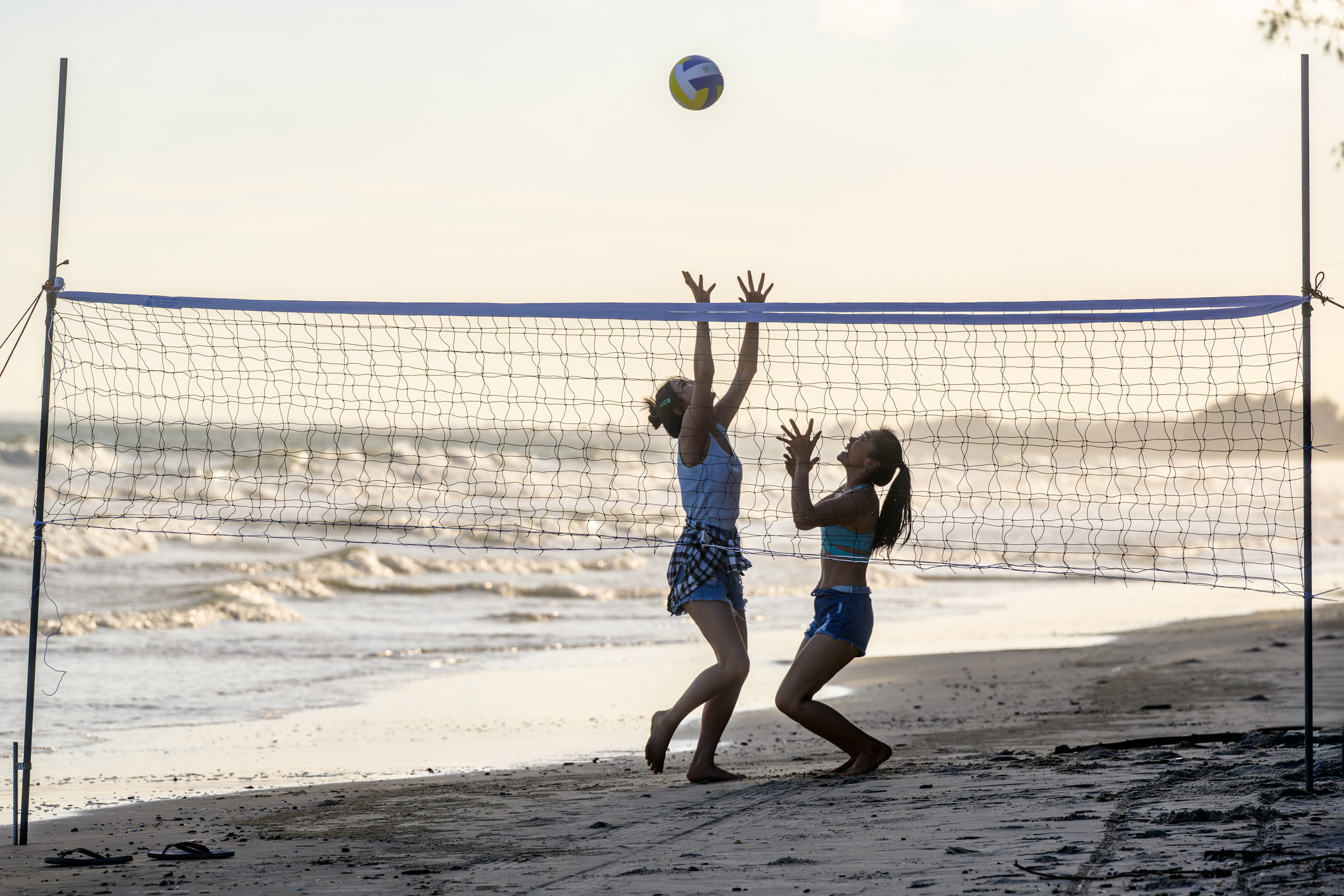
Patchareeporn Sakoolchai / Getty Images Patchareeporn Sakoolchai
A built-in bodily response
Even if you’re staying hydrated, resting up, and taking shade breaks, sleepiness in response to afternoon heat may be an ancient, pre-programmed animal response. Though people sleep best at cooler temps, heat may also trigger drowsiness, according to a 2022 study of fruit flies. The research found that high temperatures trigger a cascade of brain signals that feed directly into the flies’ circadian rhythm system. Basically, in response to hot temperatures, fruit flies are driven to nap—which the authors compare to a Spanish siesta. Though it’s not yet clear if heat does the same in human brains.
Then, there’s the effect of the sun itself. If you get sunburned, it’s well established that it can lead to fatigue. Sunburn triggers an inflammatory response, Crandall notes. If it’s bad enough, that can lead to symptoms of full-body exhaustion, as well as headache, nausea, and even fever.
Even if you fastidiously apply sunblock and avoid burning, sunlight itself can still leave you feeling sluggish. One 2004 study found that sun exposure increases mental fatigue during leisure activity. A similar 2021 paper noted similar effects among outdoor workers, independent of heat stress. Workers showed more signs of slower cognition and other symptoms of heat stress when their skin was exposed to the sun, versus workers who were kept covered, even when temperatures were consistent.
Exactly why this happens isn’t well understood, but Crandall notes that sun shining on our skin leads to chemical reactions. Sun exposure triggers vitamin D production. He speculates that it’s possible other chemical or hormonal cascades are set in motion by the sun.
[ Related: Learn how to take a nap because they’re really beneficial ]
Fighting back fatigue?
If you’re aiming to minimize the chance of the post-beach slump, Crandall says staying hydrated and avoiding sunburn are the two most important strategies. Shade breaks or indoor time might also help. But, assuming you’ve eaten enough, drunk enough water, and applied your sunscreen, the best treatment for beach fatigue may be not to fight it after all, he notes. “I would say, just take a good nap,” maybe under an umbrella.
This story is part of Popular Science’s Ask Us Anything series, where we answer your most outlandish, mind-burning questions, from the ordinary to the off-the-wall. Have something you’ve always wanted to know? Ask us.
