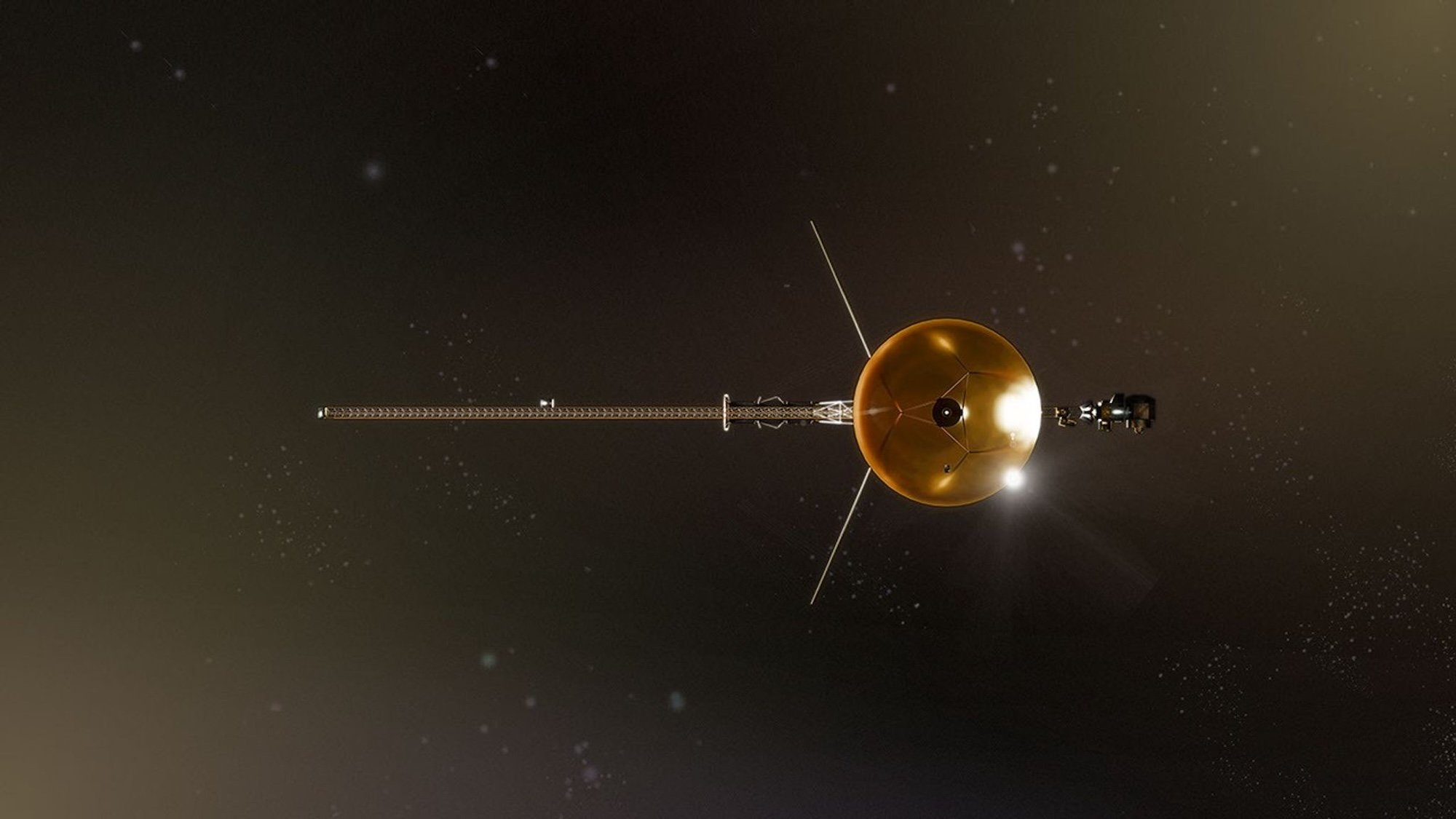
Back in 1998, NASA’s Voyager 1 spacecraft became the farthest human-made object to ever travel beyond Earth. That technically means the intrepid explorer has been constantly breaking its own record for the last 18 years. But on November 18 (at 5:18 a.m. EST, to be exact), Voyager 1 will set a very specific and significant major record. At that point, it will officially be exactly one light-day away from its home planet. This means all future communications with the craft will take at least a full 24 hours to both send and receive.
It’s a monumental achievement for a piece of equipment originally intended to only survive only a few years in deep space, so why not celebrate the moment with NASA? The agency recently announced Shine Bright for Voyager’s Light-Day, a worldwide event in which participants are encouraged to illuminate the night sky. Anytime after sunset on Tuesday, November 17, celebrants can aim either flashlight or smartphone towards the cosmos, then blink out the Morse signal “V-G-R,” NASA’s three-letter call sign. Don’t worry if you’re not necessarily versed in the code language, though. Simply blink along:

NASA even created a dedicated website to auto-flash the “VGR” Morse code, if that’s easier for beaming your dedication to the stars.
“A simple act. A shared moment. A celebration of humanity’s farthest reach,” NASA explained.
November 18 won’t be the end for Voyager 1, either. Thanks to recent equipment adjustments, NASA expects to squeeze at least a few more years’ of life from the spacecraft before it finally goes dark. At that point, Voyager 1 may become an inert piece of technology, but it will remain an interstellar monument to humanity’s curiosity and creativity.