
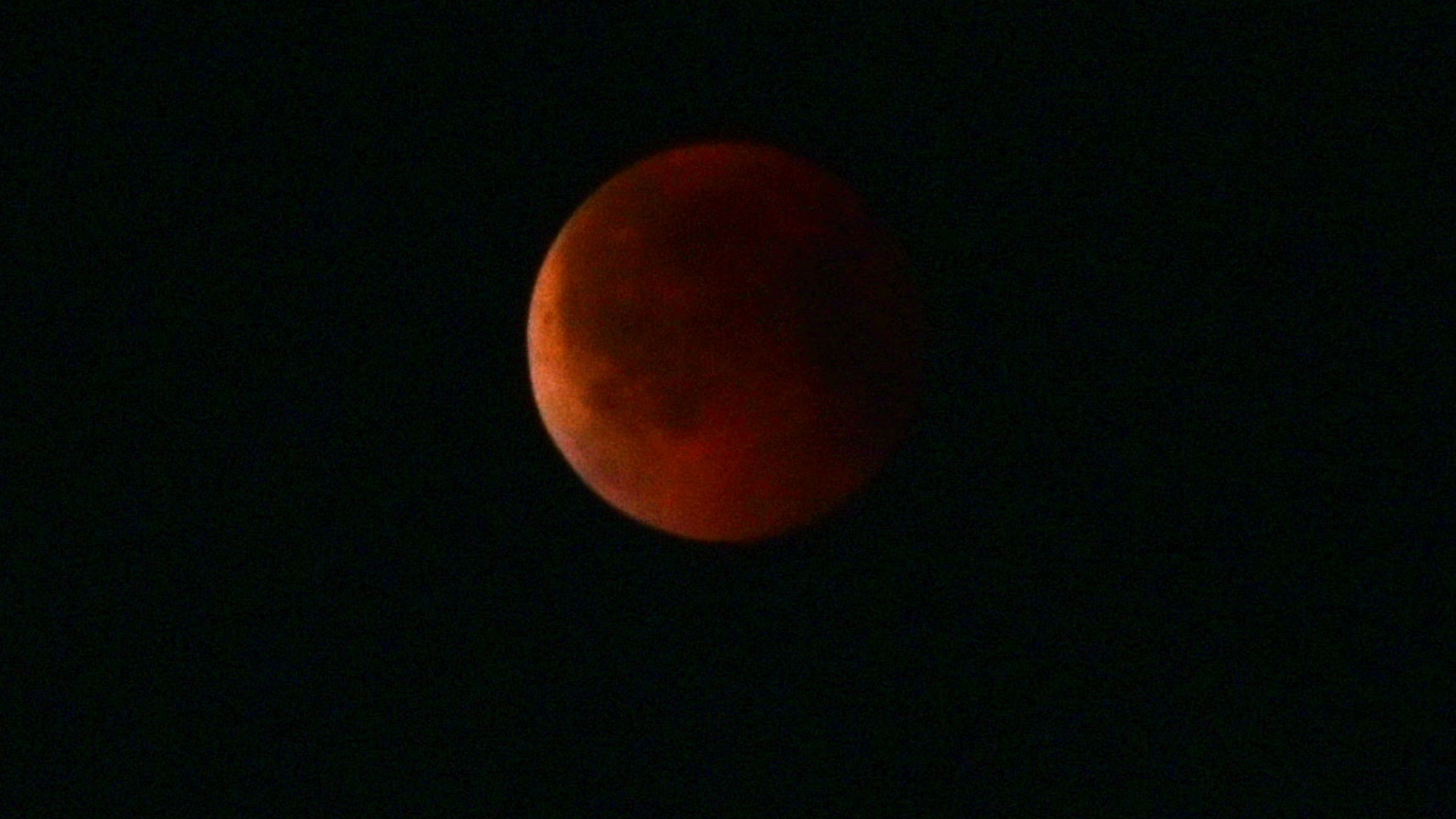
| March 3 | Total Lunar Eclipse/Full Worm Moon |
| March 20 | Vernal Equinox |
| March 25 and 26 | Conjunction of Jupiter and the Moon |
Assuming that the clouds actually part long enough for us to see the sky every so often, March promises at least one memorable celestial event: a full moon and full lunar eclipse on March 3. It will also bring the official beginning of spring and a couple of nights’ worth of intense discussion between the moon and Jupiter.
March 3: Total Lunar Eclipse/Full Worm Moon
This month’s full moon is a genuinely special one/It coincides almost exactly with a total lunar eclipse! Lunar eclipses occur when the sun, Earth and moon line up perfectly. If the moon is in the middle, then it’s a full solar eclipse, with the moon casting its shadow across the earth. If the Earth is in the middle, then it’s our shadow that gets cast across the moon.
For reasons we explained during the last full lunar eclipse, this doesn’t result in the moon disappearing completely. Instead, our satellite turns a deep shade of red, which is why lunar eclipses are often called “blood moons.” The coincidence of a lunar eclipse and a full moon also provides the best opportunity to witness a blood moon in all its sanguine glory.
This month’s full moon is called the worm moon. The name refers to the return of earthworms to thawing soil or, possibly, because of beetle larvae emerging from the trunks of thawing trees. Either way, the name alludes to the coming of spring.
If you want to catch some blood moon action, you’ll need to be up early on the morning of March 3. The lunar eclipse reaches totality at 6:33 a.m. EST, and the moon will be at its fullest all of five minutes later.
March 20: Vernal Equinox
Some good news for those of us still digging out from a historic February snowstorm Spring really is on the way. The days are already getting longer, and on March 20 we’ll hit the equinox. The vernal—or spring—equinox marks the beginning of spring in the Northern Hemisphere and the beginning of autumn down south. This is one of two days every year on which neither hemisphere is tilted further toward the sun than the other. Instead, the Earth sits in perfect balance on the equator, with both hemispheres receiving equal amounts of sunlight.
March 25 and 26: Conjunction of Jupiter and the Moon
By late March, our plucky satellite will have recovered from its run-in with our shadow and begun the process of returning to fullness again. If you look due south on the evenings of March 25 and 26, you’ll see it right next to Jupiter, high in the southern sky amid the constellation Gemini.
The two will be together for hours, appearing as if Jupiter is listening patiently as the moon tells epic tales of how it ended up so bloodied. The conjunction will be visible to the naked eye, appearing at about 7:30 p.m. EST and huddling together until well after 2 a.m.
During any month, remember that you’ll get the best experience gazing at the cosmos if you get away from any sources of light pollution, give your eyeballs some time to adjust to the darkness, and review our stargazing tips before setting out into the night.
Until next month!
